Kaizen [The Natural Law Of Success]
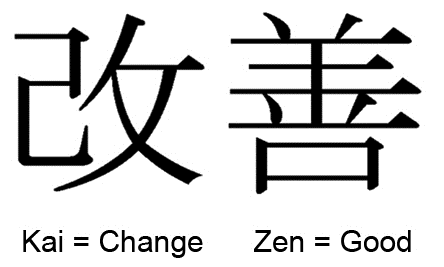
Kaizen Is Simply A Process Of Making Intelligent Change
Japan is known for it’s efficient approach to technological change that is unmatched by the rest of the world.
The secret to this efficiency lies within the idea of consistent effort applied purposefully, that is described by the Kaizen principle. What was initially used as a principle to create change in management techniques for large businesses, Kaizen is now a principle that can help describe one of the natural laws of the universe (Compounding effort).
Kaizen is an incredibly powerful idea because it allows us to focus in on the most important aspect of achieving amazing results: the next step.
For westerners, the Kaizen principle is often summarised as the process of getting 1% better every single day. To do this, we must focus on the most important thing we need to do next, in order to make this 1% improvement. In the formalised approach to Kaizen, there are a number of critical categories that allow for this next step to be effectively honed in on [See this article for an idea on what they are]. In human adaptation and specialised exercise, we can use the Kaizen principle to describe how we adapt to exercise sessions.
Each time we undergo a session we can roughly say that we cause our body to adapt & become 1% better (a generalisation across a number of different systems, depending on what is focused on with the exercise session).
The reason Kaizen is such a powerful principle is because of it’s effect over the long term. It’s true that to achieve anything, we must make sure we do the next step right. Once we have taken the next step, then we can focus on what is after that. Provided we have a map of where we need to go, if we continue focusing on the step ahead with our best intention, we will get where we’re going. Yet, with each step we take (or each 1% improvement), we experience an exponential increase in our overall ability. Over time (just like with finances) this can increase to reach an incredible number that can be very hard to catch. Once we reach this higher level of ability, all of our efforts can effectively become significantly magnified (i.e. the more fit we are, the more exercise we can do & the more healthy our body will be because of this).
See our post below to get clearer visual on how this plays out:
View this post on Instagram
Momentum Is Everything!
The reason we are sharing this with you is because we want you to be able to take advantage of this concept in action.
We encourage you to strongly consider the Kaizen principle in context with where you are today. If you’ve been going through a program & have now experienced your first set of wins, imagine where you could be if you were able to be consistent for a few years.
Imagine what you’d be able to do with your movement.
Imagine the activities you could get back to doing.
Imagine how your body would look and feel.
Once you understand the Kaizen principle & the natural law of compounding, then no goal or obstacle becomes insurmountable. All it takes is the right kind of determination to reach a destination & the guidance to get you there.
For us, this idea is the most important concept that we can help teach people. Our programs aren’t about simply fixing someone’s injury & stopping at that. They’re about giving people the tools they need to live at their absolute healthiest for as long as is physically possible.
It’s no secret that our bodies are designed to move. Once we begin to take heed of this, we can start to realise that health is ultimately related to how well we move.
The question for a lot of people then becomes: “If you could do anything with your movement, what would you be doing?”.