
Meniscus Surgery in Sydney
The meniscus cushions and stabilises your knee, and a tear can cause pain, clicking, catching or locking. Meniscus surgery may repair the tear or remove only the unstable damaged part — with your recovery guided by our integrated physiotherapy and rehabilitation team.
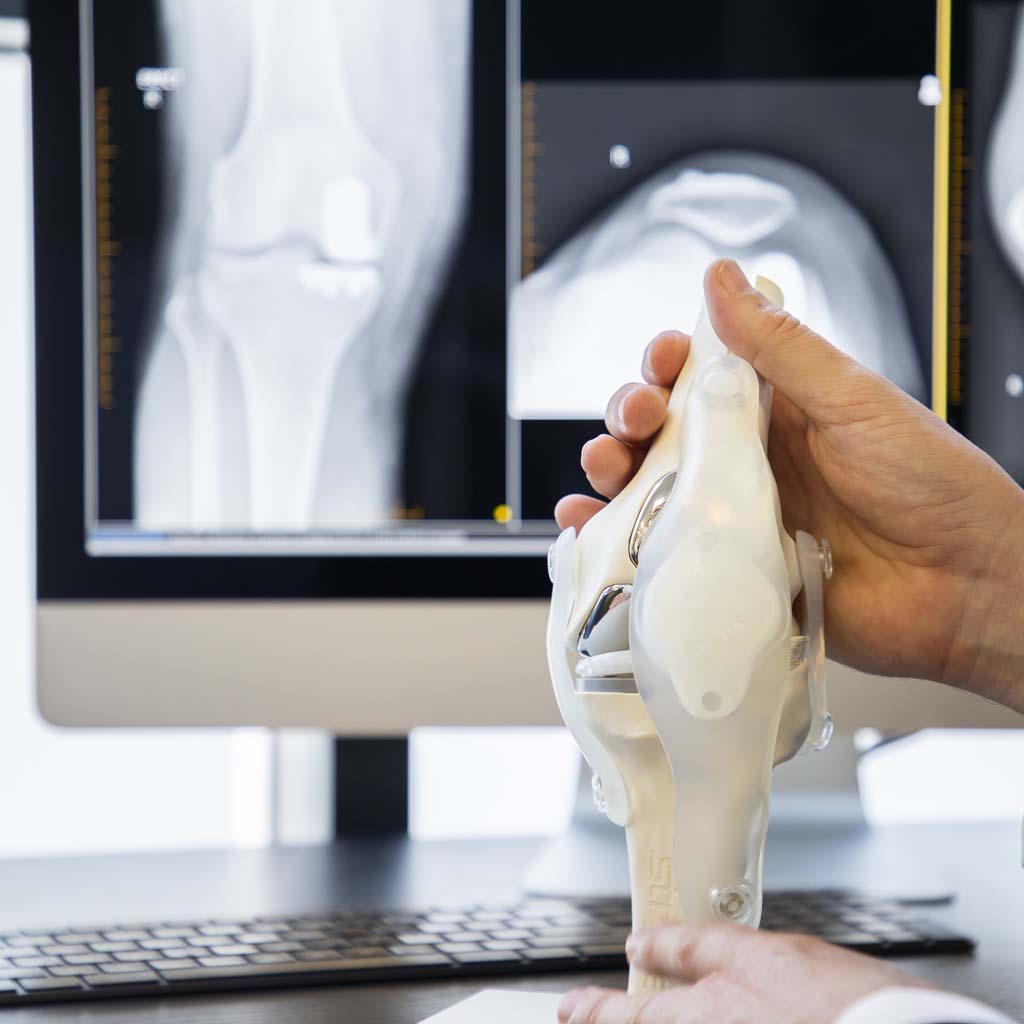
What is meniscus surgery?
Meniscus surgery is an operation to treat a torn meniscus inside the knee. The meniscus is a crescent-shaped piece of fibrocartilage that sits between the thigh bone and shin bone. Each knee has two menisci: one on the inside of the knee and one on the outside.
The meniscus helps share load, absorb shock, improve joint stability and protect the smooth cartilage on the ends of the bones. When it tears, the knee may become painful, swollen, stiff, click, catch or lock.
Most meniscus surgery is performed using knee arthroscopy, also known as keyhole surgery. Through small incisions, your surgeon can see inside the knee and either repair the meniscus with sutures or trim away only the unstable damaged part while preserving as much healthy meniscus as possible.

Do you need meniscus surgery?
Not every meniscus tear needs surgery. Some tears settle with physiotherapy, strength work, activity modification and time — especially degenerative tears in knees with early arthritis or general wear and tear.
Surgery is more likely to be considered when symptoms persist despite good rehabilitation, or when the knee has mechanical symptoms such as catching, locking, painful clicking, repeated swelling or a tear that is unlikely to settle because the damaged piece is moving inside the joint.
Repair when possible, trim only when needed. The meniscus is important for long-term knee health, so the goal is to preserve as much healthy tissue as possible. Our physiotherapy team and knee surgeons can assess whether your tear is best managed with rehabilitation, repair or trimming.
At your consultation, your surgeon will examine your knee and review imaging, commonly including an MRI. The scan is useful, but the decision is not made from the MRI alone. The key question is whether the tear matches your symptoms and whether surgery is likely to improve your knee.
Benefits and risks
What you can expect it to achieve
- Reduce pain caused by an unstable or symptomatic meniscus tear
- Improve catching, locking or painful clicking when caused by the tear
- Preserve meniscal tissue where repair is suitable
- Remove only the unstable damaged part when repair is unlikely to heal
- Support return to work, sport and daily activity with structured rehabilitation
- Treat associated injuries during the same arthroscopy where appropriate
Risks to understand
- Common and temporary: swelling, bruising, stiffness and mild wound discomfort
- Uncommon: infection, blood clots, bleeding into the knee, wound problems and anaesthetic complications
- Repair-specific: the repair may not heal and further surgery may be needed
- Trimming-specific: removing meniscal tissue can increase load on the joint surface over time
- Persistent symptoms: pain may continue if arthritis, cartilage damage or overload is also present
All surgery carries risk and outcomes vary between individuals. Your surgeon will explain how these risks apply to your knee, including whether repair or trimming is the safer and more realistic option.
Meniscus repair vs meniscus trimming
A meniscus repair stitches the torn tissue back together so it can heal. This is usually preferred when the tear is repairable because it preserves more of the meniscus and may better protect the knee long term.
A meniscus trim, also called partial meniscectomy, removes only the unstable torn section. This may be better when the tissue is frayed, degenerative, poorly supplied by blood or unlikely to heal with stitching.

| Meniscus repair | Meniscus trimming |
|---|---|
| Stitches the tear to help it heal | Removes only the unstable damaged portion |
| Preserves more meniscal tissue | Useful when the tear is not repairable |
| Recovery is slower and more protected | Recovery is usually faster |
| May require crutches and a brace | Often allows weight-bearing straight away |
| Best for selected tears with healing potential | Best for unstable frayed or degenerative tears that cannot heal |
The procedure: what happens
Meniscus surgery is usually performed as a knee arthroscopy. You will arrive at hospital before surgery, meet the anaesthetic team and have your knee prepared with antiseptic. Your surgeon will confirm the correct knee and mark the side before the anaesthetic.
The operation is usually performed under general anaesthetic. Small incisions are made at the front of the knee, and the joint is filled with sterile fluid so the surgeon can see clearly. A small camera is inserted into the knee and connected to a monitor.
Your surgeon inspects the meniscus, joint cartilage, ligaments and the rest of the knee. If the tear is repairable, it may be stitched using arthroscopic meniscal repair devices. If it is not repairable, the unstable torn portion is trimmed and smoothed, leaving as much healthy meniscus as possible.
If there are associated problems, such as loose fragments, cartilage damage or an ACL injury, these may be treated or planned for separately depending on the situation. At the end of the operation, the small wounds are closed and covered with dressings.
After surgery
You will wake in the recovery room and be monitored until comfortable and stable. Most meniscus operations are day procedures, so you can usually go home the same day with a support person.
Your immediate recovery depends on the procedure. After simple trimming, most patients can put weight through the leg as comfort allows. After a repair, your surgeon may restrict bending, weight-bearing or squatting to protect the healing meniscus.
When to seek help. Contact us or seek urgent care if you develop fever, increasing calf pain or swelling, chest pain, shortness of breath, spreading redness, wound discharge, worsening pain or sudden locking that does not settle. Concerned about your recovery? Call (02) 9437 9794.
Meniscus surgery recovery and rehabilitation
Recovery after meniscus surgery depends mainly on whether the meniscus was repaired or trimmed. A trim usually recovers faster because the damaged tissue has been removed. A repair takes longer because the repaired meniscus needs time to heal.
Your recovery starts with swelling control, walking safely, restoring knee movement and activating the quadriceps. From there, rehabilitation progresses into strength, balance, control, running and sport-specific work depending on your goals.
Recovery timeline
| Phase | After trimming | After repair |
|---|---|---|
| Days 0–7 | Walking as tolerated, swelling control, early exercises | Protected walking, swelling control, brace or crutches if advised |
| Weeks 1–2 | Return to desk work, normalising walking | Early physiotherapy, protecting the repair, gentle movement |
| Weeks 2–6 | Strength work, cycling or swimming if suitable, return to most activities | Controlled strengthening, brace and bending restrictions if required |
| Months 3–4 | Higher loading and sport progression where appropriate | Running and impact may begin gradually if cleared |
| Months 4–6+ | Usually fully recovered unless other joint problems exist | Sport-specific rehab and staged return to sport |
Timeframes are a guide. Your surgeon and rehabilitation team will progress you based on the tear, procedure, swelling, strength and sport or work demands.
Post-operative care
The bulky dressing can usually be removed the morning after surgery. Waterproof dressings underneath should stay in place until your wound check at 10 to 14 days, unless they become loose or soaked.
You can usually shower with waterproof dressings, but avoid soaking the knee in a bath, pool or ocean until the wounds have healed. Swelling may last for several weeks, and incision sites can feel puffy or firm for up to three months.
Rehabilitation at MTP Health
This is where MTP Health is different. Your rehabilitation is delivered by our physiotherapists and exercise physiologists in the same clinic as your surgeon, following a plan based on your exact procedure.
Your physiotherapist will help settle swelling, restore movement and rebuild quadriceps strength. If you are returning to sport, exercise physiology becomes important for running mechanics, jumping, landing, change of direction and workload planning.
We recommend booking your first post-operative physiotherapy appointment as soon as your surgical date is confirmed, ideally two to five days after surgery.
Returning to driving, work and sport
Driving usually depends on which knee was operated on, whether you drive an automatic or manual car, and whether you can safely perform an emergency stop. You must also be off strong pain medication. Please check with your surgeon and your insurer before driving.
After meniscus trimming, office workers may return within a few days and heavy workers may need up to two weeks or longer depending on symptoms and job demands. Full recovery often takes four to six weeks.
After meniscus repair, office workers may return after about one week, while heavy manual workers may need up to three months before full duties. Running, jumping, twisting and impact sport are usually delayed for several months to protect the repair.
The meniscus matters. The aim is not just to make the knee feel better now, but to preserve as much useful meniscal tissue as possible for the future. That is why repair is considered carefully, and trimming is kept as limited as possible.
Meniscus surgery cost in Sydney
The cost of meniscus surgery depends on your private health cover, hospital insurance, surgeon fees, anaesthetist fees, assistant fees, hospital charges and whether the operation involves trimming, repair or additional procedures.
If you are having surgery using private health cover, the standard fees for the surgeon, anaesthetist and assistant usually lead to a total out-of-pocket gap. This will be confirmed in your written quote before surgery.
The anaesthetist is an independent practitioner and may charge a different gap, which can affect the final figure. We provide their details and recommend checking their quote before committing to surgery.
The surgeons at MTP Health participate in various reduced-gap schemes run by different health insurance providers. Availability can vary, and reduced-gap surgical time slots may involve a longer wait. Your insurance may also have an excess to pay, commonly around $500.
If you are having meniscus surgery through the public system, there is no out-of-pocket surgical cost, but waiting times can be long and depend on your local hospital, urgency category and availability.
Why have your meniscus surgery at MTP Health
MTP Health brings together experienced knee surgeons, physiotherapists and exercise physiologists in one clinic. That matters because meniscus surgery is not just about treating the tear — it is about choosing the right treatment, protecting the meniscus where possible and guiding your recovery properly.
Honest advice comes first. If your tear is best managed without surgery, we will tell you. If repair is possible, we will explain why it may be worth protecting. If trimming is more realistic, we will explain why and aim to preserve as much healthy meniscus as possible.
Your surgeon

Dr Jonathan Negus
Dr Negus is a fellowship-trained hip and knee surgeon who works alongside MTP Health's physiotherapy and exercise physiology team so your surgery and rehabilitation are managed as one plan.
View full profile →Frequently asked questions
Can every meniscus tear be repaired?
Not every tear is suitable for repair. The location, shape, tissue quality and blood supply all influence whether stitching the tear is likely to work.
Tears in the outer third of the meniscus, where the blood supply is richer, often have better healing potential. Tears closer to the inner edge have less blood supply and are less likely to heal with stitches.
Your surgeon can explain whether repair or trimming is the more suitable option based on your symptoms, examination, imaging and what is seen during arthroscopy.
How soon can I return to sport after meniscal surgery?
It depends largely on whether the meniscus was repaired or trimmed. Repairs are usually protected for longer to let the tissue heal, while trimming procedures often allow earlier progression.
After trimming, some people return to lower-impact activity within weeks, provided swelling and strength have recovered. After repair, running, twisting and impact sport are usually delayed for several months.
Your physiotherapist and surgeon will guide a phased return based on your procedure, your knee function and the demands of your sport.
Will my knee feel normal again after meniscal surgery?
Many people regain comfortable movement as they recover, although this varies with the tear pattern, the underlying health of the joint and rehabilitation.
Surgery aims to reduce mechanical irritation and improve day-to-day function rather than restore the meniscus to its original state. If there is arthritis or cartilage damage, some aching or swelling may persist.
Your surgeon can outline what is realistic for your knee before you decide on surgery.
Does a meniscus tear always lead to arthritis?
A tear does not automatically cause arthritis, although certain tear patterns and loss of meniscal tissue can increase pressure on the joint surfaces over time.
Preserving healthy meniscal tissue where possible, keeping the leg strong and avoiding excessive twisting loads may help support long-term knee health.
An early assessment can help you understand your individual situation and whether your tear is best treated with rehabilitation, repair or trimming.
How do I know if my symptoms are from the meniscus or something else?
Meniscal symptoms can overlap with cartilage irritation, ligament injuries, kneecap-related pain and arthritis.
A careful clinical assessment, often with an MRI, can help identify the likely source. The pattern of pain, swelling, catching, locking and the way the injury happened all matter.
If you are experiencing catching, locking or swelling that keeps returning, it is worth having the knee reviewed by a knee specialist.
What is the difference between a meniscus repair and a meniscectomy?
A meniscus repair stitches the torn tissue together so it can heal. It preserves more of the meniscus but requires a longer, more protected recovery.
A partial meniscectomy trims away the unstable torn portion while leaving as much healthy tissue as possible. Recovery is usually faster, but removing meniscal tissue can increase load on the joint surface.
Can a meniscus tear heal without surgery?
Some meniscus tears can settle without surgery, especially small stable tears or degenerative tears that are not causing locking or repeated swelling.
Physiotherapy can improve strength, movement and load control around the knee. Surgery is more likely to be considered when symptoms persist or when the tear is mechanically unstable.
How long does meniscus surgery take?
Meniscus surgery commonly takes around 30 to 90 minutes, depending on the tear, whether it is repaired or trimmed, and whether there are other injuries treated at the same time.
There is also time before surgery for anaesthetic preparation and after surgery for recovery before you go home.
Meniscus surgery consultations across Sydney
North Shore Health Hub, Level 4, Suite 401, 7 Westbourne St, St Leonards NSW 2065
St Leonards consulting →173 Warringah Road, Beacon Hill NSW 2100 — serving the Northern Beaches
Beacon Hill consulting →Also consulting at Gosford, Wahroonga, Castle Towers and Tamworth.
Talk to a surgeon about your meniscus tear
Book a consultation to find out whether your meniscus tear is best treated with rehabilitation, repair or surgery — and leave with a clear plan for your knee either way.
Book a ConsultationPrefer to talk? Call (02) 9437 9794 · GP & physio referrals: referrer information
- Cleveland Clinic, Meniscus Surgery — patient guidance on procedure types, risks and recovery.
- Vaquero J, Forriol F. Meniscus tear surgery and meniscus replacement. Muscles, Ligaments and Tendons Journal.
- Current meniscal preservation literature supporting repair where suitable and limited trimming where repair is not appropriate.