
ACL Reconstruction Surgery Sydney
An ACL reconstruction rebuilds the ligament that stabilises your knee, helping you return to sport, work and activity with confidence. At MTP Health, your surgeon works side by side with our physiotherapy and rehabilitation team, so your recovery is planned from the beginning.
What is ACL reconstruction surgery?
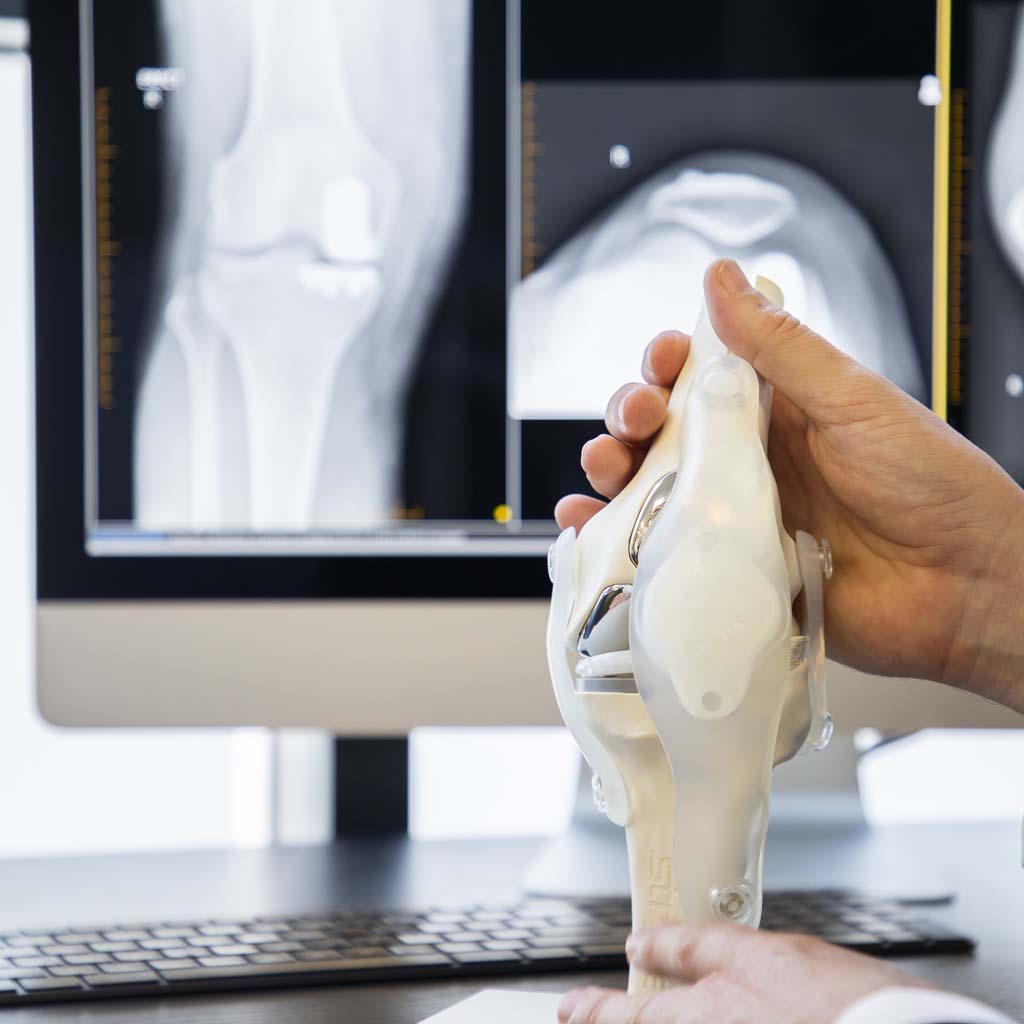
ACL reconstruction surgery is a common procedure used to restore stability to the knee after the anterior cruciate ligament has ruptured. The ACL sits deep inside the knee and helps control twisting, pivoting and forward movement of the shin bone under the thigh bone.
When an ACL tear occurs, it does not usually heal well enough on its own to restore reliable stability for pivoting sport. Some people can manage without surgery, especially if they do not play twisting sports and their knee feels stable. Others continue to feel the knee give way, buckle or feel untrustworthy — and this is when knee reconstruction may be considered.
The operation replaces the torn ligament with a tendon graft, usually taken from your hamstring or patellar tendon. The aim is to give you a knee you can trust again, while also reducing the risk of repeated giving-way episodes that can damage the meniscus and joint cartilage.

Do you need ACL reconstruction?
You are most likely to benefit from ACL reconstruction if you are young and want to remain active, play sports involving twisting, pivoting or rapid deceleration, or your knee is unstable during normal day-to-day activities. It may also be important if your work is physical or your knee giving way could place you or others at risk, such as builders, firefighters, police, defence personnel or emergency workers.
ACL injuries often happen during sport after a sudden change of direction, awkward landing, rapid stop, tackle or twisting movement. Many people describe a pop, rapid swelling within hours and a feeling that the knee has shifted or given way. Diagnosis is made through your history, examination and imaging, commonly including MRI to assess the ACL, meniscus, cartilage and other ligaments.
Not every ACL tear needs immediate surgery. The right first step is usually to settle swelling, restore movement and assess the whole knee properly. Our physiotherapy and knee surgery teams can help you understand whether surgery, rehabilitation or a staged approach is best for your injury.
Timing matters. ACL reconstruction is rarely an emergency. Operating on a swollen, painful and stiff knee can increase the risk of long-term stiffness. In most cases, we first aim to restore a full and comfortable range of motion, reduce swelling and rebuild early strength before surgery.
Benefits and risks
What you can expect it to achieve
- Restores stability to a knee that gives way after ACL rupture
- Supports return to sport, running, pivoting and change-of-direction activity
- Helps protect the meniscus and cartilage from repeated instability episodes
- Allows physically demanding workers to rebuild confidence in the knee
- Can treat associated injuries, such as meniscal tears, at the same operation where appropriate
- Provides a structured pathway back to sport through physiotherapy and exercise physiology
Risks to understand
- Common and temporary: swelling, bruising, stiffness and graft-site discomfort in the early recovery period
- Uncommon: infection, blood clots, wound problems, nerve or blood vessel injury, and anaesthetic complications
- Specific to ACL reconstruction: graft rupture, ongoing instability, stiffness or difficulty regaining full extension
- Return-to-sport risk: returning too early or without meeting strength, balance and movement targets increases the risk of re-injury
All surgery carries risk and outcomes vary between individuals. Dr Jonathan Negus will discuss the specific risks for your knee, especially if there are associated meniscus, cartilage or other ligament injuries.
Hamstring, patellar tendon and graft choices
An ACL reconstruction uses a graft to replace the torn ligament. The graft is most commonly taken from your own hamstring tendons or patellar tendon, although other options may be considered depending on your age, sport, anatomy, previous surgery and surgeon recommendation.
Hamstring grafts usually involve less pain at the front of the knee, while patellar tendon grafts may be preferred in some high-demand athletes but can cause more kneeling discomfort. There is no single best graft for every patient — the decision is individual.

The procedure: what happens
You will arrive at hospital between one and two hours before surgery. ACL reconstruction is usually performed as day surgery under general anaesthetic, meaning you are asleep for the procedure. Your anaesthetist may also use local anaesthetic or a nerve block to reduce pain after you wake up.
Once you are asleep, the graft is harvested. In many cases, this comes from the hamstring tendons through a small incision on the inside of the shin below the knee. If a patellar tendon graft is used, an incision is made at the front of the knee to take the central portion of the tendon with small bone plugs. The graft is prepared so it is the correct size and strength for your knee.
Your surgeon then performs the arthroscopy. Small incisions are made at the front of the knee and sterile fluid is used to create a clear view inside the joint. The torn ACL is assessed, and associated injuries such as meniscal tears may be treated with meniscus surgery at the same time where appropriate, along with cartilage damage where needed.
Accurate tunnels are drilled in the femur and tibia. The graft is passed through these tunnels and fixed in place with screws, buttons, staples or other fixation devices. The knee is checked for stability and movement before the wounds are closed with dissolvable sutures and dressings are applied.
After surgery
You will wake in the recovery room, where you are monitored for around an hour. Once stable, you will return to the day stay ward. Most people go home the same day, although an overnight stay may be more comfortable if surgery is late in the day or if there are additional procedures.
You will usually be given crutches before leaving hospital. Most patients can put weight through the leg immediately after ACL reconstruction and bend the knee as comfort allows, unless a meniscal repair or other associated procedure requires restrictions. A brace is not routinely needed, but it may be used when there has been meniscal repair, root repair or more complex ligament surgery.
When to seek help. Contact us or seek urgent care if you develop fever, increasing calf pain or swelling, chest pain, shortness of breath, spreading redness, wound discharge, severe pain that is not improving, or a sudden new giving-way episode. Concerned about your recovery? Call (02) 9437 9794.
ACL reconstruction recovery and rehabilitation
ACL recovery is not just about the surgery. The operation restores the ligament, but rehabilitation restores the knee. Most people feel much better for daily activities by around three to six months, but return to high-risk pivoting sport usually takes nine to twelve months and should be based on testing, not the calendar alone.
Your post-operative rehabilitation starts as soon as you wake from anaesthetic. Early exercises include calf pumps to encourage blood flow, thigh contractions to regain quadriceps control, gentle knee movement and walking with crutches. Your first physiotherapy appointment should ideally be booked for two to five days after surgery.
Recovery timeline
| Phase | Timeframe | What to expect |
|---|---|---|
| Protect & settle | Weeks 0–2 | Swelling control, wound care, restoring knee extension, walking with crutches, gentle movement and early muscle activation |
| Movement & control | Weeks 2–6 | Weaning off crutches, normalising walking, building range of motion, early balance and controlled strengthening |
| Strength foundation | Weeks 6–12 | Progressive strength work, exercise bike, balance, gait retraining and preparation for higher loading |
| Running preparation | Months 3–6 | Strength testing, controlled running progressions, landing mechanics and early sport-specific preparation |
| Sport-specific rehab | Months 6–9 | Change of direction, acceleration, deceleration, jumping, landing, agility and controlled team training progressions |
| Return to sport | Months 9–12+ | Return-to-sport testing, confidence building, full training exposure and staged return to competition where safe |
Timeframes are a guide. Your surgeon and rehabilitation team will progress you based on swelling, strength, control, confidence, sport demands and associated injuries.
Post-operative care
The bulky bandage can usually be removed the morning after surgery, leaving waterproof dressings underneath. These should stay in place until your wound check at 10 to 14 days unless they become loose or soaked. You may shower with waterproof dressings, but avoid soaking the knee in a bath, pool or ocean until the wounds have healed.
Some swelling around the knee and puffiness at the incision sites can last for several weeks. The knee may remain swollen for up to six weeks, and the incision areas can feel firm or raised for up to three months. This is usually part of normal healing, provided pain, redness and discharge are not worsening.
Rehabilitation at MTP Health
This is where MTP Health is different. Your rehabilitation is delivered by our physiotherapists and exercise physiologists in the same clinic as your surgeon, following a clear ACL pathway. We recommend booking your first post-operative physiotherapy appointment as soon as your surgery date is confirmed, ideally two to five days after surgery.
Your physiotherapist will help manage swelling and stiffness first, then rebuild strength, balance, control and movement quality. Exercise physiology becomes increasingly important from three months onwards, when the goal shifts from basic recovery to performance, running mechanics, power, change of direction and injury-risk reduction.
The ACL rehabilitation protocol we use is based on years of research and clinical experience. As a guide, many patients benefit from physiotherapy twice weekly for the first six weeks, weekly physiotherapy for the second six weeks, and one to two exercise physiology sessions per week from three to twelve months.
Returning to work, driving and sport
Most office workers can return to work after one to two weeks, depending on pain, swelling, transport and the ability to elevate the leg during the day. Heavy manual workers may need two to three months before resuming full duties, especially if their role involves ladders, uneven ground, kneeling, lifting or sudden movement.
Returning to driving usually takes a minimum of six weeks for right knee surgery and around two weeks for left knee surgery in an automatic car. Regardless of timing, you must be able to safely perform an emergency stop and must have stopped all painkilling medication other than over-the-counter medication such as Panadol or Nurofen. Please also check with your car insurer.
Returning to high-risk sports such as netball, soccer, rugby, AFL, basketball and skiing usually takes a minimum of nine to twelve months. Returning earlier than nine months, or before meeting strength, balance, landing and sport-specific targets, increases the risk of graft failure or a second ACL injury.
Rehab is the difference between surgery and sport. The graft needs time to heal, but your body also needs time to rebuild strength, control and confidence. At MTP Health, surgery and rehabilitation are planned as one pathway, not two separate steps.
ACL reconstruction cost in Sydney
The cost of ACL reconstruction depends on your private health cover, hospital insurance, surgeon fees, anaesthetist fees, assistant fees, hospital charges and whether other procedures, such as meniscal repair, are required at the same time.
If you are having surgery using private health cover, the standard fees for the surgeon, anaesthetist and assistant usually lead to a total out-of-pocket payment of around $4,500. This is the gap left after Medicare and your health fund have paid their rebates.
The anaesthetist is an independent practitioner and may charge a different gap, which can affect the final figure. We provide their details and recommend checking their quote before committing to surgery.
The surgeons at MTP Health participate in various reduced-gap schemes run by different health insurance providers. Availability can vary, and reduced-gap surgical time slots may involve a longer wait. Your insurance may also have an excess to pay, commonly around $500.
If you are having ACL reconstruction through the public system, there is no out-of-pocket surgical cost, but waiting times can be long and depend on your local hospital, urgency category and availability.
Why have your ACL reconstruction at MTP Health
MTP Health brings together experienced knee surgeons, physiotherapists and exercise physiologists in one clinic. That matters because ACL reconstruction is only the start. The result depends on getting the timing right, treating associated injuries properly and completing a structured rehabilitation plan that prepares you for your actual sport, job and life.
Honest advice comes first. If your knee is not ready for surgery yet, we will help you prepare it. If you can manage well with rehabilitation alone, we will tell you. If reconstruction is the right path, we will guide you from diagnosis through surgery, early recovery, gym-based strengthening and return-to-sport testing.
Your surgeon

Dr Jonathan Negus
Dr Negus is a fellowship-trained hip and knee surgeon who works alongside MTP Health's physiotherapy and exercise physiology team so your surgery and rehabilitation are managed as one plan.
View full profile →Frequently asked questions
What is ACL reconstruction surgery?
ACL reconstruction surgery is a common surgical procedure. It restores stability to your knee if the ACL is ruptured.
You are most likely to benefit from reconstruction surgery if:
- You are young and want to remain active
- You want to keep playing sports that involve twisting, pivoting or rapid deceleration
- Your knee is unstable and gives way, or feels like it might, with normal day-to-day activities
- Your job is very physical or your knee giving way could be dangerous, such as building, firefighting, policing or emergency work
The surgery aims to give you a knee that you can trust when active. It can help you return to your chosen sport while reducing the risk of further damage to the knee from repeated instability episodes.
How can I best prepare for ACL reconstruction surgery?
An ACL reconstruction is not usually emergency surgery. In fact, if it is carried out too quickly on a swollen and stiff knee, it can lead to a worse result. Operating on a knee that is not moving well can increase the risk of long-term stiffness.
It is vital that you work with your physiotherapist to regain a full and painless range of motion in your knee. This generally takes 10 days to three weeks from the injury, although it can take longer if there are other injuries.
Sometimes it is necessary to operate first on another injury, such as a bucket-handle meniscal tear, to allow the knee to move properly. The ACL reconstruction may then be performed several weeks later when the knee is ready.
It is also important to consider the full rehabilitation period and how the timing of surgery may affect family events, holidays, work trips, busy work periods, school exams, university finals or major sporting commitments.
At MTP Health, we take your preparation seriously. We want you physically strong, psychologically prepared and medically safe before surgery. We may organise additional tests or specialist referrals if needed.
Finally and importantly, we help you get strong. Our physiotherapists and exercise physiologists can assess your function, and we recommend booking your first post-operative physiotherapy appointment for two to five days after surgery once your surgical date is confirmed.
What happens before ACL reconstruction surgery?
The hospital will contact you in the week of surgery and confirm your arrival time and fasting instructions, usually the day before your procedure.
For our patients, if you are on a morning list you usually need to stop all food from midnight and stop clear fluids from 5:30am or two hours before the planned start of the list, whichever comes first.
For afternoon lists, the food fasting time is usually 11am.
Acceptable clear fluids include water, see-through apple juice with no bits, or see-through sports drink such as Gatorade. Clear fluids do not include milk or cloudy juice with bits.
What happens during ACL reconstruction surgery?
You will arrive at hospital between one and two hours before surgery and can usually go home on the same day. One of our anaesthetists will give you a general anaesthetic, meaning you will be asleep for the whole procedure. They may also place local anaesthetic around the nerves of the leg to reduce pain after you wake up.
Once you are asleep, the first step is harvesting the graft. In most cases, this comes from the hamstring tendons, but it can also come from part of the patellar tendon. To access the hamstrings, a small incision is made on the inside of your shin just below the knee joint. For the patellar tendon, an incision is made at the front of the knee from the kneecap toward the tibial tuberosity.
The graft is prepared with sutures and sized to suit your knee. A tourniquet may be inflated around the upper thigh to reduce blood flow and improve visibility during the arthroscopy.
Your surgeon then makes two to three small incisions at the front of the knee and fills the joint with sterile saline. A telescope, called an arthroscope, is inserted into the knee and attached to a camera. This allows the surgeon to assess the torn ACL and check for other injuries such as meniscal tears or cartilage damage.
The correct positions are measured and marked before tunnels are drilled into the femur and tibia. The graft is passed through these tunnels and fixed at either end with screws, buttons, staples or other fixation devices.
At the end of the procedure, the incisions are injected with local anaesthetic, closed with dissolvable sutures and covered with dressings. The surgery usually takes 30 to 90 minutes, with extra time before for anaesthetic and after for recovery.
What should I expect immediately after ACL reconstruction surgery?
Most patients experience little more than mild to moderate discomfort after waking from ACL reconstruction. Pain is usually controlled with medication for a short period.
After the operation, you wake in the recovery room, where you are monitored for approximately one hour. Once stable, you are transferred to the day stay ward. Your surgeon will usually contact your relative or support person, but they should be aware that this may be several hours after you were taken into theatre because of preparation and recovery time.
Walking — You will be given crutches before leaving hospital for safety. Following ACL reconstruction, most patients can put weight through the leg immediately and bend the knee as pain allows, unless an associated repair requires restrictions. Most people are walking comfortably by around two weeks.
Bracing — A brace is not used routinely. It may be used to restrict bending when there has been an associated meniscal repair, root repair or more complex reconstruction. In those cases, it may be worn for around six weeks.
Dressings — The bulky dressing around your leg can usually be removed the morning after surgery. Smaller waterproof dressings underneath should stay in place until your wound check at 10 to 14 days. Some fluid from inside the knee can ooze into the dressings over the first 24 to 48 hours and may have a faint red colour.
You can shower with waterproof dressings, but avoid soaking in the bath, pool or ocean. If dressings come loose or become soaked, they should be replaced.
Length of stay — It is usually safe to go home on the same day. If surgery is later in the day, or if there are additional procedures, it may be more comfortable to stay overnight and go home the next day.
Surgeon follow-up — Your first post-operative visit is usually at two weeks. This appointment is important for checking wound healing, assessing knee stiffness and answering your questions. Further reviews are usually arranged at six weeks, 12 weeks, six months, one year and then as recommended.
What is my rehabilitation following ACL reconstruction surgery?
Your recovery starts the minute you are awake from the anaesthetic. Early exercises include pumping your calf muscles to encourage blood movement through the legs and contracting your thigh muscles to press the back of your knee into the bed. The physiotherapist will assist you with getting out of bed and walking.
It is vital to your recovery that you engage with physiotherapy to maximise your early recovery from surgery. At MTP Health, we recommend booking your first post-operative appointment with a physiotherapist as soon as your surgical date is confirmed. This should usually be between two and five days after surgery.
Your physiotherapist will help you manage swelling and stiffness before progressing leg strength and function. Later, your program will focus on your chosen sport or activity and reduce the risk of further injury.
The ACL rehabilitation protocol we use is based on years of research and experience. As a guide, we recommend physiotherapy twice weekly for the first six weeks, once weekly for the second six weeks, and one to two exercise physiology sessions weekly from three to twelve months.
When can I return to driving, work and sport after ACL reconstruction surgery?
The knee may remain swollen for up to six weeks, and the incision sites are often puffy and firm for up to three months. Recovery to the point where the knee feels relatively normal for daily activities usually takes around six months.
Driving
Returning to driving usually takes a minimum of six weeks for right knee surgery and around two weeks for left knee surgery in an automatic car. Regardless of time, you must be able to safely perform an emergency stop and must have stopped all painkilling medication other than over-the-counter medications such as Panadol or Nurofen. Please also check with your car insurance company.
Work
Most office workers can return to work after one to two weeks. Heavy manual workers may require two to three months before resuming full duties.
Sport
Returning to high-risk sports such as netball, soccer, footy, basketball and skiing takes a minimum of nine to twelve months. It requires consistent rehabilitation under the guidance of physiotherapy and exercise physiology.
Returning to sport earlier than nine months, or before achieving the strength, balance and function targets set by your team, increases the risk of graft failure or further ACL injury.
What are the risks of ACL reconstruction surgery?
ACL reconstruction surgery is generally a safe procedure, but all joint surgeries carry some general risks. The most common side effects are temporary pain, bruising, swelling and stiffness.
Blood clots — Blood clots are uncommon after ACL surgery but can cause calf swelling and pain. A clot in the leg is called a deep vein thrombosis, or DVT. Rarely, this can travel to the lungs and cause a pulmonary embolism.
Graft-site pain — You may feel pain or discomfort where the graft was taken, such as the hamstring or patellar tendon area. This is usually manageable with pain relief and improves over time.
Infection — Infection is very uncommon. A superficial wound infection may require antibiotics. If infection enters the knee joint, further surgery may be needed to wash out the joint.
Skin numbness — Small nerve fibres in the skin are often cut during surgery, leaving a small numb patch around the scar or outer part of the leg. This usually shrinks over time, although some numbness can persist.
Joint stiffness — Most patients are stiff after ACL surgery. This usually settles over days to weeks, but excessive internal scarring, called arthrofibrosis, can occasionally cause longer-term stiffness.
Graft rupture — The reconstructed ligament is vulnerable during rehabilitation, especially if excessive force is placed on it too early. The risk is higher in people returning to pivoting and high-impact sport. If the graft ruptures, revision ACL reconstruction may be needed.
Other uncommon complications include anaesthetic risks, allergic reaction to medications, nerve or blood vessel injury, heart complications and stroke.
How much does ACL reconstruction cost?
As always with the health system, the answer is: it depends.
At MTP Health, our aim is to simplify healthcare through a better understanding of the system upfront. You can discuss the options specific to you with the team when you see your specialist.
If you are having surgery using private health cover, the standard fees for the surgeon, anaesthetist and assistant usually lead to a total out-of-pocket payment of around $4,500. This is the gap left after Medicare and your health fund have paid their rebates.
The anaesthetist is an independent practitioner and can charge a different gap, which may affect the final figure. We always provide their details and recommend checking their quote before committing to surgery.
The surgeons at MTP Health participate in various reduced-gap schemes run by different health insurance providers. Please check availability of surgical time slots first, as there may be a longer wait for this option.
Your insurance may also have an excess to pay, commonly around $500. If you are having the operation through the public system, there is no out-of-pocket surgical cost, but you may need to wait up to a year depending on hospital availability and urgency category.
Can an ACL tear heal without surgery?
Some people can manage an ACL tear without surgery, especially if they do not play pivoting sports and their knee feels stable after rehabilitation. This is usually called non-operative ACL management.
Surgery is more likely to be recommended when the knee keeps giving way, when you want to return to twisting or pivoting sport, or when instability could damage the meniscus or cartilage. The right choice depends on your age, sport, work, symptoms, knee stability and associated injuries.
What is the difference between ACL repair and ACL reconstruction?
ACL reconstruction replaces the torn ligament with a tendon graft. This remains the most common operation for ACL rupture, especially when the ligament is torn in a way that cannot reliably heal.
ACL repair attempts to reattach or preserve the torn ligament in selected tear patterns. It is not suitable for every ACL injury. Your surgeon will explain which option is appropriate based on the type of tear, tissue quality, timing and associated injuries.
ACL reconstruction consultations across Sydney
North Shore Health Hub, Level 4, Suite 401, 7 Westbourne St, St Leonards NSW 2065
St Leonards consulting →173 Warringah Road, Beacon Hill NSW 2100 — serving the Northern Beaches
Beacon Hill consulting →Also consulting at Gosford, Wahroonga, Castle Towers and Tamworth.
Talk to a surgeon about your ACL injury
Book a consultation to find out whether ACL reconstruction is right for you — and if your knee is not ready yet, to leave with a clear plan to prepare properly.
Book a ConsultationPrefer to talk? Call (02) 9437 9794 · GP & physio referrals: referrer information
- American Academy of Orthopaedic Surgeons, Clinical Practice Guideline on Management of Anterior Cruciate Ligament Injuries.
- American Academy of Orthopaedic Surgeons, Appropriate Use Criteria for Return to Play After ACL Injury.
- Current ACL rehabilitation protocols and peer-reviewed return-to-sport literature supporting criterion-based progression after ACL reconstruction.