
Knee Surgery in Sydney
Take the stairs one foot after the other, stand up from a chair and walk the dog without the knee stiffening, swelling or threatening to give way. Knee surgery in Sydney fixes the one part of the joint that has failed, a worn surface, a snapped ligament or a torn piece of cartilage, so the knee holds your weight the way it did before.
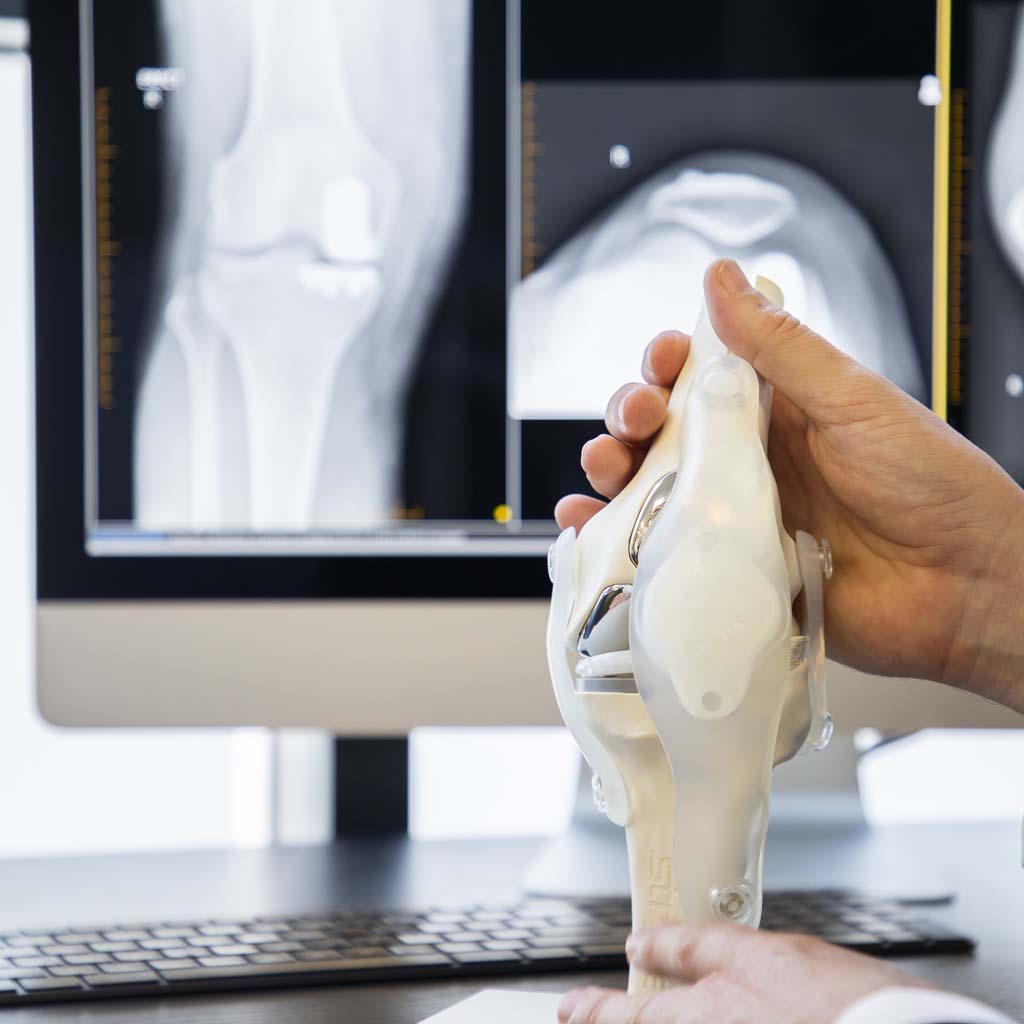
A knee that locks, buckles or throbs by evening has usually passed the point where rest and painkillers turn it around. What it needs depends on what is broken inside it, and two knees with the same pain can need completely different operations. That is why the first appointment is a diagnosis, not a surgery date. MTP Health keeps assessment, surgery and rehabilitation inside one Sydney team, so the people who work out what is wrong are the ones who fix it.
What Knee Surgery at MTP Health Involves
Not every knee operation is a replacement. Some rebuild a torn ligament so the joint stops giving way, some trim or repair cartilage that is catching, and some change the angle of the leg to take load off a worn patch and buy years before a replacement is needed. Matching the operation to the damage is why an accurate picture of the joint comes first.
Most of the smaller procedures are done through keyhole incisions, with a camera guiding the work and a recovery measured in weeks. Replacements and realignments are larger, open operations with a longer road back, but they solve problems keyhole surgery cannot reach. Which category you fall into is a reading of your scans and how the knee behaves when a surgeon tests it, not a preference.
A consultation goes through your history, your imaging and the way the knee moves and loads, then sets out the surgical and non-surgical options side by side so you can see what each one asks of you. What the first appointment looks like is set out on the orthopaedic first visit page.
The result of a knee operation is made as much in rehabilitation as in theatre, and because MTP Health runs its own physiotherapy and exercise physiology, your recovery is mapped before you go in, not arranged once you are already home.
Types of Knee Surgery Available
Knee procedures sort into five families, each defined by the structure it treats. Work out which family your problem sits in and the rest of the decision gets simpler:
Knee Replacement
Resurfaces a joint worn out by arthritis or injury, for pain and stiffness that limit walking, sleep or daily tasks:
Ligament Reconstruction
Rebuilds the ligaments that keep the knee stable when a tear lets it give way, most often after a sports or twisting injury:
Meniscus and Cartilage
Repairs or manages the cushioning and lining of the joint, for catching, locking or pain from one damaged area:
Knee Arthroscopy
Keyhole surgery in its own right, and often the vehicle for meniscus and cartilage work:
Realignment Surgery (Osteotomy)
Shifts the leg’s alignment to move load off a worn area, and can delay a replacement in younger, active people:
Who Knee Surgery Suits
Two questions come up with the knee more than with most joints, whether you are too young for a replacement and whether you can put one off. These points help you place yourself:
-
When Surgery Makes Sense
Surgery moves up the list when imaging confirms structural damage, the knee limits walking, work or sleep, and rehabilitation has been given a fair run without lasting change. Bone-on-bone arthritis, a ligament that keeps letting the knee slip, or a torn meniscus blocking the joint are the usual reasons it becomes the better call.
-
When Other Options Come First
Plenty of knees improve with loaded rehabilitation, weight and activity change and time. Where arthritis is early, a tear is small or the instability is mild, a program through exercise physiology or the structured knee and hip program may get you there without an operation.
-
When a Replacement Can Wait
A younger, active knee with wear on one side is often better served by realignment than by an early replacement, since an implant lasts a limited time and a second one is a harder operation. Where that applies, an osteotomy can buy years. Whether it fits your knee is judged on your alignment and the pattern of wear.
-
When It May Not Suit
Surgery may not suit where the knee is likely to settle with time and rehabilitation, where other health conditions raise the risk above the likely benefit, or where the months of rehabilitation afterwards cannot be committed to. These factors are weighed with you during assessment.
How the Process Runs
From first call to walking again, knee surgery through MTP Health follows a set sequence:
Consultation and Diagnosis
Your first appointment reviews your symptoms, examines the knee and works through your scans. Where the imaging is incomplete, further scans may be arranged before anything is decided. You leave with a diagnosis and a run-through of every reasonable option, surgical and non-surgical.
Surgery Preparation
Once surgery is agreed, preparation covers what to expect, how to get the knee and your general health ready, and what the early weeks involve. Building strength beforehand through prehabilitation before surgery often shortens the climb back.
Surgery and Recovery
The operation is done at one of the affiliated hospitals, as day surgery or a short stay depending on the procedure. Rehabilitation starts soon after and rebuilds movement, strength and trust in the joint. Guided post-operative rehabilitation runs over the weeks and months that follow, matched to the operation you had.
Plan Your Recovery
What to Expect on the Day of Surgery
Most knee procedures are done at an affiliated private hospital, with the detail confirmed for you beforehand:
Before the Operation
You are given a fasting time and an arrival time ahead of the day. On arrival, the surgeon and anaesthetist confirm the plan and answer any last questions. The leg is marked and prepared, and the anaesthetic is settled, whether a general, a spinal or both.
During and After
Keyhole procedures often take under an hour, while a replacement usually runs one to two hours, varying with what is found and treated. Afterwards, you are watched in recovery and given pain relief. Many keyhole cases go home the same day, while replacements and larger reconstructions may mean a stay of one or more nights.
First Days Home
You go home with instructions on wound care, how much weight to put through the leg and which movements to start, often with crutches or a brace. Pain and swelling are expected early and ease with the medication and measures provided. Your first rehabilitation session is usually booked before you leave. The final run-up is covered on the week before surgery page.

Weighing Up the Trade-offs
An honest read of both sides helps you decide with clear eyes:
What It Costs and What Affects the Price
Cost turns on the procedure, the hospital, the anaesthetist and your private health cover, so no single figure can be quoted upfront. At consultation, you are given an itemised estimate with the relevant item numbers, so you can check your rebate with Medicare and your insurer. Public options may be available on referral, though waiting times differ.
A few things move the total. Whether the operation is keyhole or open, how long you stay, the anaesthetic used and the implants that go into a replacement or reconstruction all shift the figure. Your level of cover sets how much of the hospital and surgical fee is met and what gap is left. Bringing your policy details to the consultation lets these be answered against your own situation.
Why Choose MTP Health for Knee Surgery
MTP Health puts physiotherapy, exercise physiology and orthopaedic surgery under one roof in Sydney, so the assessment, the operation and the recovery are run by one team instead of handed between separate providers. Each plan is built around the individual knee, with every step explained so you keep hold of your own recovery.

Dr Jonathan Negus
- Fellowship of the Royal Australasian College of Surgeons (FRACS) and Fellowship of the Australian Orthopaedic Association (FAOrthA).
- PhD and higher degrees from the University of Cambridge, Imperial College London and the University of Sydney.
- Primary and revision knee replacement, ligament and sports injury surgery, and osteotomy and realignment.
- Over 15 years of training, with research into recovery after knee replacement.

Dr Donald Cawthorne
- Fellowship of the Royal Australasian College of Surgeons (FRACS) and Fellowship of the Australian Orthopaedic Association (FAOrthA).
- Trained at the University of Sydney; Australian Orthopaedic Association accredited lower limb fellowship.
- Specialty training at Shriners Hospital in Portland, Oregon.
- Robotic and computer-assisted knee replacement and sports knee surgery.
Both use robotic and computer-assisted methods for robotic joint replacement where the procedure suits it. Consultations run from St Leonards on the North Shore and Beacon Hill, with orthopaedic consulting also in Gosford, Wahroonga, Castle Towers and Tamworth.
Walking Comfortably on Your Own Knee Again
A knee that gives way, locks or aches through every stair does not have to set the limit on what you do. The way back begins with a clear read of what is wrong, from an examination and your scans, and from there the plan is built around the operation your knee actually needs, or the rehabilitation that spares you one. Book a consultation to find out which path fits your knee.
Book Your AssessmentFrequently Asked Questions (FAQs)
How long does recovery from knee surgery take?
It depends on the procedure. A keyhole operation such as knee arthroscopy may allow light activity within a few weeks, while a replacement, ligament reconstruction or osteotomy usually involves several months of staged rehabilitation before you are back to full loading. Your surgeon gives you a timeline built around your operation and your starting point.
Am I too young for a knee replacement?
Age matters because an implant has a finite lifespan, so a replacement put in early may need revising later. For a younger, active person with wear on one side of the joint, a realignment such as an osteotomy can sometimes delay a replacement for years. Whether that suits you depends on your alignment and where the damage sits, which is assessed at consultation.
Will I be able to kneel and return to sport afterwards?
Many people return to demanding activity after knee surgery, though what is realistic depends on the procedure and the joint. Kneeling can stay uncomfortable for some after a replacement, while a well-rehabilitated ligament reconstruction often supports a return to sport. Your surgeon sets expectations for your specific operation.
How much will knee surgery cost me?
There is no single price, since it depends on the procedure, the hospital, the anaesthetist and your health cover. You receive an itemised estimate with item numbers at consultation, so you can confirm your rebate with Medicare and your insurer before deciding.
Do I need a referral to be seen?
A referral from a general practitioner (GP) or specialist is generally needed to see an orthopaedic surgeon and to claim a Medicare rebate. If you are not sure what you need, contact the clinic and the staff can talk you through it before you book.
What if surgery turns out not to be the answer?
Not every knee needs an operation. Where rehabilitation is likely to work, that is what is recommended, and the clinic’s exercise physiology and physiotherapy teams can deliver it. The consultation exists to find the right answer, which is sometimes to hold off surgery altogether.