
Rehab After Knee Replacement
Understand the stages of post-operative rehabilitation, from early movement and walking through to strength, everyday function and longer-term exercise.
What Is Rehabilitation After Knee Replacement?
Pain, swelling, stiffness and weakness are common concerns after knee replacement surgery. Even everyday tasks such as standing from a chair, walking to the bathroom or using stairs may feel difficult at first. It can also be hard to know how much activity is appropriate, whether your progress is on track and when an increase in symptoms needs medical attention.
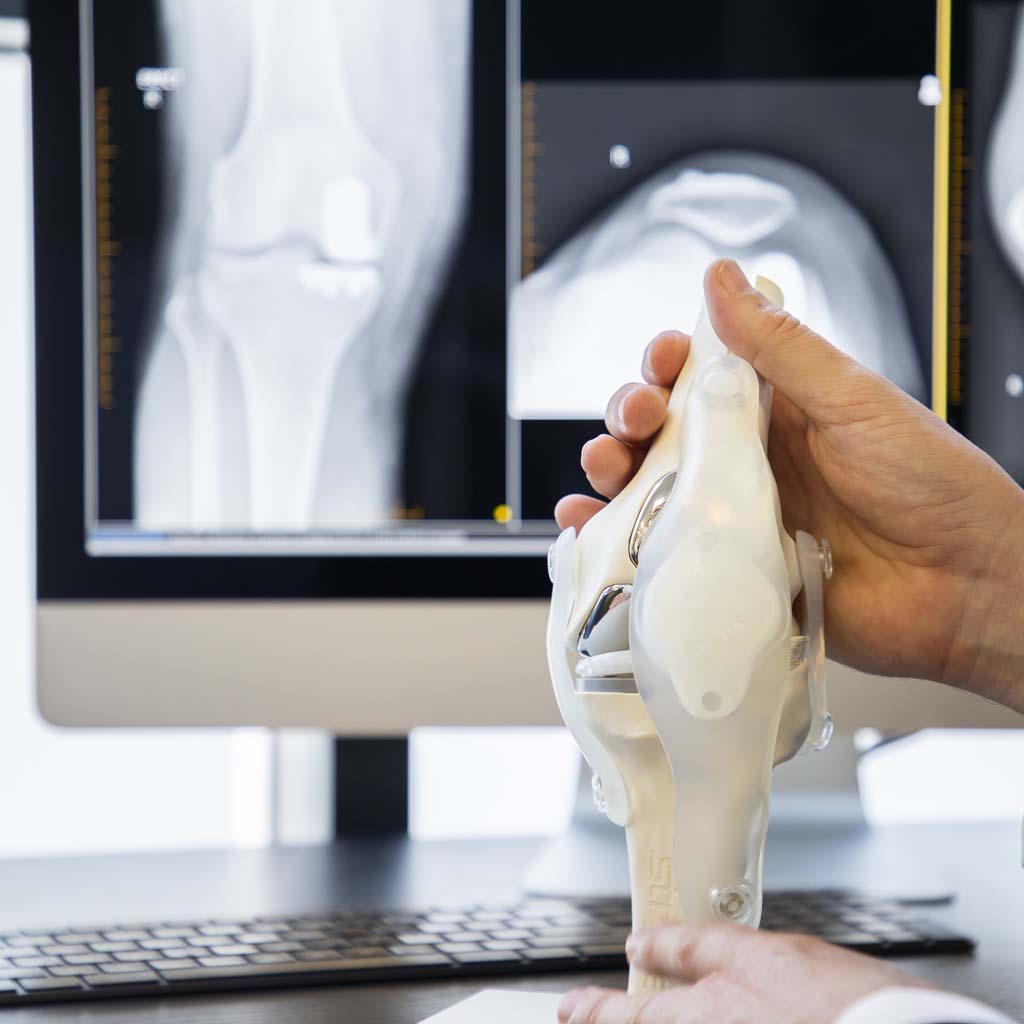
Rehab after knee replacement is a progressive process designed to restore movement, rebuild strength and help you return to everyday function safely. It usually begins in hospital and continues through home exercises, walking practice and supervised rehabilitation after discharge.
MTP Health provides post-operative rehabilitation services for patients who require individual assessment and support after orthopaedic surgery. This educational guide explains the usual stages and goals of knee replacement rehabilitation without replacing advice from your surgeon, hospital team or rehabilitation clinician. This may include post-operative physiotherapy care when pain, movement restrictions, weakness or walking difficulties require closer clinical assessment.
Recovery does not follow one fixed timeline. Progress depends on the operation performed, your health before surgery, pain and swelling, muscle strength, complications, participation in rehabilitation and the instructions provided by your treating team.
Rehabilitation after knee replacement is the structured process of restoring movement, strength, walking ability and independence after surgery. It may involve hospital-based physiotherapy, outpatient appointments, home exercises and later-stage strength or conditioning work.
A knee replacement removes damaged joint surfaces and replaces them with artificial components. Rehabilitation does not alter the implant or repeat the surgical procedure. Its purpose is to help the muscles, joints and movement patterns around the operated knee recover after surgery.
A post-operative rehabilitation program may address:
- pain, swelling and stiffness;
- difficulty bending or straightening the knee;
- reduced quadriceps activation;
- weakness in the hip, thigh and calf muscles;
- altered walking patterns;
- reduced balance or confidence;
- difficulty using stairs;
- difficulty sitting, standing or transferring;
- reduced tolerance for walking and daily activity; and
- return to work, recreation and independent exercise.
Rehabilitation is adjusted as healing progresses. Early exercises are generally different from those used during the later stages of recovery.

What Conditions Can Post-Operative Rehabilitation Support?
This page focuses primarily on rehab after knee replacement, although post-operative rehabilitation is also used after other orthopaedic procedures. Each operation has different precautions, healing requirements and functional goals.
Total Knee Replacement
Total knee replacement, also called total knee arthroplasty, replaces damaged surfaces across the knee joint. It is commonly performed for advanced arthritis when pain, stiffness and loss of function continue despite appropriate non-surgical care.
Rehabilitation may focus on knee extension and flexion, quadriceps control, walking, balance, stairs and progressive lower-limb strengthening.
Partial Knee Replacement
A partial knee replacement treats one affected compartment of the knee rather than replacing the entire joint. Rehabilitation goals may be similar to those used after total knee replacement, although the surgical approach and individual recovery can differ.
Other Joint Replacement Surgery
Post-operative rehabilitation may also be required after hip, shoulder or other joint replacement procedures. The principles of progressive movement and strengthening may be similar, but exercises and precautions must be matched to the joint involved.
Ligament, Arthroscopy and Other Orthopaedic Procedures
Patients may also complete rehabilitation after ligament reconstruction, arthroscopy, tendon repair, fracture surgery or another orthopaedic procedure. These operations can have specific restrictions that differ from knee replacement rehabilitation.
For example, return-to-sport testing after ACL reconstruction belongs within a procedure-specific ACL rehabilitation program rather than a general post-operative pathway.
When Might Post-Operative Rehabilitation Be Considered?
Rehabilitation is commonly considered after knee replacement when a patient needs guidance with movement, exercise and return to function. The amount of supervision required varies.
It may be particularly useful when:
- knee movement is limited after surgery;
- the quadriceps are difficult to activate;
- walking remains uneven or unsafe;
- a frame, crutches or walking stick is being used;
- pain or swelling is affecting exercise progression;
- stairs, transfers or daily tasks are difficult;
- the patient is unsure how to progress the hospital exercise program;
- recovery has slowed or symptoms have increased;
- other medical or musculoskeletal conditions affect mobility; or
- the patient wants support returning to work or recreation.
Some people require frequent supervision early in recovery. Others may progress with a smaller number of reviews and an individual home exercise program. The appropriate format depends on clinical need, safety, confidence and access to support.
Who May Be Suitable for Post-Operative Rehabilitation?
Most patients are encouraged to move and exercise after knee replacement, but rehabilitation should be appropriate for the individual and consistent with the surgeon's instructions.
Suitability and program design may be influenced by:
- the type of knee replacement performed;
- the surgical approach and any specific precautions;
- general health and medical conditions;
- pain, swelling and wound healing;
- knee movement and muscle activation;
- walking ability and falls risk;
- pre-operative strength and mobility;
- previous surgery or injury;
- other knee, hip, foot or spinal conditions;
- work and recreational goals;
- home environment and available support; and
- the patient's confidence completing exercises independently.
Age alone does not determine suitability. An older patient may participate in a modified program, while a younger and more active patient may still require careful progression because of pain, swelling or surgical restrictions.
When Surgery May Not Be the First Option
Knee replacement is generally considered after a patient has been assessed and when symptoms such as pain, stiffness and reduced function remain significant despite appropriate non-surgical care.
Before surgery, treatment may include physiotherapy, strengthening, activity modification, medication prescribed by a doctor, injections, weight management, walking aids or monitoring. These options may help some patients manage symptoms or delay an operation.
Once knee replacement has been performed, the purpose of rehabilitation changes. It is no longer conservative management of the original joint damage. It becomes a recovery process focused on restoring movement, strength and function after surgery.
Patients who have not yet decided whether to proceed with surgery may be better suited to a broader knee and hip rehabilitation program or a discussion with their orthopaedic surgeon.
How Is a Post-Operative Rehabilitation Program Performed?
Post-operative rehabilitation is not one single treatment. It is a staged process that may involve hospital care, outpatient physiotherapy, home exercise and later-stage conditioning.
Before Surgery
Some patients complete prehab before surgery to improve strength, mobility and confidence before the operation. Prehab may also help patients understand the types of exercises and functional tasks that are likely to be important after surgery.
This page does not cover pre-operative preparation in detail because rehabilitation after surgery has different goals and precautions.
During Surgery
During knee replacement surgery, damaged joint surfaces are replaced with artificial components. The specific operative technique, implant choice and anaesthetic plan are determined by the surgical and hospital teams.
Detailed information about the operation itself should come from the treating surgeon. The rehabilitation program begins after surgery and is guided by the procedure performed and any individual precautions.
Immediately After Surgery
Early care usually includes medical monitoring, pain management, initial movement and planning for discharge. A hospital physiotherapist may help the patient stand, walk with an appropriate aid and begin simple exercises.
The hospital team may also review stairs, transfers and equipment needs before discharge. Patients should follow the written instructions provided by the hospital and surgeon.
After Discharge
After discharge, rehabilitation may continue at home, through outpatient appointments or in another setting when clinically required.
The program is usually progressed according to:
- pain and swelling;
- wound and medical status;
- knee movement;
- muscle activation and strength;
- walking quality;
- balance and safety;
- functional ability; and
- surgeon guidance.
What Happens at a Post-Operative Assessment?
A post-operative assessment establishes the patient's current stage of recovery and identifies the next appropriate priorities.

Reviewing the Operation and Surgeon Instructions
The clinician may review the operation performed, the surgical date, discharge information and any precautions provided by the surgeon or hospital.
Relevant medical history and medication may also be discussed, although medication changes and dosing advice remain the responsibility of the prescribing medical professional.
Reviewing Pain, Swelling and Wound Context
Pain and swelling can affect movement, muscle activation and walking. The clinician may ask how symptoms change through the day and how the knee responds to walking or exercise.
A rehabilitation clinician does not replace the surgeon or wound care team. Unexpected wound changes, increasing redness, discharge, fever or rapidly worsening pain require appropriate medical review.
Assessing Knee Movement
Both bending and straightening are considered during knee replacement rehabilitation.
Knee flexion is needed for sitting, stairs and many everyday tasks. Knee extension, or the ability to straighten the knee, is important for standing and walking efficiently.
Movement should not be judged against a universal target without considering the individual operation, symptoms and surgeon guidance.
Assessing Muscle Activation and Strength
The quadriceps can become difficult to activate after surgery because of pain, swelling and reduced use. This weakness may affect knee control, walking, stairs and confidence.
The clinician may also review hip, hamstring, calf and general lower-limb strength.
Reviewing Walking and Functional Tasks
The assessment may include:
- walking with the current aid;
- weight transfer through the operated leg;
- step length and walking rhythm;
- balance;
- sitting and standing;
- getting in and out of bed;
- stairs; and
- tasks relevant to home or work.
These elements may form part of physiotherapy after knee replacement, particularly when pain, movement restrictions or walking difficulties require individual assessment.
Setting Recovery Goals
Goals should be meaningful to the patient. Early goals may involve walking safely around the home or getting in and out of a chair. Later goals may involve returning to work, shopping, gardening, cycling or another valued activity.
Benefits and Goals of Rehab After Knee Replacement
The intended goals of post-operative rehabilitation may include:
- restoring knee bending and straightening where possible;
- improving quadriceps and lower-limb strength;
- supporting safer and more efficient walking;
- improving balance and confidence;
- progressing from walking aids when appropriate;
- improving transfers and stair use;
- building tolerance for daily activities;
- reducing deconditioning after surgery;
- supporting a return to work or recreation; and
- developing a sustainable longer-term exercise routine.
These are treatment goals rather than guaranteed outcomes. Rehabilitation cannot guarantee a particular range of movement, pain level, return-to-work date or recovery time.
The Stages of Rehab After Knee Replacement
Knee replacement recovery is better understood as a series of stages than as a rigid week-by-week schedule. Patients may move through these stages at different rates.
Early Recovery and Safe Mobility
The early stage generally focuses on safe movement, basic knee exercises, walking with an appropriate aid and managing activity around pain and swelling.
Priorities may include:
- standing and walking safely;
- getting in and out of bed or a chair;
- beginning knee bending and straightening exercises;
- activating the quadriceps;
- using a frame or crutches correctly;
- practising essential stairs where required; and
- following hospital and surgeon instructions.
Restoring Movement and Muscle Control
As the patient becomes more mobile, rehabilitation may place greater emphasis on knee extension, flexion, quadriceps control and walking technique.
The aim is not to force the knee through severe pain. Exercise should be progressed in a way that encourages movement while monitoring the response afterwards.
Building Strength and Walking Capacity
Resistance exercise may gradually become more important as healing progresses. Strengthening commonly addresses the quadriceps, gluteal muscles, hamstrings and calf muscles.
Walking may progress through longer distances, more varied environments and reduced reliance on a walking aid when safety and walking quality allow.
Returning to Everyday Activities
Functional rehabilitation may focus on:
- stairs;
- household activities;
- community walking;
- shopping;
- public transport;
- work-related tasks;
- gardening; and
- appropriate recreational exercise.
Ongoing Strength and Conditioning
Some patients benefit from continuing strength and cardiovascular exercise after routine rehabilitation has finished. This may support general health, confidence and longer-term physical capacity.
Exercise physiology after surgery may be considered when a patient needs progressive conditioning, assistance managing chronic health conditions or support establishing a sustainable exercise routine.
Exercises Commonly Used After Knee Replacement
Exercise selection varies according to recovery stage and individual assessment. A list found online should not replace instructions from the treating team.
Knee Extension Exercises
Exercises that encourage knee straightening may be used because a persistent bent-knee position can affect standing and walking.
The appropriate technique depends on pain, swelling and the surgeon's instructions. The knee should not be forced aggressively.
Knee Flexion Exercises
Knee bending may be practised to support sitting, transfers, stairs and other daily activities. Progress can vary, and swelling commonly affects how easily the knee bends.
Quadriceps Activation
Early quadriceps exercises may help the patient regain control of the thigh muscles. As activation improves, the program may progress towards stronger functional exercises.
Hip and Lower-Limb Strengthening
Hip, hamstring and calf strength contribute to balance, walking and stair use. Rehabilitation should address the whole lower limb rather than focusing only on the knee joint.
Walking and Gait Exercises
Walking practice may focus on:
- safe weight transfer;
- step length;
- knee control;
- walking rhythm;
- turning; and
- use of an appropriate aid.
Balance and Functional Exercises
Balance and functional exercises may include supported standing, stepping, sit-to-stand practice and stair-related tasks.
Cardiovascular Exercise
Walking, stationary cycling or another low-impact activity may be introduced when appropriate. Suitability depends on knee movement, wound status, medical health and professional guidance.
Managing Pain, Swelling and Stiffness During Rehabilitation
Pain, swelling and stiffness are common after knee replacement. Their severity and duration vary between patients.
Expected Responses to Exercise
Some temporary soreness or fatigue may occur after rehabilitation. A small increase in symptoms that settles may be different from pain that continues to worsen or significantly reduces function.
The rehabilitation clinician may adjust exercise resistance, range, duration or frequency according to the response.
Pacing Activity and Rest
Doing too much activity at once may aggravate swelling and fatigue. Doing too little may contribute to stiffness, weakness and loss of confidence.
Pacing involves balancing exercise, walking, daily tasks and rest rather than trying to complete all activity in one session.
When Symptoms Need Reassessment
Symptoms should be reviewed when:
- pain is increasing rather than gradually settling;
- swelling has changed substantially;
- movement or walking suddenly worsens;
- the patient cannot complete previously manageable exercises;
- there has been a fall or new injury; or
- there are wound, infection or blood clot concerns.
Walking Aids, Stairs and Daily Movement
Using a Frame, Crutches or Walking Stick
A walking aid can improve safety and reduce the tendency to limp during early recovery. The type of aid used depends on the patient's balance, strength and hospital instructions.
When a Walking Aid May Be Reduced
Progression should not be based on a fixed date alone. It may be appropriate to reduce support when the patient can walk safely, control the operated leg and maintain a reasonable walking pattern.
Stopping an aid too early may lead to limping, poor confidence or increased falls risk. Continued reliance on an aid may also warrant assessment if progress has slowed.
Practising Stairs
Stair technique may initially follow a protective pattern taught in hospital. Progression depends on knee movement, strength, balance, pain and confidence.
Sitting, Standing and Transfers
Chair height, arm supports and the home environment can influence how difficult transfers feel. Functional exercises may be used to improve control and independence.
Risks and Considerations
Rehabilitation is intended to support recovery, but exercises can cause soreness, fatigue or temporary symptom flare-ups. The program should be modified when the response is excessive or when medical concerns arise.
Considerations may include:
- pain and swelling limiting exercise;
- reduced balance or falls risk;
- difficulty activating the quadriceps;
- restricted knee movement;
- medical conditions affecting exercise tolerance;
- other joint or spinal problems;
- wound or infection concerns;
- possible blood clot symptoms;
- fear of movement;
- fatigue and poor sleep; and
- difficulty completing the home program.
A rehabilitation program should not override the surgeon's precautions or delay medical assessment when symptoms are concerning.
Seek prompt medical assessment for concerning symptoms. Wound changes, fever, marked calf pain or swelling, chest pain, sudden shortness of breath, a significant fall or an abrupt loss of function should not be managed as routine exercise concerns.
Warning Signs After Knee Replacement
Some concerns require contact with the surgeon, GP, hospital or emergency services rather than routine exercise advice.
Wound or Infection Concerns
Increasing redness, warmth, wound discharge, fever, feeling unwell or rapidly worsening pain should be assessed promptly by the appropriate medical team.
Possible Blood Clot Symptoms
Marked calf pain, unusual calf swelling or tenderness may require urgent medical review. Chest pain, sudden shortness of breath, coughing blood, fainting or severe breathing difficulty require urgent emergency assessment.
Sudden Loss of Function or New Symptoms
Sudden inability to bear weight, a significant fall, new numbness or weakness, or an abrupt decline in knee function should be assessed.
This list is not exhaustive. Patients should follow the discharge instructions provided by their surgeon and hospital.
Recovery and Rehabilitation Expectations
Recovery after knee replacement is influenced by many factors. Two patients who have the same operation may progress differently.
Factors may include:
- age and general health;
- strength and function before surgery;
- the severity and duration of symptoms before surgery;
- the operation performed;
- pain and swelling;
- wound healing;
- other medical conditions;
- other joint or spinal problems;
- complications;
- sleep and fatigue;
- confidence and fear of movement;
- home support; and
- participation in rehabilitation.
Movement, strength and function may not improve at the same rate. A patient may walk further while still experiencing stiffness, or gain movement before regaining full strength.
Temporary setbacks can occur. When progress stops or symptoms worsen, the program may need to be reassessed rather than simply made more difficult.
Returning to Work, Driving and Activity
Returning to Work
Return to work depends on the physical and cognitive demands of the role, transport, pain, fatigue and the ability to sit, stand or walk safely.
A desk-based role may have different requirements from work involving lifting, climbing, kneeling or prolonged standing. A fixed return date cannot be applied to every patient.
Returning to Driving
Driving may depend on the operated side, pain medication, knee movement, strength, reaction time, ability to perform an emergency stop, insurer requirements and medical clearance.
Patients should follow advice from their surgeon and relevant licensing or insurance requirements rather than relying on a general timeline.
Walking, Cycling and Swimming
Walking is commonly progressed throughout rehabilitation. Stationary cycling or swimming may be considered when movement, wound healing and medical advice permit.
Higher-Impact Activity and Sport
Return to golf, hiking or other recreational activity depends on strength, balance and surgeon guidance. Running and high-impact sport may not be appropriate for every person after knee replacement.
How Knee Replacement Rehab Compares With Other Options
Home-Based Rehabilitation
Some patients can complete much of their rehabilitation at home with an individual exercise program and periodic reviews. This requires confidence, safety and an appropriate level of support.
Outpatient Physiotherapy
Outpatient physiotherapy may be useful when movement, walking, pain or exercise progression requires closer assessment.
Structured Rehabilitation Programs
A structured program may combine professional review, supervised exercise and home practice. MTP Health's commercial program options and delivery formats are explained separately through the relevant service and program pages.
Inpatient Rehabilitation
Some patients may require inpatient rehabilitation because of medical complexity, mobility limitations or insufficient support at home. Suitability is determined by the hospital and treating team.
Later-Stage Strength Programs
When the immediate post-operative phase has passed, some patients may transition into broader orthopaedic rehabilitation programs or longer-term strength and conditioning.
Questions to Ask Your Surgeon or Rehabilitation Clinician
- Are there any specific precautions after my operation?
- When should outpatient rehabilitation begin?
- What should I bring to my first appointment?
- How will my knee movement and strength be assessed?
- How much walking is appropriate at my current stage?
- When should I reduce the use of my walking aid?
- Which symptoms are expected after exercise?
- What should I do if swelling or pain increases?
- How will my exercises be progressed?
- When should I contact my surgeon rather than my physiotherapist?
- What factors will determine my return to work or driving?
- What form of ongoing exercise may be suitable after rehabilitation?
Take the Next Step
Rehab after knee replacement is a staged process that begins with safe movement and progresses towards strength, walking capacity and everyday function. The appropriate pace varies, and exercise should be guided by symptoms, medical status, functional progress and the surgeon's instructions.
A post-operative assessment may be helpful when pain, swelling, stiffness, weakness or walking difficulties are affecting recovery, or when you are unsure how to progress your exercise program.
Routine rehabilitation concerns can be discussed with a qualified health professional. Wound changes, symptoms of a possible blood clot, sudden loss of function or significant medical symptoms require prompt medical assessment.
Frequently Asked Questions
How long does rehab take after knee replacement?
There is no single rehabilitation duration that applies to everyone. Recovery depends on the operation, pre-operative function, health, pain, swelling, complications and rehabilitation progress. Some goals may be achieved relatively early, while strength and endurance can continue improving over a longer period.
How soon should physiotherapy start after knee replacement?
Early movement and basic exercises often begin in hospital. The timing of outpatient physiotherapy depends on discharge instructions, surgeon guidance and individual need. Patients should follow the plan provided by their hospital and treating team.
How much walking should I do after knee replacement?
Walking is usually progressed gradually. The appropriate amount depends on balance, pain, swelling, fatigue, walking quality and the use of an aid. Several manageable walks may be more appropriate than one long walk that causes a substantial symptom flare.
Why is my knee still swollen or stiff?
Swelling and stiffness can continue during recovery and may fluctuate with activity. They should generally be monitored over time. Increasing swelling, wound changes, fever, calf symptoms or a sudden decline in function require medical review.
Is pain during rehabilitation normal?
Some discomfort or muscle soreness may occur during rehabilitation. Severe pain, pain that continues to worsen or pain associated with new swelling, wound changes or loss of function should be assessed rather than treated as a routine exercise response.
When can I stop using a walking aid?
A walking aid may be reduced when you can walk safely with adequate balance, leg control and walking quality. The decision should not be based only on how many days or weeks have passed.
Can I complete rehabilitation at home?
Some patients can complete much of their rehabilitation at home with an appropriate exercise plan and periodic review. Others require more supervision because of movement restrictions, weakness, balance concerns, medical conditions or difficulty progressing exercises independently.
This information is general and does not replace personalised advice from your orthopaedic surgeon, physiotherapist, exercise physiologist, GP, hospital or other treating health professional.
Post-operative rehabilitation assessments across Sydney
North Shore Health Hub, Level 4, Suite 401, 7 Westbourne St, St Leonards NSW 2065
St Leonards consulting →173 Warringah Road, Beacon Hill NSW 2100 — serving the Northern Beaches
Beacon Hill consulting →Also consulting at Gosford, Wahroonga, Castle Towers and Tamworth.
Support your recovery with an individual rehabilitation assessment
Book an assessment to review your operation, current movement, strength and walking, and the next stage of your post-operative rehabilitation.
Book an AssessmentPrefer to talk? Call (02) 9437 9794 · GP & physio referrals: referrer information