
Hip Resurfacing in Sydney
Hip resurfacing preserves more of your own bone than a total hip replacement, making it worth considering for younger, active patients with hip arthritis. Learn how it works, who it suits and what recovery involves.
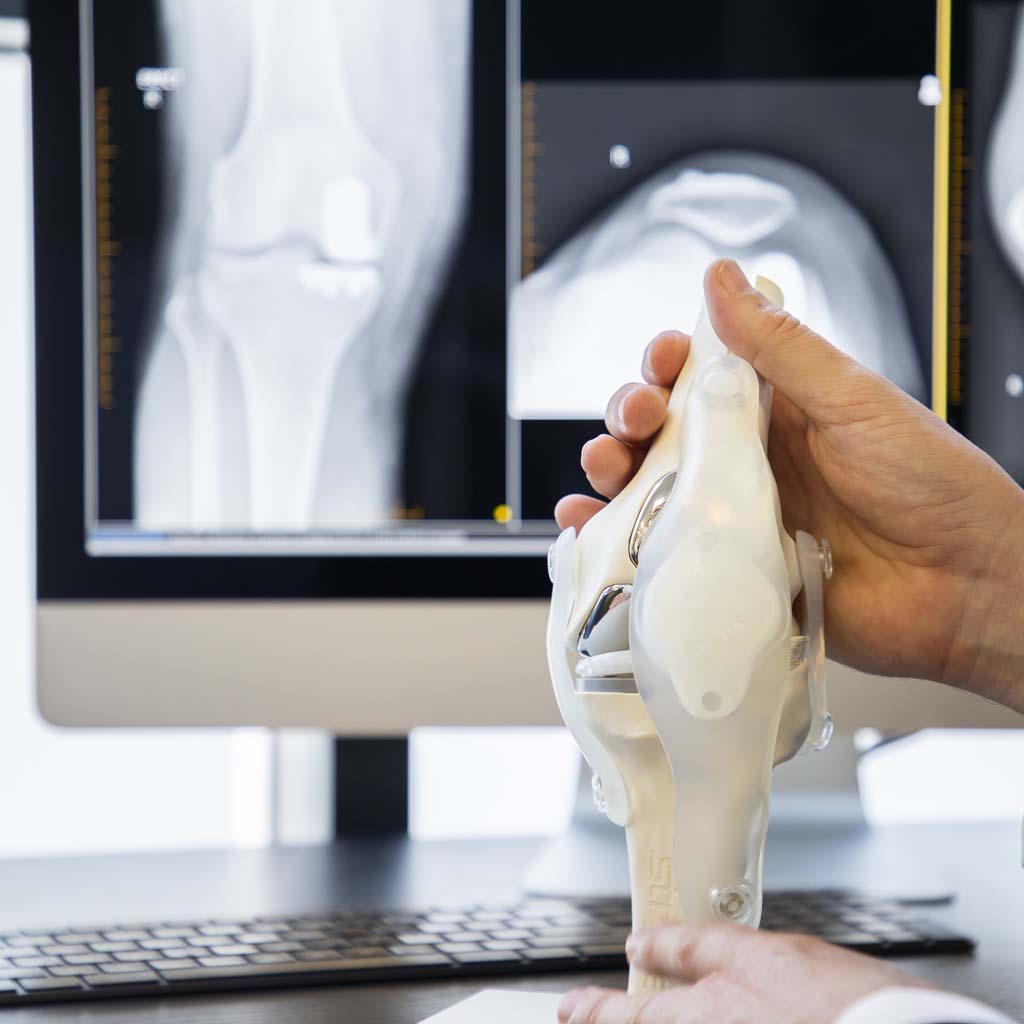
What is hip resurfacing?
Hip resurfacing is an alternative to total hip replacement for selected patients with hip arthritis. Both procedures replace the damaged socket, but they treat the ball of the hip differently.
In a total hip replacement, the femoral head, or ball, is removed and replaced with a prosthetic ball attached to a stem that sits inside the thigh bone. In hip resurfacing, the femoral head is reshaped and covered with a smooth cap, preserving more of your own femoral bone.
Because less bone is removed from the femur, hip resurfacing may be useful for some younger, active patients with strong bone who may want to keep more options open if revision surgery is ever needed later in life.

Do you need hip resurfacing?
Hip resurfacing is not suitable for most people with hip arthritis. It is a selective operation, and careful patient selection is the most important part of getting a safe and durable result.
It is most commonly considered for younger, active patients with osteoarthritis, strong bone quality, good femoral head structure and a larger femoral head size. Historically, the best results have been seen in carefully selected men. Women and patients with smaller bones, poorer bone quality, inflammatory arthritis, kidney disease, metal sensitivity or complex hip anatomy need especially careful assessment.
Not every active patient is suitable. Hip resurfacing can be attractive because it preserves femoral bone and may allow a more natural-feeling hip, but it is not simply a “sportier” hip replacement. Your surgeon needs to assess whether the benefits are likely to outweigh the specific risks in your case.
At your consultation, your surgeon will take a detailed history, examine your hip and review imaging. X-rays are usually required, and CT planning or functional imaging may be used where more detailed planning is needed. The decision depends on your symptoms, arthritis pattern, bone strength, anatomy, activity goals and the safest implant option for you.
What is hip osteoarthritis?
The hip joint is made up of the ball, called the femoral head, and the socket, called the acetabulum. These are normally covered in smooth joint cartilage, which cushions the joint and helps it glide freely.
Hip osteoarthritis means this cartilage has worn away. When bone begins rubbing on bone, the hip can become painful, stiff and difficult to use. This can affect walking, stairs, sleep, work, sport and everyday activity.
If you are not ready for surgery, or if surgery is not the right option, non-surgical care may still help. You can learn more about hip osteoarthritis and the treatment options available before considering surgery.
Benefits and risks
What you can expect it to achieve
- Relief from pain caused by advanced hip arthritis
- Improved walking, mobility and day-to-day function
- Preservation of more femoral bone compared with total hip replacement
- A larger femoral head size, which may reduce dislocation risk in suitable cases
- A hip that may feel more natural for some younger active patients
- Potentially easier conversion to total hip replacement if revision is required later
- Possible return to higher activity levels in carefully selected patients, after appropriate rehabilitation
Risks to understand
- Common and temporary: bruising, swelling, stiffness, fatigue and discomfort in the early recovery period
- Uncommon: infection, blood clots, wound problems, nerve or blood vessel injury, fracture and ongoing pain
- Specific to resurfacing: femoral neck fracture, loosening, wear, metal ion problems with metal-on-metal implants and the need for ongoing monitoring in some patients
- Revision risk: if the implant fails or symptoms persist, revision to a total hip replacement may be required
- Anaesthetic and medical risks: allergic reaction, heart or lung complications, stroke and other rare serious complications
Australian registry data continues to show that hip resurfacing outcomes depend heavily on patient selection, sex, head size, implant type and surgeon experience. The AOANJRR reports that women have had higher revision rates than men after resurfacing, while larger head sizes are associated with lower revision rates.
Hip resurfacing vs total hip replacement
The main difference is what happens to the femoral head. In a total hip replacement, the ball is removed and replaced with a stemmed implant. In hip resurfacing, the ball is shaped and capped, so more of your own femoral bone is preserved.
Hip resurfacing may suit some younger active patients, but total hip replacement remains the better option for most people with hip arthritis. Total hip replacement has a very strong track record, broader suitability and more implant options.

| Hip resurfacing | Total hip replacement |
|---|---|
| The femoral head is reshaped and capped | The femoral head is removed and replaced with a prosthetic ball and stem |
| Preserves more femoral bone | Removes more femoral bone but is suitable for many more patients |
| Usually considered for younger, active patients with strong bone | Suitable for a wider age range and broader arthritis patterns |
| May allow more natural movement in selected patients | Reliable pain relief and function improvement for most patients |
| May require monitoring for metal ions if a metal-on-metal implant is used | Modern bearings may include ceramic, polyethylene or other combinations |
| Performed by fewer surgeons because indications are narrow | Commonly performed by hip replacement surgeons |
Resurfacing is about suitability, not just age or activity. The best results are seen when the operation, implant and patient match well. If resurfacing is not right for you, a carefully planned total hip replacement may be the safer and more durable option.
Metal-on-metal and ceramic hip resurfacing
Traditional hip resurfacing has often used metal-on-metal bearings. These can perform well in selected patients, particularly men with larger femoral head sizes, but they can also create metal wear particles and raised metal ion levels in some cases.
This is one reason hip resurfacing became much more selective over time, especially in women and patients with smaller femoral head sizes. Some patients with metal-on-metal resurfacing may need blood tests, imaging or ongoing surveillance if symptoms develop or if metal ion levels are a concern.
Newer ceramic hip resurfacing designs are being developed and introduced to address some concerns related to metal-on-metal bearings. Early data is promising, but long-term evidence is still developing. Your surgeon will discuss whether any resurfacing implant is appropriate for you and what evidence supports its use in your situation.
Preparing for hip resurfacing
Hip resurfacing is rarely urgent, and results are generally better with proper preparation. At MTP Health, preparation is taken seriously because your strength, general health, home setup and expectations all affect your recovery.
We generally aim to prepare you over a minimum period of four to six weeks where possible. This gives time to improve your strength and range of motion, check that you are medically safe for surgery, and help you understand what recovery will involve.
Your preparation may include
- Planning imaging, which may include a CT scan and functional X-rays
- Routine blood tests
- MRSA swabs
- Medication review, especially blood thinners, diabetes and blood pressure medications
- Anaesthetic review
- Cardiology or physician review if needed
- Pre-operative physiotherapy and exercise physiology
- Planning around work, stairs, transport, family events and home support
Our physiotherapists and exercise specialists will assess your current level of function and build a personal program to help you start recovering as soon as you wake from the anaesthetic. This may include hip strength, range of motion, walking tolerance, balance, stair practice and education about your hospital stay.
What happens before hip resurfacing surgery?
Before surgery, we need to know about all medications you take, including prescription medicines, over-the-counter medicines, supplements and blood thinners. Some medications may need to be stopped or adjusted before surgery, but this should only be done with medical guidance.
If you smoke, stopping for as long as possible before surgery is strongly recommended. Smoking can increase wound, anaesthetic and healing risks. It is also important to keep the skin around the hip free from cuts, scratches or sores in the weeks before surgery, as these can increase infection risk and may delay the operation.
The hospital will contact you before surgery to confirm your admission time and fasting instructions. If you are on a morning list, you may be asked to stop food from midnight and stop clear fluids in the early morning or two hours before the list starts, whichever comes first. Afternoon lists may have a later clear-fluid cut-off. Always follow the exact instructions from your hospital and anaesthetic team.
Acceptable clear fluids usually include water, clear apple juice without pulp and clear sports drinks. Milk and cloudy juices are usually not considered clear fluids.
The procedure: what happens
You will usually arrive at hospital one to two hours before your operation. A nurse will prepare the hip area, and you will meet the anaesthetic team. Before the anaesthetic, your surgeon will confirm your identity, the correct joint and the correct side, then mark the hip. This safety check is an important part of preventing wrong-side surgery.
The most common anaesthetic for hip resurfacing is a spinal block with a light general anaesthetic, meaning you are asleep and comfortable during the procedure. The surgical team also performs a formal time-out check to confirm your name, imaging, consent form and marked side all match.
Hip resurfacing is usually performed through an incision around the hip that allows the surgeon to safely expose the joint. The damaged socket is prepared and fitted with a new cup. The femoral head is then carefully shaped, and a smooth resurfacing cap is placed over the prepared bone.
The hip is checked for movement, stability and leg length. At the end of the procedure, local anaesthetic is injected around the wound, the incision is closed with dissolvable sutures and skin glue, and a waterproof dressing is applied.
The operation usually takes around 90 minutes to two hours, with extra time before and after for anaesthesia, preparation and recovery. For relatives or partners waiting, it can be three to five hours from leaving the admissions area to returning to the ward.
What should I expect immediately after surgery?
After the operation, you will wake in the recovery room, where nurses monitor your pain, blood pressure, circulation and general comfort. Once you are stable, you will return to the ward and begin your post-surgical recovery.
The resurfaced hip is usually strong enough to walk on straight away. The team will aim to have you standing and walking within hours of waking up. If you feel light-headed or nauseated, you may start by standing or marching on the spot before progressing further.
Walking
You will normally be encouraged to put full weight through the operated leg as tolerated, unless your surgeon gives you different instructions. A physiotherapist will help you use a frame or crutches safely and progress this as your balance and strength improve.
Dressings and wound care
You will have a waterproof dressing that should usually remain in place until your wound check at 10 to 14 days. A small amount of dried ooze in the first 24 to 48 hours can be normal. You can shower with the dressing, but avoid baths, pools, ocean swimming and hydrotherapy until the wound is healed and watertight.
Length of stay
Some suitable patients can go home on the day of surgery. More commonly, patients stay overnight and sometimes a second night. Your discharge depends on pain control, walking safety, stairs, medical stability, wound status and home support.
Surgeon follow-up
Your first post-operative visit is usually at around two weeks. This appointment is important for checking wound healing, assessing your new hip and answering questions. Further follow-up may include appointments at six weeks with X-ray, 12 weeks, six months, one year and then ongoing review as recommended.
When to seek help. Contact us or seek urgent care if you develop fever, increasing wound redness, discharge, worsening calf pain or swelling, shortness of breath, chest pain, sudden severe pain, new weakness or pain that is not controlled by medication. Concerned about your recovery? Call (02) 9437 9794.
Hip resurfacing recovery and rehabilitation
Your recovery starts as soon as you wake from the anaesthetic. Early exercises usually include calf pumps to encourage blood flow and thigh muscle contractions to begin waking the leg muscles up again.
The physiotherapist will help you get out of bed, sit in a chair, stand and walk. You may start with a frame and progress quickly to crutches or sticks. Your goal is to become safe walking, managing stairs if needed, and completing the basic exercises required for discharge.
The total recovery from hip resurfacing takes at least 12 months. Many patients walk without sticks by four to six weeks, but strength, balance, endurance and confidence continue improving for many months.
Recovery timeline
| Phase | Timeframe | What to expect |
|---|---|---|
| Wake up & mobilise | Day 0–1 | Standing, walking with assistance, calf pumps, early exercises and pain control |
| Early home recovery | Weeks 0–2 | Wound care, walking practice, swelling control, basic strengthening and safe daily routines |
| Early independence | Weeks 2–6 | Reducing walking aids, improving confidence, building strength and returning to light daily activities |
| Strength & control | Weeks 6–12 | Progressive strengthening, balance work, longer walks, cycling and return to many normal routines |
| Return to activity | Months 3–6 | Gradual return to low-impact sport and more demanding activity, guided by your recovery |
| Higher-demand activity | Months 6–12+ | Progression towards higher-load activity only if strength, control and imaging are satisfactory |
Timeframes are a guide. Your surgeon and rehabilitation team will progress you based on your hip, your health, your implant, your goals and your recovery.
Rehabilitation at MTP Health
This is where MTP Health is different. Your rehabilitation is delivered by our own physiotherapists and exercise specialists, working in the same clinic as your surgeon. Your plan can begin before surgery and continue seamlessly afterwards, with everyone working from the same goals and shared clinical record.
Your rehabilitation may include pre-operative rehabilitation, post-operative rehabilitation, physiotherapy and exercise physiology, depending on your needs.
Inpatient rehabilitation
Most patients do not need inpatient rehabilitation after hip resurfacing. It can be useful for people who live alone, have many stairs, need extra medical supervision or do not have enough support at home. We will discuss your home setup and recovery options during your preparation sessions.
Returning to driving, work and sport
Return to driving, work and sport depends on your comfort, strength, medication use, confidence, transport needs and the demands of your activity. You should always follow your surgeon’s advice and check with your insurer before driving.
Returning to driving
You should not drive until you can safely perform an emergency stop and are no longer taking strong painkillers. As a general guide, many patients wait at least four weeks after a left hip resurfacing and around six weeks after a right hip resurfacing, but this varies between people.
Returning to work
Desk-based work can often be restarted once you are comfortable, mobile enough and no longer taking strong pain medication. Sitting for long periods may still be uncomfortable early on, so a staged return and regular movement breaks are often helpful.
More physical jobs usually take longer. Climbing ladders, carrying heavy loads and high-risk manual work are generally avoided for around 12 weeks, unless your surgeon and rehabilitation team advise otherwise.
Returning to sport
Return to sport is gradual and should be guided by your pain, strength, balance and physiotherapy progress. Swimming can usually restart once the wound is fully healed and watertight, often from around three weeks, but this should be confirmed at your wound review.
Activities such as golf, bushwalking, cycling and gym-based strengthening are introduced progressively. One of the reasons hip resurfacing may be discussed with younger active patients is the potential to return to more demanding activity. However, high-impact activity should not be rushed and must be discussed with your surgeon, especially in the first six to 12 months.
Rehab is half the result. Hip resurfacing can preserve bone and may suit some active patients, but your outcome still depends on careful selection, good surgery, early movement, progressive strength work and sensible return-to-activity planning.
Hip resurfacing cost in Sydney
The cost of hip resurfacing depends on your private health cover, hospital insurance, surgeon fees, anaesthetist fees, assistant fees, hospital charges, implant costs and any excess on your policy.
If you are having surgery using private health cover, your out-of-pocket costs depend on your insurer, level of cover and whether reduced-gap arrangements apply. The anaesthetist is an independent practitioner and may charge a separate gap, so we provide their details and recommend checking their quote before surgery.
The surgeons at MTP Health participate in various reduced-gap schemes run by different health insurance providers. Availability can vary, and reduced-gap surgical time slots may involve a longer wait. Your insurer may also charge an excess depending on your policy.
If surgery is performed through the public system, there is no out-of-pocket surgical cost, but waiting times can be long and depend on hospital access, urgency category and local availability.
Why have your hip resurfacing at MTP Health
MTP Health brings together fellowship-trained orthopaedic surgeons, careful surgical planning, physiotherapy and exercise physiology in one clinic. That matters because hip resurfacing is not just about choosing a bone-preserving implant — it is about selecting the right patient, preparing properly and rehabilitating well afterwards.
Honest advice comes first. If your hip is better suited to non-surgical care, we will tell you. If total hip replacement is the safer or more durable option, we will explain why. If hip resurfacing is suitable, we will help you understand the procedure, recovery, risks, implant considerations and expected outcome clearly before you decide.
Your surgeon

Dr Jonathan Negus
Dr Negus is a fellowship-trained hip and knee surgeon with a particular focus on joint replacement. He works alongside MTP Health's physiotherapy and exercise physiology team so your surgery and rehabilitation are managed as one plan.
View full profile →Frequently asked questions
What is hip resurfacing?
Hip resurfacing is an alternative to total hip replacement for selected patients. Both procedures involve replacing the damaged socket. The difference is what happens to the ball of the hip.
In a total hip replacement, the femoral head is removed and replaced with a prosthetic ball attached to a stem that sits inside the thigh bone. In hip resurfacing, the femoral head is shaped and covered with a smooth cap instead.
The advantages of hip resurfacing may include a lower risk of dislocation, more natural movement for some patients and easier conversion to total hip replacement later if revision is needed, because less femoral bone is removed.
Hip resurfacing is only suitable for a small group of patients, usually younger active patients with strong and healthy bone. Metal-on-metal resurfacing has historically performed best in carefully selected men, while women and smaller-boned patients need especially careful assessment because of higher failure rates and metal ion concerns.
What is hip osteoarthritis?
The hip joint is made up of the ball, called the femoral head, and the socket, called the acetabulum. Both are normally covered in smooth cartilage, which cushions the joint and allows it to glide freely.
Osteoarthritis means this cartilage has worn away. When bone rubs on bone, the hip can become painful and stiff, which can limit walking, stairs, sleep, sport and daily activities.
You can learn more about symptoms, diagnosis and non-surgical treatment on our hip osteoarthritis page.
How do I best prepare for hip resurfacing?
Hip resurfacing is rarely urgent, and results are generally better with proper preparation.
It is important to work with your physiotherapist to improve hip range of motion, walking capacity and hip strength before surgery. Our MTP Health programs can help you prepare for rehabilitation and recovery.
You should also think carefully about timing. Recovery can affect family events, holidays, work trips, busy work periods, driving and home responsibilities.
At MTP Health, we aim to prepare you over a minimum period of four to six weeks where possible. Preparation may include planning imaging such as CT scan and functional X-rays, routine blood tests, MRSA swabs and medical optimisation if you have heart, lung, diabetes or other health concerns.
Our physiotherapists and exercise specialists will assess your function and provide a personal program so you are ready to start recovering as soon as you wake from the anaesthetic.
What happens before hip resurfacing surgery?
We need to know about all your medications, especially those for diabetes, blood pressure or blood thinning, because some may need to be stopped or adjusted before surgery.
If you smoke, it is strongly recommended that you stop for as long as possible before surgery to support healing and reduce risk. You should also keep the hip area free from scratches, cuts or sores in the weeks before surgery. Last-minute gardening, shaving injuries or skin breaks can increase infection risk and may cause surgery to be delayed.
The hospital will contact you in the week of surgery to confirm your arrival time and fasting instructions. Clear fluids usually include water and clear drinks without milk or pulp, but you should follow the exact instructions given by your hospital and anaesthetic team.
What happens during hip resurfacing surgery?
You will arrive at hospital around one to two hours before surgery. A nurse will prepare the hip area, and you will meet the anaesthetic team, who will make sure you are comfortable and safe during the procedure.
Before your anaesthetic, your surgeon will confirm which joint and which side is being operated on. They will check this against your consent form and mark the correct hip. The surgical team will also complete a formal time-out procedure before surgery begins.
The most common anaesthetic for joint replacement surgery is a spinal block with a light general anaesthetic, meaning you will be asleep.
During hip resurfacing, the damaged socket is replaced with a new cup. The femoral head is not removed in the same way as a total hip replacement. Instead, it is reshaped and fitted with a smooth cap. The hip is then checked for stability, movement and leg length before the wound is closed with dissolvable sutures, skin glue and a waterproof dressing.
The surgery usually takes around 90 minutes to two hours, with extra time for anaesthesia and recovery. For relatives or partners, it is often three to five hours from leaving admissions to returning to the ward.
What should I expect immediately after hip resurfacing surgery?
After the operation, you wake in the recovery room, where you are monitored closely. Once stable, you will be transferred to the ward to begin your recovery.
The resurfaced hip is usually strong enough for you to walk on straight away. The team will aim to have you walking within hours of waking up. If you feel light-headed or nauseated, they may help you stand and march on the spot first.
You will have a waterproof dressing that usually stays on until your wound check at 10 to 14 days. You can shower with the dressing, but should avoid baths, pools, ocean swimming and hydrotherapy until the wound is healed and watertight.
Some patients can go home on the same day, but most stay overnight and sometimes a second night. Your first post-operative visit is usually around two weeks after surgery to check your wound, assess your hip and answer your questions.
What is my rehabilitation following hip resurfacing surgery?
Your recovery starts the minute you are awake from the anaesthetic. You begin with simple exercises such as calf pumps and thigh muscle contractions to encourage circulation and start waking up the muscles around the hip.
The physiotherapist will help you get out of bed, sit in a chair and begin walking. You may start with a frame and then progress to crutches or sticks as your balance and confidence improve.
Your first goal is to be safe for discharge home. This usually means walking safely, managing stairs if needed, understanding your exercises and having pain controlled well enough to move.
In the first two weeks, the focus is pain control, wound care, walking, swelling management and completing your exercises. At around two weeks, we check your wound. At around six weeks, X-rays may be arranged to confirm the implant remains secure and functioning well.
Most patients do not need inpatient rehabilitation, but it can be useful for people who live alone, have difficult stairs or need extra medical support.
When can I return to driving, work and sport after hip resurfacing surgery?
Return to driving, work and sport depends on your recovery speed, pain levels, strength, medication use, transport needs and the physical demands of the activity.
Driving
You should not return to driving until you can safely perform an emergency stop and are no longer taking strong painkillers. As a guide, this is often at least four weeks after a left hip resurfacing and around six weeks after a right hip resurfacing. Please check with your surgeon and car insurance company.
Work
Office work can often restart once you are comfortable and no longer taking strong painkillers. More physically demanding work takes longer. Climbing ladders and carrying heavy loads are generally avoided for around 12 weeks.
Sport
Return to sport is gradual and guided by your pain, confidence and physiotherapy progress. Swimming may restart once the wound is healed, often from around three weeks. Activities such as golf, bushwalking and cycling are introduced gradually. Higher-impact activities should be discussed with your surgeon and should not be rushed.
What are the risks of hip resurfacing surgery?
Hip resurfacing can be a safe and effective procedure in carefully selected patients, but all surgery has risks.
General surgical risks include blood clots, infection, wound problems, bleeding, injury to blood vessels, injury to nerves and fracture. Anaesthetic risks can include allergic reaction, heart or lung complications, stroke and other rare serious complications.
Specific hip resurfacing risks include leg length difference, dislocation, femoral neck fracture, implant loosening, wear, ongoing pain and the possibility of revision surgery in future.
If a metal-on-metal resurfacing implant is used, there may also be risks related to metal wear particles or raised metal ion levels. Some patients may need ongoing monitoring with blood tests or imaging.
The sciatic nerve is rare to damage during routine first-time hip surgery, but it may be at higher risk in more complex cases such as protrusio or dysplasia. Sciatic nerve damage can cause foot drop or numbness. Your surgeon will discuss your individual risk profile before surgery.
Is hip resurfacing better than total hip replacement?
Hip resurfacing is not automatically better. It may be better for a small group of younger, active patients with strong bone and the right hip anatomy.
Total hip replacement remains the more suitable option for most people with hip arthritis. It has broader indications, excellent long-term results and avoids some of the metal ion concerns associated with metal-on-metal resurfacing.
The right choice depends on your age, sex, bone quality, femoral head size, arthritis pattern, activity goals and surgeon assessment.
How long does hip resurfacing last?
Hip resurfacing can last many years in carefully selected patients, particularly when implant choice, bone quality, head size and surgical technique are favourable.
Long-term results vary. Australian registry data shows that outcomes differ by patient group and implant factors, which is why resurfacing is now reserved for narrower indications than total hip replacement.
If resurfacing fails, it can often be revised to a total hip replacement, and preserving femoral bone is one of the reasons resurfacing may be considered in younger patients.
Hip resurfacing consultations across Sydney
North Shore Health Hub, Level 4, Suite 401, 7 Westbourne St, St Leonards NSW 2065
St Leonards consulting →173 Warringah Road, Beacon Hill NSW 2100 — serving the Northern Beaches
Beacon Hill consulting →Also consulting at Gosford, Wahroonga, Castle Towers and Tamworth.
Talk to a surgeon about your hip
Book a consultation to find out whether hip resurfacing is right for you — and if it is not, to leave with a clear plan for the most suitable next step.
Book a ConsultationPrefer to talk? Call (02) 9437 9794 · GP & physio referrals: referrer information
- Australian Orthopaedic Association National Joint Replacement Registry (AOANJRR), Annual Report — hip arthroplasty and hip resurfacing outcomes and revision data.
- Current peer-reviewed literature and consensus guidance on hip resurfacing patient selection, implant choice, metal ion monitoring, rehabilitation and return to activity.