
Anterior Cruciate Ligament (ACL) Tears
Understand ACL tear symptoms, causes, diagnosis and treatment options, including rehabilitation and when orthopaedic assessment may be appropriate.
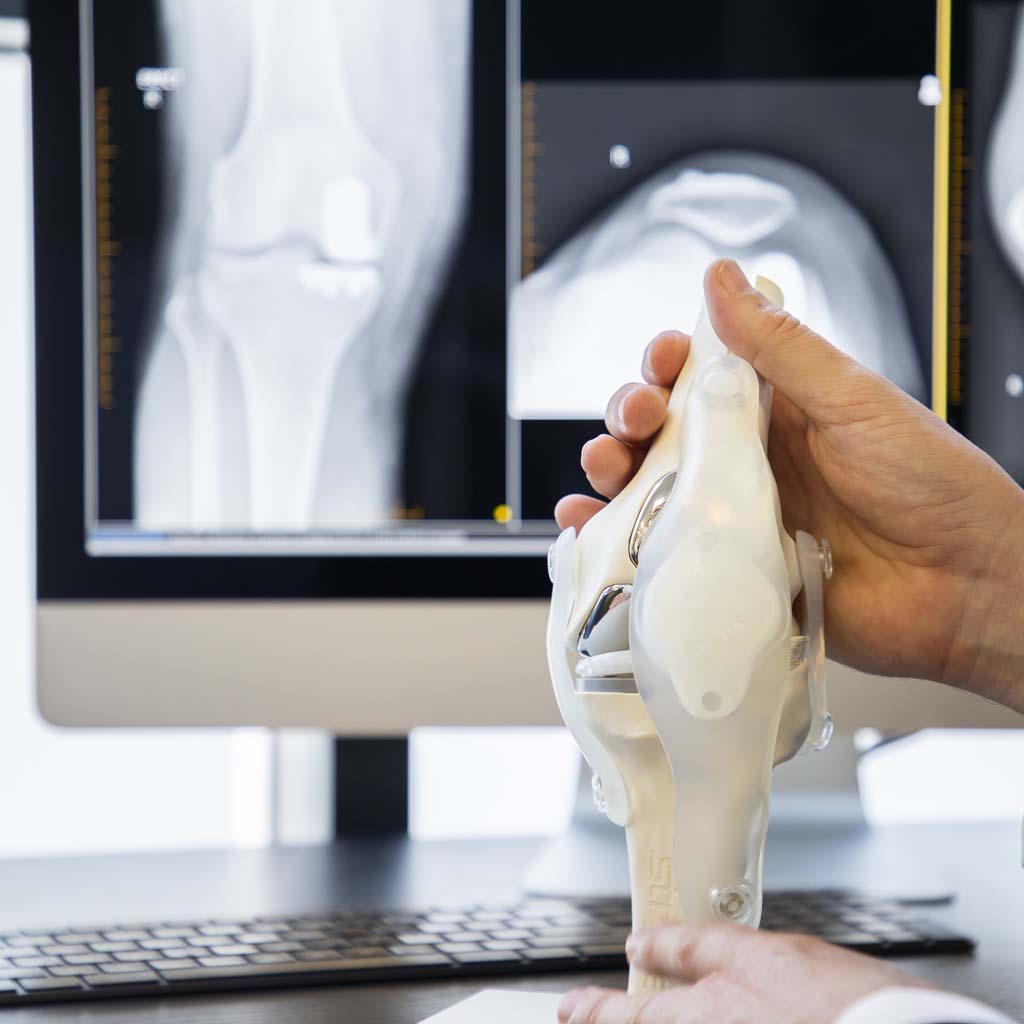
What Is an ACL Tear?
An ACL tear is an injury to the anterior cruciate ligament, one of the main ligaments that helps stabilise the knee. The injury commonly occurs during sport, exercise or an unexpected twisting movement and may cause pain, rapid swelling, reduced movement or a feeling that the knee is giving way.
The anterior cruciate ligament runs through the centre of the knee and connects the thigh bone, known as the femur, to the shin bone, known as the tibia. It helps control forward movement and rotation of the knee, particularly during activities involving changes of direction, landing, pivoting or sudden deceleration.
An ACL injury can range from a mild sprain to a partial tear or complete ACL rupture. Treatment depends on the extent of the injury, knee stability, associated damage, activity demands and personal goals. Some people can manage an ACL tear with rehabilitation, while others may be assessed for ACL reconstruction surgery if instability continues or they wish to return to activities that place higher rotational demands on the knee.
This page explains common ACL tear symptoms, how the injury occurs, how it is diagnosed and the treatment options that may be considered. Information about other knee, hip and musculoskeletal conditions is also available through the orthopaedic conditions section.
What Does the ACL Do?
The knee is formed by the femur, tibia and patella, or kneecap. These bones are supported by ligaments, muscles, tendons, cartilage and the menisci, which work together to provide movement and stability.
The ACL is one of two cruciate ligaments located within the centre of the knee. It crosses the posterior cruciate ligament and helps prevent the tibia from moving too far forwards in relation to the femur. It also contributes to rotational control when the body turns or changes direction over a planted foot.
A healthy ACL supports movements used in everyday life and sport, including walking, running, jumping and landing. Its stabilising role becomes especially important during pivoting sports such as football, soccer, netball and basketball.
Partial ACL Tear
A partial ACL tear means that some fibres of the ligament remain intact. The degree of knee instability can vary, and not every partial tear causes the same symptoms. Some people retain enough functional stability to manage the injury with structured rehabilitation, while others continue to experience giving way during twisting or higher-demand activities.
The wording used in an MRI report does not determine treatment on its own. Clinical examination, symptoms, activity goals and associated injuries also need to be considered.
Complete ACL Tear or Rupture
A complete ACL tear, often described as an ACL rupture, means that the ligament has been fully disrupted. A complete tear can reduce rotational stability, although the effect differs between individuals. Some people can walk in a straight line without significant difficulty after the initial pain and swelling settle but notice instability during pivoting, landing or rapid changes of direction.
A complete tear does not automatically mean that surgery is required. Treatment decisions are based on how the knee functions, the activities a person wants to return to, whether the knee repeatedly gives way and whether other structures have also been injured.

ACL Tear Symptoms
ACL tear symptoms can vary according to the mechanism of injury, whether the tear is partial or complete and whether there is associated damage to the meniscus, cartilage or other ligaments.
Symptoms at the Time of Injury
Common symptoms at the time of an anterior cruciate ligament tear may include:
- A popping or snapping sensation within the knee
- Sudden pain
- Rapid swelling, often developing within the first few hours
- Difficulty continuing sport or physical activity
- Reduced ability to fully bend or straighten the knee
- A feeling that the knee has shifted, buckled or given way
- Difficulty placing full weight through the affected leg
Some people can still walk after a torn ACL, particularly once the initial pain begins to settle. Being able to walk does not rule out an ACL injury, and persistent swelling or instability should be assessed by a qualified health professional.
Symptoms After the Initial Swelling Settles
As the acute pain and swelling improve, the main concern may become instability rather than constant pain. The knee may feel unreliable during turning, stepping sideways, landing or walking on uneven ground.
Ongoing symptoms can include:
- Repeated episodes of the knee giving way
- Reduced confidence during sport or exercise
- Difficulty changing direction
- Swelling after activity
- Weakness around the knee and thigh
- Difficulty returning to previous work or sporting demands
- Locking, catching or joint-line pain when a meniscus is also injured
Pain alone does not indicate the severity of an ACL injury. Some complete tears become less painful after the early inflammatory phase, even though the ligament remains disrupted.
How Do ACL Tears Happen?
ACL tears commonly occur when the knee is exposed to a sudden rotational or forward force. The injury may result from a non-contact movement, direct contact or a combination of both.
Non-Contact ACL Injuries
Many ACL tears occur without another person directly striking the knee. A non-contact injury may happen when a person:
- Changes direction suddenly while the foot is planted
- Stops or slows down quickly
- Lands awkwardly from a jump
- Turns the body while the knee remains relatively fixed
- Loses balance while skiing or during another high-speed activity
These movements can place substantial rotational force through the knee and overload the ACL.
Contact ACL Injuries
A contact injury may occur when an external force pushes the knee into an unstable position. Examples include a tackle during football, a collision during sport or a fall in which the lower leg becomes trapped.
Contact injuries may involve more than the ACL. The medial collateral ligament, meniscus, articular cartilage or other structures can also be damaged depending on the direction and force of the impact.
Sports Commonly Associated With ACL Injuries
ACL injuries are often associated with sports that involve pivoting, cutting, jumping, landing or rapid changes of direction. These may include:
- Australian rules football
- Rugby league and rugby union
- Soccer
- Netball
- Basketball
- Skiing
- Touch football
- Gymnastics
An ACL tear can also occur outside sport, including during a workplace incident, fall, awkward step or motor vehicle accident.
How Is an ACL Tear Diagnosed?
Diagnosis usually involves a review of how the injury occurred, the symptoms that followed, a physical examination and imaging where appropriate. The assessment also considers whether other parts of the knee may have been injured.

Medical History
A clinician may ask about the movement or impact that caused the injury, whether a pop was felt or heard, how quickly swelling developed and whether the knee has given way since the incident.
Information about previous knee injuries, sporting activities, work requirements and current function can help guide the assessment and treatment discussion.
Physical Examination
During a clinical examination, the knee may be assessed for swelling, tenderness, movement, muscle activation and stability. Tests commonly used to examine the ACL include the Lachman test, anterior drawer test and pivot-shift test.
These tests assess how the tibia moves in relation to the femur. Examination findings may be less clear immediately after an injury if pain, swelling or muscle guarding limits movement, and reassessment may sometimes be useful after the acute symptoms improve.
X-Rays
An X-ray does not show the ACL directly. It may be requested to check for fractures, joint alignment, bone injury or other bony changes that could contribute to the symptoms.
MRI
Magnetic resonance imaging, commonly called an MRI, provides detailed images of the soft tissues within the knee. It can help identify whether the ACL is partially or completely torn and assess the menisci, cartilage, collateral ligaments and patterns of bone bruising.
An MRI is interpreted together with the clinical examination. Imaging findings alone do not determine whether an operation is required.
Other Injuries That Can Occur With an ACL Tear
An ACL tear may occur in isolation, but associated injuries are common. These can affect symptoms, treatment decisions and rehabilitation.
Meniscus Tears
The medial and lateral menisci are pads of fibrocartilage that help distribute load and support stability within the knee. A meniscus may tear during the same twisting event that damages the ACL.
Meniscus injuries can cause joint-line pain, swelling, catching or locking. The type, location and size of the tear influence whether it may be monitored, treated through rehabilitation or addressed surgically.
Medial Collateral Ligament Injury
The medial collateral ligament, or MCL, supports the inner side of the knee. It can be injured when the knee is forced inwards, particularly during contact sport. Some MCL injuries heal with bracing and rehabilitation, although combined ligament injuries require individual assessment.
Cartilage Damage
Articular cartilage covers the ends of the bones and helps the knee move smoothly. Cartilage may be damaged during the initial injury or through repeated episodes of instability. The location and extent of cartilage damage can influence symptoms and long-term joint health.
Bone Bruising
Bone bruising is commonly seen on MRI after an ACL rupture. It occurs when the surfaces of the femur and tibia make forceful contact during the injury. Bone bruising may contribute to pain and can take time to settle.
Because associated injuries can change the recommended treatment pathway, a complete assessment should consider the whole knee rather than the ACL alone.
ACL Tear Treatment
ACL tear treatment is individualised and depends on several factors, including the severity of the injury, the stability of the knee, associated damage, age, activity level, occupation and personal goals. While some people benefit from non-surgical management, others may be candidates for surgery if ongoing instability limits their ability to return to work, sport or everyday activities.
The aim of treatment is to reduce symptoms, restore knee function where possible and help patients return safely to their desired level of activity. Decisions are made after considering the findings from a clinical assessment, imaging, previous treatment and the patient's expectations.
Non-surgical Treatment
Surgery is not the first option for every ACL injury. Some people with a partial tear or a complete tear that does not cause ongoing instability may achieve satisfactory function through a structured rehabilitation program.
Non-surgical management may include:
- Activity modification during the early stages of recovery
- Ice, compression and elevation to help manage swelling
- Pain relief medication when appropriate
- A structured physiotherapy for knee conditions focusing on strength, movement and balance
- Quadriceps and hamstring strengthening exercises
- Neuromuscular and proprioception training to improve knee control
- Progressive return to work, exercise and recreational activities
- Bracing in selected situations where appropriate
Regular review helps determine whether rehabilitation is progressing as expected or whether ongoing instability continues to interfere with daily activities or sporting goals.
When ACL Reconstruction May Be Considered
ACL reconstruction may be considered when the knee continues to feel unstable despite appropriate rehabilitation or when a person wishes to return to activities that involve frequent pivoting, cutting or rapid changes of direction.
Factors that may influence whether reconstruction is discussed include:
- Repeated episodes of the knee giving way
- Complete ACL rupture with functional instability
- Associated meniscus or cartilage injuries
- Participation in pivoting or contact sports
- Physically demanding occupations
- Failure to achieve satisfactory stability with rehabilitation alone
When surgery is considered appropriate, your surgeon will discuss the expected benefits, potential risks, graft options and rehabilitation requirements. More detailed information is available on our ACL reconstruction page.
Recovery After an ACL Tear
Recovery following an ACL injury varies considerably between individuals. Factors such as the severity of the tear, associated injuries, chosen treatment, general health and commitment to rehabilitation all influence progress.
Recovery Without Surgery
People managed without surgery usually complete a structured rehabilitation program designed to restore strength, movement, balance and confidence in the knee. Some individuals are able to return to recreational activities without ongoing instability, while others may continue to experience symptoms during higher-demand movements.
Regular assessment helps determine whether rehabilitation goals are being achieved or whether treatment should be reviewed.
Recovery After ACL Reconstruction
Recovery following ACL reconstruction occurs gradually over several months. Early rehabilitation focuses on controlling pain and swelling, restoring knee movement and regaining normal walking. Strengthening and balance exercises are then progressively introduced before higher-level functional training begins.
Returning to running, physically demanding work and sport is guided by healing, strength, movement quality and functional assessment rather than time alone. Every person's recovery timeline is different, and clearance for higher-level activities should be based on individual progress.
Physiotherapy and Rehabilitation
Rehabilitation plays an important role whether surgery is performed or not. A structured physiotherapy program helps restore muscle strength, improve movement patterns and support confidence during daily activities and sport-specific movements.
Exercises are progressed according to symptoms, healing and functional ability. Rehabilitation often continues well beyond the point at which pain has settled, helping prepare the knee for increasing physical demands.
Return to Work
The timing of return to work depends on the nature of the person's occupation and the treatment undertaken. Office-based duties may be resumed earlier than work involving climbing, lifting, kneeling or frequent changes of direction.
Your surgeon and rehabilitation team can provide guidance based on your recovery and work requirements.
Return to Sport and Physical Activity
Returning to sport requires more than the absence of pain. Strength, balance, movement control, confidence and functional performance should all be assessed before resuming activities that place high demands on the knee.
For people who have undergone ACL reconstruction, return to sport is usually a gradual process involving progressive rehabilitation and sport-specific training. Not everyone returns to the same level of activity, and recovery varies between individuals.
Risks of Leaving an ACL Tear Untreated
Not every untreated ACL tear leads to ongoing problems. However, persistent instability may increase the risk of further injury to other structures within the knee in some people.
Potential consequences of ongoing instability may include:
- Repeated episodes of the knee giving way
- Further meniscus injury
- Progressive cartilage damage
- Reduced confidence during physical activity
- Difficulty participating in work or sport
- An increased risk of developing osteoarthritis over time, particularly when other joint structures have also been injured
These risks vary between individuals and should be discussed in the context of your symptoms, lifestyle and examination findings.
When Should You See an Orthopaedic Surgeon?
Early assessment may be appropriate if you experience significant swelling after a twisting injury, hear or feel a pop, or find that your knee repeatedly gives way during everyday activities or sport.
You may also benefit from specialist assessment if:
- Your symptoms are not improving with appropriate rehabilitation
- You have difficulty returning to work or sport
- Your MRI suggests an ACL tear together with other knee injuries
- You are unsure whether surgery should be considered
- Your knee continues to feel unstable despite treatment
A consultation provides an opportunity to review your symptoms, examine the knee, assess imaging and discuss the most appropriate treatment options for your individual situation.
Questions to Ask Your Surgeon
Preparing questions before your appointment can help you better understand your diagnosis and treatment options. You may wish to ask:
- Is my ACL partially torn or completely ruptured?
- Are there any associated meniscus or cartilage injuries?
- Do I need further imaging or investigations?
- Could rehabilitation be appropriate before considering surgery?
- Would ACL reconstruction be suitable for my lifestyle and activity goals?
- What type of graft may be recommended if surgery is required?
- What are the potential benefits and risks of treatment?
- What will rehabilitation involve?
- When might I return to work, driving and sport?
- What results can I realistically expect?
Conclusion
An ACL tear is a common knee injury that can affect stability, confidence and participation in work, recreation and sport. Although some injuries respond well to rehabilitation, others may require further assessment to determine whether surgery is appropriate.
If you have ongoing knee instability, persistent symptoms or a confirmed ACL injury, an orthopaedic assessment can help clarify the diagnosis and discuss the most appropriate treatment options. Management should always be tailored to your symptoms, examination findings, activity goals and overall knee health.
Your surgeon

Dr Jonathan Negus
Dr Jonathan Negus assesses and treats knee ligament injuries, including ACL tears. Assessment considers symptoms, knee stability, imaging, associated injuries, previous treatment and individual activity goals before any treatment recommendation is made.
View full profile →Frequently asked questions
Can you walk with a torn ACL?
Yes. Some people are able to walk after the initial pain settles, particularly on level ground. However, walking normally does not exclude an ACL tear, and instability may become more noticeable during turning, pivoting or higher-demand activities.
Does every ACL tear require surgery?
No. Some ACL tears can be managed successfully with structured rehabilitation. Surgery may be considered when instability persists, when associated injuries are present or when a person wishes to return to activities that place greater rotational demands on the knee.
How is an ACL tear diagnosed?
Diagnosis usually involves a discussion of how the injury occurred, a physical examination and imaging where appropriate. MRI is commonly used to assess the ACL and identify associated injuries, while X-rays help assess the bones and rule out fractures.
Can an ACL tear heal by itself?
The ACL has a limited ability to heal after a complete rupture. Some partial tears may remain functional with appropriate rehabilitation, but treatment decisions depend on knee stability, symptoms and individual goals rather than imaging alone.
How long does recovery take after an ACL tear?
Recovery varies according to the severity of the injury, whether surgery is performed and the rehabilitation program followed. Some people recover with rehabilitation alone, while others require a longer recovery following ACL reconstruction.
Will I develop arthritis after an ACL tear?
Not everyone develops osteoarthritis after an ACL injury. The long-term risk depends on several factors, including associated meniscus or cartilage damage, recurrent instability and the overall health of the knee joint.
ACL tear assessments across Sydney
North Shore Health Hub, Level 4, Suite 401, 7 Westbourne St, St Leonards NSW 2065
St Leonards consulting →173 Warringah Road, Beacon Hill NSW 2100 — serving the Northern Beaches
Beacon Hill consulting →Also consulting at Gosford, Wahroonga, Castle Towers and Tamworth.
Discuss your ACL injury with MTP Health
Book an assessment to clarify the extent of your injury and discuss rehabilitation and surgical options that may be appropriate for your situation.
Book an AssessmentPrefer to talk? Call (02) 9437 9794 · GP & physio referrals: referrer information