
Knee Reconstruction in Sydney
Knee reconstruction covers surgery for the ligaments that stabilise your knee, including ACL, PCL, MCL and multi-ligament injuries. At MTP Health, your diagnosis, surgery and rehabilitation are planned together so you understand your options and the pathway back to activity.
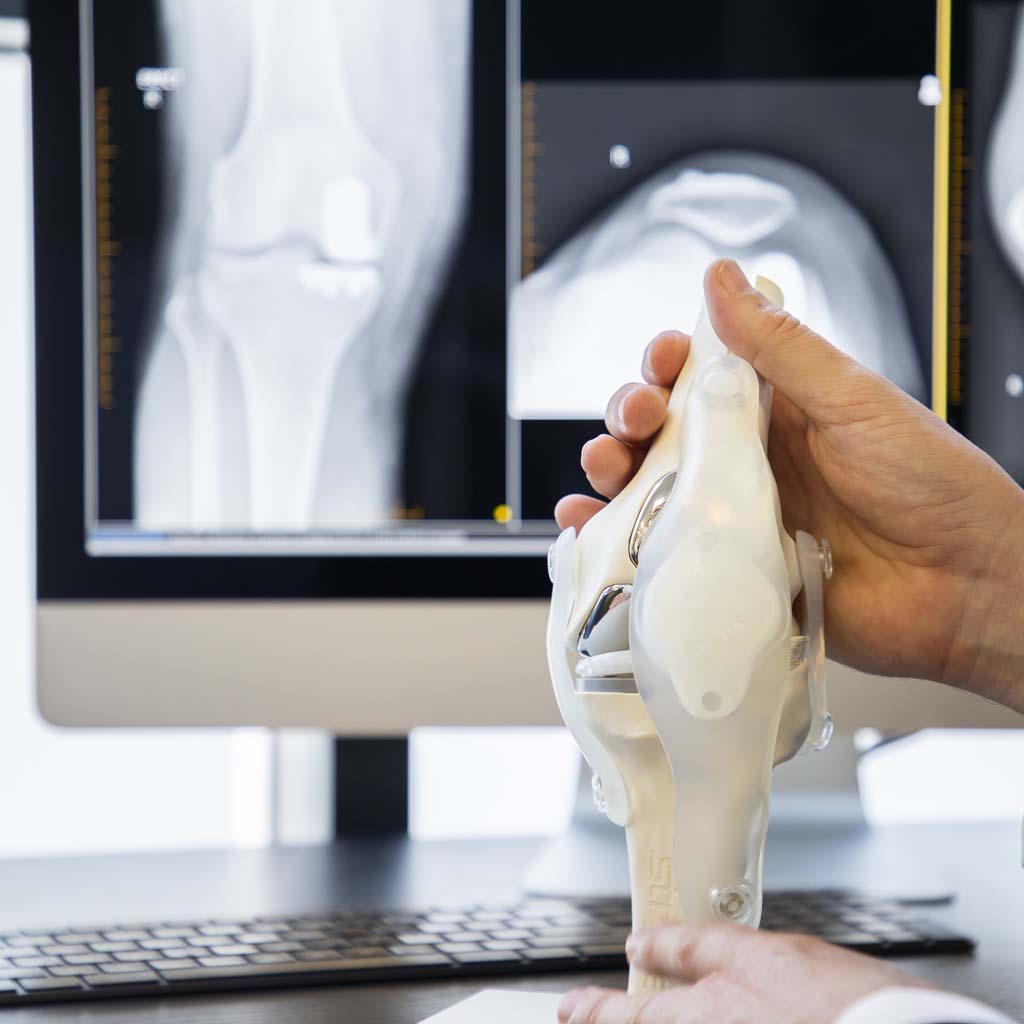
What is knee reconstruction?
Knee reconstruction is surgery to restore stability after injury to one or more of the major knee ligaments. These ligaments include the anterior cruciate ligament, or ACL, the posterior cruciate ligament, or PCL, the medial collateral ligament, or MCL, and the lateral side structures, including the LCL and posterolateral corner.
Ligaments guide and control knee movement. When a ligament is torn, the knee may feel unstable, give way, swell after activity or feel unsafe with twisting, pivoting, stairs or sport. Some injuries heal well with rehabilitation alone. Others need surgery to repair or reconstruct the damaged ligament so the knee can tolerate higher loads again.
Knee reconstruction is broader than ACL surgery. It may involve one ligament, several ligaments, a meniscal repair, cartilage treatment or staged surgery depending on the injury pattern. The best plan depends on your symptoms, MRI findings, stability testing, sport or work demands and your longer-term goals.

Do you need knee reconstruction?
Knee reconstruction is not automatically required for every ligament injury. Partial or stable tears can often be managed with a structured rehabilitation program, especially when the knee feels secure and the person is not returning to high-demand pivoting sport.
Surgery is considered more readily when knee instability continues and the knee gives way, when several ligaments are injured, when there is a repairable meniscus injury, or when a patient wants to return to activities that involve cutting, pivoting, contact or unpredictable movement. Multi-ligament injuries usually need careful specialist assessment because the knee may be unstable in more than one direction.
Not every ligament injury needs surgery. Many people improve with swelling control, strength work, movement restoration, bracing and sport-specific rehabilitation. Our physiotherapy team and exercise physiologists can help you trial non-surgical management or prepare for surgery if reconstruction becomes the right step.
At your consultation, your surgeon will take a detailed history, examine the stability of your knee and review imaging, usually including an MRI. The decision is not based on the scan alone. It depends on how the knee behaves, which ligaments are injured, whether other structures are involved and what you need your knee to do.
Benefits and risks
What you can expect it to achieve
- Restore stability after ACL, PCL, MCL, LCL or multi-ligament injury
- Reduce giving-way episodes during daily activity or sport
- Support return to higher-demand work, training or sport where appropriate
- Protect the knee from repeated instability episodes that may stress the meniscus or cartilage
- Allow meniscal or cartilage injuries to be treated at the same time where required
- Improve confidence with twisting, pivoting, stairs and uneven ground
- Provide a structured rehabilitation pathway from early recovery to return-to-activity testing
Risks to understand
- Common and temporary: swelling, bruising, stiffness, weakness and discomfort in the early recovery period
- Uncommon: infection, blood clots, wound problems, nerve or blood vessel injury, and anaesthetic complications
- Specific to reconstruction: graft stretching or re-tear, persistent instability, knee stiffness, loss of motion, kneeling discomfort or ongoing pain
- Longer-term: recurrent injury, further meniscal or cartilage problems, and the possibility of arthritis developing after significant ligament trauma
All surgery carries risk and outcomes vary between individuals. The aim of your consultation is to make sure reconstruction matches the injury and your goals. A technically sound operation still needs a careful rehabilitation plan to achieve the best possible result.
ACL reconstruction vs other ligament reconstruction
ACL reconstruction is the most common type of knee ligament reconstruction, but it is not the only one. PCL, MCL, LCL and posterolateral corner injuries can also require repair or reconstruction depending on the injury pattern and stability of the knee. MPFL reconstruction may be used when kneecap instability is the main problem.
Single-ligament injuries are usually simpler than multi-ligament injuries. When several structures are involved, the timing, graft choices, bracing and rehabilitation plan need to be tailored carefully to restore stability without creating stiffness.

| Single-ligament reconstruction | Multi-ligament reconstruction |
|---|---|
| Usually involves one main ligament, commonly the ACL | Involves two or more stabilising structures |
| Often performed arthroscopically or through small incisions | May require combined arthroscopic and open techniques |
| Rehabilitation follows a staged strength and control pathway | Rehabilitation may be more protective and individualised |
| Return to pivoting sport is often considered around 9–12 months | Return to sport may take longer depending on complexity |
| Usually planned around one primary instability pattern | Requires careful planning across several instability patterns |
The procedure: what happens
Before surgery, you will have a pre-operative assessment to review your injury, imaging, general health, medications and anaesthetic plan. Where appropriate, we recommend pre-operative rehabilitation to reduce swelling, restore movement and improve strength before surgery.
The operation is performed under general or spinal anaesthesia. The exact technique depends on which ligament is injured. In many cases, arthroscopy is used to inspect the joint and treat associated meniscal or cartilage injuries. Small tunnels may be created in the bone so a graft can be positioned where the torn ligament used to function.
Graft options may include hamstring tendon, patellar tendon, quadriceps tendon or donor graft tissue in selected circumstances. The best graft depends on the ligament being reconstructed, your sport or work demands, previous surgery, body size, growth status in younger patients and surgeon recommendation.
The graft is fixed securely while the knee is checked for stability and movement. In multi-ligament injuries, additional incisions may be needed to repair or reconstruct the medial or lateral side structures. A brace may be used after surgery depending on the ligaments involved.
After surgery
You will wake in the recovery room, where your pain, circulation and vital signs are monitored closely. Once you are comfortable and stable, you will return to the ward or prepare for discharge depending on the procedure and your recovery.
Many single-ligament reconstructions are performed as day surgery or short-stay surgery. More complex multi-ligament reconstructions may require a longer admission, more protective bracing and closer early rehabilitation guidance.
When to seek help. Contact us or seek urgent care if you develop a fever, increasing calf pain or swelling, spreading redness, wound discharge, shortness of breath, chest pain, sudden worsening pain, new numbness or pain that is not controlled by medication. Concerned about your recovery? Call (02) 9437 9794.
Knee reconstruction recovery and rehabilitation
Recovery after knee reconstruction is gradual and is usually measured in months rather than weeks. The early goal is to control swelling, restore movement and rebuild basic muscle activation. Later rehabilitation focuses on strength, balance, running mechanics, change-of-direction control and sport-specific testing where relevant.
The timeline varies depending on the ligament injured, graft choice, whether meniscal or cartilage procedures were performed, and whether the injury involved one ligament or several. Return to sport should not be based on time alone. Strength, control, confidence and objective testing all matter.
Recovery timeline
| Phase | Timeframe | What to expect |
|---|---|---|
| Protect & settle | Days 0–14 | Swelling control, wound care, walking with aids as needed, early range-of-motion and muscle activation |
| Movement & control | Weeks 2–6 | Improving walking quality, restoring knee movement, reducing aids and building early quadriceps and hip strength |
| Strength foundation | Weeks 6–12 | Progressive strengthening, balance, cycling, step control and return to more normal daily routines |
| Running preparation | Months 3–6 | Heavier strengthening, landing control, running preparation and gradual straight-line running if criteria are met |
| Return to sport pathway | Months 6–12+ | Agility, change of direction, sport-specific drills, confidence testing and staged return to training or competition |
Timeframes are a guide. Your surgeon and rehabilitation team will progress you based on the injury, procedure, graft, symptoms, strength and goals.
Post-operative care
At home, the priorities are keeping wounds clean and dry, controlling swelling, using pain medication safely, walking as instructed and completing your prescribed exercises. Bracing, crutches and weight-bearing restrictions vary depending on the reconstruction and any associated procedures.
Rehabilitation at MTP Health
This is where MTP Health is different. Your rehabilitation is delivered by our own physiotherapists and exercise physiologists, working in the same clinic as your surgeon. Your plan can begin before surgery and continue seamlessly afterwards, with everyone working from the same goals and shared clinical record.
Rehabilitation focuses on restoring movement early, then rebuilding strength, balance, landing control, running quality, change-of-direction ability and confidence. Your recovery may be supported by our pre-operative rehabilitation, post-operative rehabilitation, physiotherapy and exercise physiology services.
Returning to driving, work and sport
Return to driving depends on which knee was operated on, whether you drive an automatic or manual car, your brace or crutch use, pain, swelling, reaction time and medication use. You must be able to safely perform an emergency stop and must no longer be taking strong pain medication. Please check with your surgeon and insurer before driving.
Desk-based work may be possible within a few weeks depending on pain, swelling, transport and how long you need to sit. Physical work takes longer, especially if it involves standing, climbing, kneeling, lifting, carrying or uneven ground.
Return to pivoting or contact sport is often considered from around nine to twelve months after ACL reconstruction, but this varies. Objective testing of strength, hop performance, movement control and confidence helps guide readiness rather than time alone.
Rehab is part of the reconstruction. Surgery can restore the mechanical structure, but rehabilitation restores the athlete, worker or active person using that knee. The best outcomes come from combining good surgery with progressive strength work, movement retraining and clear return-to-activity criteria.
Knee reconstruction cost in Sydney
The cost of knee reconstruction depends on your private health cover, hospital insurance, surgeon fees, anaesthetist fees, assistant fees, hospital charges, graft or implant requirements and whether meniscal, cartilage or multi-ligament procedures are performed at the same time.
If you are having surgery using private health cover, your out-of-pocket cost depends on your fund, policy, hospital arrangement and any gap charged by the surgical and anaesthetic teams. The anaesthetist is an independent practitioner and may charge a separate gap, so we provide their details and recommend checking their quote before surgery.
Because knee reconstruction can range from a single ACL reconstruction to complex multi-ligament surgery, costs vary. Your team will explain the expected fees, hospital arrangements and rebate pathway before surgery wherever possible.
If surgery is performed through the public system, there may be no out-of-pocket surgical cost, but waiting times can be long and depend on hospital access, urgency category and local availability.
Why have your knee reconstruction at MTP Health
MTP Health brings together fellowship-trained knee surgery specialists, careful surgical planning, physiotherapy and exercise physiology in one clinic. That matters because knee reconstruction is not just about the operation — it is about diagnosis, timing, graft choice, rehabilitation and safe return to activity.
Honest advice comes first. If your injury is better suited to non-surgical care, we will tell you. If instability, sport demands or associated injuries make surgery the better option, we will explain why. If knee reconstruction is suitable, we will help you understand the procedure, recovery, risks and expected outcome clearly before you decide.
Your surgeon

Dr Jonathan Negus
Dr Negus is a fellowship-trained hip and knee surgeon with a focus on evidence-based knee care, joint preservation and reconstruction decision-making. He works alongside MTP Health's physiotherapy and exercise physiology team so your surgery and rehabilitation are managed as one plan.
View full profile →Frequently asked questions
Is surgery always necessary for a knee ligament injury?
Not always. Partial or stable tears can often be managed well with a structured rehabilitation program, and many people never need an operation.
Surgery is considered more readily when the knee stays unstable, when several ligaments are involved, or when someone wants to return to high-demand activity. An assessment helps clarify what may suit your situation.
How long does recovery take after knee reconstruction?
Recovery is gradual and usually measured in months rather than weeks. The early stages of movement and strength tend to fill the first few months, with a return to higher-demand activity often considered from around nine months, depending on the injury and your progress.
Timelines vary, and your rehabilitation team can guide you based on how you are responding.
When can I return to sport after ACL reconstruction?
A return to pivoting or contact sport is often considered from somewhere around nine to twelve months, though this differs between individuals.
Rather than relying on time alone, objective testing of strength, control and confidence helps judge readiness. Coming back better prepared may help reduce the risk of re-injury for some people.
Can physiotherapy help before surgery?
Yes. Preparing the knee beforehand, known as prehabilitation, is often encouraged.
Building strength, restoring movement and settling swelling ahead of time may make the early weeks of recovery more manageable for some people. Our physiotherapists and exercise physiologists can tailor a plan around your surgical date.
What happens if I delay treatment for a knee ligament injury?
It depends on the injury and how active you are. Where the knee keeps giving way, that ongoing instability may place extra stress on the cartilage and meniscus over time.
Having the injury assessed helps you understand the likely implications and decide on timing with clear information.
What ligaments can be reconstructed?
Knee reconstruction can involve the ACL, PCL, MCL, LCL, posterolateral corner or several ligaments together.
The right plan depends on which structures are injured, how unstable the knee is, whether the injury is acute or chronic, and whether the meniscus, cartilage or bone has also been damaged.
What graft is used for knee ligament reconstruction?
Graft options may include hamstring tendon, patellar tendon, quadriceps tendon or donor graft tissue in selected cases.
Your surgeon will recommend a graft based on the ligament being reconstructed, your anatomy, previous surgery, sport or work demands and the overall reconstruction plan.
Can knee reconstruction be done with meniscus surgery?
Yes. Meniscal tears are commonly assessed during ligament reconstruction, especially after twisting injuries.
If the meniscus is repairable, your surgeon may repair it at the same time. This can affect your early weight-bearing and rehabilitation restrictions, so the recovery plan is adjusted accordingly.
Knee reconstruction consultations across Sydney
North Shore Health Hub, Level 4, Suite 401, 7 Westbourne St, St Leonards NSW 2065
St Leonards consulting →173 Warringah Road, Beacon Hill NSW 2100 — serving the Northern Beaches
Beacon Hill consulting →Also consulting at Gosford, Wahroonga, Castle Towers and Tamworth.
Talk to a surgeon about knee instability
Book a consultation to find out whether knee reconstruction is right for your ligament injury — and if it is not, to leave with a clear plan for the most suitable next step.
Book a ConsultationPrefer to talk? Call (02) 9437 9794 · GP & physio referrals: referrer information
- Current peer-reviewed literature on ACL reconstruction, graft choice, rehabilitation and return-to-sport testing.
- Current peer-reviewed literature on PCL, collateral ligament and multi-ligament knee injury management, including staged rehabilitation and surgical timing.