
Knee Osteoarthritis in Sydney
Understand the symptoms, causes, diagnosis and treatment options for knee osteoarthritis, including non-surgical care and when specialist assessment may be appropriate.
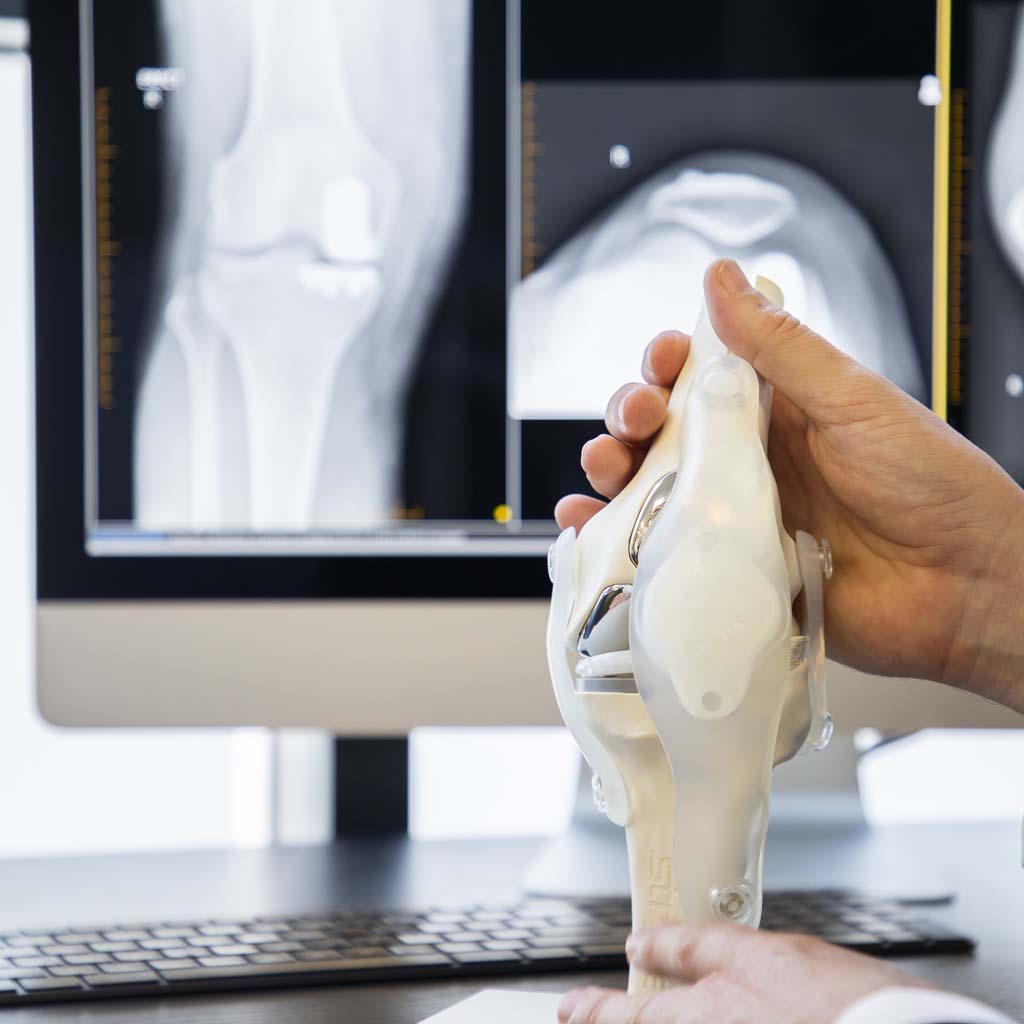
What is knee osteoarthritis?
Knee osteoarthritis is a common long-term joint condition that can cause pain, stiffness, swelling and reduced mobility. It develops as changes occur throughout the knee joint and may make everyday activities such as walking, climbing stairs, working, exercising and getting out of a chair more difficult.
Many people manage knee osteoarthritis with education, exercise, physiotherapy and other non-surgical treatments. When symptoms continue to significantly affect daily life despite appropriate care, knee replacement surgery may be considered for selected patients, although surgery is not required for everyone.
This page explains what knee osteoarthritis is, its symptoms and causes, how it is diagnosed, the available treatment options and when specialist or surgical assessment may be considered.
Knee osteoarthritis, sometimes called knee OA or knee joint arthritis, affects the knee as a whole. It commonly involves changes to the smooth articular cartilage covering the ends of the bones, as well as the underlying bone, joint lining, menisci and surrounding muscles.
As osteoarthritis progresses, the cartilage may become thinner or irregular. The joint may also develop bony growths called osteophytes, changes in the bone beneath the cartilage and narrowing of the space between the bones. These changes can contribute to pain, stiffness and reduced knee function, although the appearance of arthritis on an X-ray does not always match the severity of a person's symptoms.

The knee has three main compartments:
- the medial compartment on the inner side of the knee;
- the lateral compartment on the outer side of the knee; and
- the patellofemoral compartment between the kneecap and thigh bone.
Osteoarthritis may affect one compartment or several parts of the joint. The location and extent of the arthritis can influence which treatments may be appropriate.
Symptoms of knee osteoarthritis
Osteoarthritis of the knee can affect people differently. Some patients have clear changes on an X-ray but relatively manageable symptoms, while others experience substantial pain and functional restriction despite less advanced imaging findings.
Knee pain
Pain may be felt on the inner or outer side of the knee, at the front of the joint or behind the kneecap. It may initially occur during weight-bearing activity and later become more persistent. Some people experience pain at night or discomfort that interrupts sleep.
Stiffness and reduced movement
The knee may feel stiff after sitting, resting or waking in the morning. As the condition progresses, it may become difficult to fully bend or straighten the joint.
Swelling
Intermittent swelling may occur when the joint becomes irritated. Persistent or rapidly developing swelling should be assessed because it can also have causes other than osteoarthritis.
Grinding, clicking or crepitus
Some patients notice grinding, clicking or a rough sensation during movement. These symptoms do not always indicate that surgery is required, but they should be considered alongside pain, function and examination findings.
Reduced mobility and function
Knee arthritis may make walking, climbing stairs, standing from a chair, kneeling, squatting, working or participating in sport more difficult. Weakness in the muscles around the knee can further affect balance and confidence during movement.
Changes in alignment
Advanced arthritis may be associated with a bow-legged, or varus, alignment when the inner compartment is affected. A knock-kneed, or valgus, alignment may develop when arthritis predominantly affects the outer compartment.
Seek timely medical assessment. Sudden severe pain, an acutely hot or red knee, fever, an inability to bear weight or rapidly developing swelling may have causes other than osteoarthritis and should be assessed promptly.
What causes knee osteoarthritis?
Knee osteoarthritis usually develops through a combination of factors rather than a single cause. Factors that may increase the likelihood of developing knee OA include:
- increasing age;
- a previous meniscus, ligament or cartilage injury;
- a previous fracture involving the knee joint;
- earlier knee surgery;
- repetitive or prolonged loading through the joint;
- varus or valgus knee alignment;
- muscle weakness;
- family history and genetic factors; and
- higher body weight, which may increase joint loading.
Osteoarthritis that develops following an earlier injury is often described as post-traumatic osteoarthritis. Other forms of arthritis, including rheumatoid arthritis, inflammatory arthritis and crystal arthritis, may also affect the knee but require a different assessment and management approach.
How is knee osteoarthritis diagnosed?
A diagnosis is usually based on the pattern of symptoms, physical examination and appropriate imaging. Assessment is also important for excluding other causes of knee pain, such as a meniscus injury, ligament problem, inflammatory condition or pain referred from the hip or lower back.
Your clinician may ask when the pain began, where it is located, which activities aggravate it and how it affects sleep, work, walking and recreation. Previous injuries, operations, medical conditions and treatments may also be reviewed.

Physical examination
The assessment may include knee alignment, gait, swelling, tenderness, muscle strength, stability and range of motion. The hip and surrounding areas may also be examined when another source of pain is possible.
Weight-bearing X-rays
Standing or weight-bearing X-rays can help show how the joint behaves under load. They may identify joint-space narrowing, osteophytes, changes in the underlying bone and alterations in alignment.
Treatment decisions should not be based on an X-ray alone. The imaging findings need to be considered alongside the patient's symptoms, function, health and goals.
MRI and other investigations
An MRI is not required for every patient with knee osteoarthritis. It may be requested when the diagnosis is unclear, symptoms do not match the X-ray findings, or another problem involving the menisci, ligaments, cartilage or bone is suspected.
Blood tests may be considered when an inflammatory condition, infection or another form of arthritis needs to be excluded.
Treatment options for knee osteoarthritis
Treatment for knee osteoarthritis depends on the severity of symptoms, the effect on daily function, examination findings, general health and individual goals. For many people, a combination of non-surgical treatments can help reduce symptoms, improve mobility and maintain function.
Surgery is not the starting point for everyone. Non-surgical care is generally considered first unless there is a specific reason for a different approach. Treatment should be based on symptoms, function, health and individual priorities rather than imaging alone.
Education and activity modification
Understanding how osteoarthritis behaves can help patients remain active without repeatedly aggravating the knee. Activities may be adjusted rather than stopped completely, with lower-impact options used when appropriate.
Physiotherapy and exercise
Exercise is an important part of knee osteoarthritis management. A program may include quadriceps and hip strengthening, aerobic exercise, flexibility work, balance training and gradual exposure to functional activities.
Exercise should be selected according to the patient's current capacity, symptoms and health. Some temporary discomfort may occur when beginning a program, but exercises should be reviewed if they cause substantial or persistent worsening.
Weight management
Where relevant, gradual weight reduction may decrease loading through the knee and improve mobility. Advice should be individualised and may involve support from a GP, dietitian or other qualified health professional.
Medicines
Topical or oral medicines may be considered for symptom management. Their suitability depends on medical history, other medicines and potential side effects. Patients should discuss pain-relief and anti-inflammatory medicines with their GP, pharmacist or treating clinician rather than starting or changing medication without advice.
Braces and walking aids
A knee brace, walking stick or other mobility aid may assist selected patients. The appropriate device depends on knee alignment, symptoms, balance and functional needs.
Knee injections
A knee injection may be considered for short-term symptom management in selected situations. The response varies, and any benefit may be temporary. Injections do not restore normal joint cartilage, and the potential benefits, limitations and timing should be discussed with the treating clinician.
Multidisciplinary osteoarthritis care
Patients who are not ready for surgery, are not suitable for an operation or wish to improve their non-surgical management may benefit from a coordinated program. The MTP Health Osteoarthritis Clinic provides access to structured assessment and management for hip and knee osteoarthritis.
When might surgery be considered?
Although many people manage knee osteoarthritis without an operation, surgery may be discussed when the condition causes substantial pain or loss of function and appropriate non-surgical treatment has not provided sufficient improvement. The decision is individual and should not be based on age or imaging alone.
A surgical assessment may be appropriate when:
- pain regularly affects walking, sleep, work or independence;
- stiffness significantly limits knee movement;
- symptoms continue despite a suitable exercise and treatment program;
- the knee has developed progressive deformity or instability;
- non-surgical options no longer provide acceptable symptom control; or
- the patient wishes to understand whether a surgical option may be suitable.
Patients can review the broader range of knee surgery options when considering how different procedures are used to address arthritis, injury and other knee conditions.
Questions to ask your clinician
- Are my symptoms primarily caused by knee osteoarthritis?
- Which parts of my knee are affected?
- Do I need further imaging or tests?
- Which non-surgical treatments remain appropriate for me?
- What may happen if I continue without surgery?
- When would specialist or surgical assessment be appropriate?
- What risks are particularly relevant to my health?
- What rehabilitation or exercise program may help me?
Assessment for knee osteoarthritis in Sydney
Knee osteoarthritis does not automatically require surgery. A thorough assessment can help confirm the diagnosis, determine which parts of the knee are affected and identify treatment options that may suit the pattern of symptoms, previous management, general health and individual priorities.
Patients with persistent knee arthritis symptoms may benefit from specialist assessment to confirm the diagnosis, review imaging and compare non-surgical and surgical options. Where surgery is not yet appropriate, coordinated osteoarthritis care may help improve strength, mobility and confidence while supporting ongoing symptom management.
Book an assessment with MTP Health in Sydney to discuss your knee symptoms and the treatment options that may be appropriate for your situation.
Your specialist

Dr Jonathan Negus
Dr Jonathan Negus assesses and treats hip and knee conditions, including knee osteoarthritis. Assessment considers symptoms, examination findings, imaging, previous treatment, general health and individual goals before any treatment recommendation is made.
View full profile →Frequently asked questions
Can knee osteoarthritis improve without surgery?
Yes. Many people with knee osteoarthritis can improve pain and function through a combination of education, physiotherapy, strengthening and aerobic exercise, activity modification, weight management where appropriate, medicines and other non-surgical treatments. Surgery is generally considered when symptoms continue to significantly affect daily life despite appropriate non-surgical care.
How is knee osteoarthritis diagnosed?
Diagnosis is usually based on symptoms, physical examination and appropriate imaging. Weight-bearing X-rays may help show joint-space narrowing, osteophytes, changes in the underlying bone and alignment. MRI is not required for every patient and may be used when the diagnosis is unclear or another problem is suspected.
Can I continue exercising if I have knee osteoarthritis?
In many cases, yes. Regular, appropriately prescribed exercise is an important part of managing knee osteoarthritis and may help improve strength, mobility and function. Your program should be selected according to your symptoms, current capacity and overall health by a qualified health professional.
Does an X-ray showing advanced arthritis mean I need surgery?
No. Imaging findings should be considered alongside your pain, mobility, function, health, previous treatment and goals. Some people have substantial X-ray changes with manageable symptoms, while others experience more difficulty despite less advanced imaging findings.
When should I see an orthopaedic surgeon for knee osteoarthritis?
You may benefit from an orthopaedic assessment if knee pain or stiffness continues despite appropriate treatment, limits work or daily activities, disturbs sleep, or if you would like to understand whether surgical treatment may be appropriate. An assessment can also help confirm the diagnosis and compare non-surgical and surgical options.
Knee osteoarthritis assessments across Sydney
North Shore Health Hub, Level 4, Suite 401, 7 Westbourne St, St Leonards NSW 2065
St Leonards consulting →173 Warringah Road, Beacon Hill NSW 2100 — serving the Northern Beaches
Beacon Hill consulting →Also consulting at Gosford, Wahroonga, Castle Towers and Tamworth.
Discuss your knee symptoms with MTP Health
Book an assessment to clarify the cause of your symptoms and discuss appropriate non-surgical and surgical treatment options.
Book an AssessmentPrefer to talk? Call (02) 9437 9794 · GP & physio referrals: referrer information