
Arthritis in Sydney
Joint pain, stiffness and swelling are common, and arthritis is one of the main causes. Knowing which type you have shapes the right treatment, and there is a lot you can do to protect your joints and keep moving.
What is arthritis?
Arthritis is a general term for conditions that cause pain, stiffness, swelling and reduced movement in one or more joints. It is not a single disease. More than 100 different conditions are grouped under the term arthritis, and they can behave very differently, affect different joints and require different treatment.
Broadly, arthritis can be divided into two main groups. Degenerative arthritis, most commonly osteoarthritis, develops as the joint surfaces change over time. Inflammatory arthritis occurs when the immune system or a metabolic process drives inflammation within the joint, as happens in rheumatoid arthritis, psoriatic arthritis or gout. Because these groups are managed in different ways, identifying which type of arthritis is present is one of the most important parts of assessment.
Because the type matters, your care is often shared. A GP or rheumatologist usually leads the medical side, while a physiotherapist and, where needed, an orthopaedic surgeon help you stay mobile and weigh up whether surgery could help.
Arthritis often settles in one particular joint, and the knee and hip are the most commonly affected. It can also involve your shoulder, elbow, hand or wrist. Whichever joint is troubling you, it sits within the wider group of orthopaedic conditions looked after at MTP Health.
Your diagnosis comes from your symptoms, an examination and, where needed, a few tests, not from a scan alone.
What helps depends on the type you have. With osteoarthritis or a joint problem from an old injury, most of your care is hands-on, through physiotherapy, exercise physiology and the Osteoarthritis Clinic, with surgery considered only if it is needed. With an inflammatory or autoimmune form, a GP or rheumatologist usually leads the medical treatment, while physiotherapy and exercise keep you moving alongside it.

Types of arthritis
The type matters, because the cause, the joints involved and the treatment all differ. Knowing which form you have points to the treatment most likely to help you.
Osteoarthritis
Osteoarthritis is the most common form of arthritis. It involves gradual changes throughout a joint, including the smooth articular cartilage, the underlying bone and the surrounding structures. It most often affects the knees, hips, hands, big toe, spine and shoulders. Osteoarthritis is generally related to load, previous injury, age and individual factors rather than to an overactive immune system.
Because osteoarthritis is treated according to the joint involved, the joint that is affected shapes your care. When it develops after an earlier injury, it is often called post-traumatic osteoarthritis.
Rheumatoid arthritis
Rheumatoid arthritis is an autoimmune condition in which the immune system targets the lining of the joints, causing inflammation, pain and swelling. It often affects the same joints on both sides of the body, such as the hands, wrists and feet, and may be associated with prolonged morning stiffness and general symptoms such as fatigue. Rheumatoid arthritis usually requires diagnosis and ongoing medical management with a GP and rheumatologist, as early treatment can help protect the joints.
Psoriatic arthritis
Psoriatic arthritis is an inflammatory arthritis that can occur in people who have psoriasis, a skin condition. It may affect the fingers, toes, larger joints or the spine, and can appear before or after the skin changes. Like other inflammatory forms, it is generally managed medically, with exercise and rehabilitation supporting joint function.
Ankylosing spondylitis and axial spondyloarthritis
This group of inflammatory conditions mainly affects the spine and the joints where the spine meets the pelvis. It often begins in younger adults and may cause back pain and stiffness that is worse with rest and improves with movement. Assessment and medical management are usually coordinated with a GP or rheumatologist, with exercise playing an important supporting role.
Gout and crystal arthritis
Gout is a common form of crystal arthritis. It occurs when urate crystals form within a joint, often causing sudden, severe pain, swelling and redness, frequently in the big toe. Other crystal conditions, such as calcium pyrophosphate deposition, can cause similar episodes in different joints. Gout is generally managed by a GP and may involve treatment during flares as well as longer-term measures to lower urate levels.
Post-traumatic arthritis
Post-traumatic arthritis develops in a joint that has been injured in the past, such as after a fracture, ligament injury or cartilage damage. A previous ACL tear, meniscal or cartilage injury can increase the likelihood of joint changes over time. This form is assessed and managed in a similar way to osteoarthritis, with attention to the earlier injury.
Other and urgent forms
Some forms of arthritis are less common but important to recognise. Reactive arthritis can follow certain infections, while septic arthritis is a joint infection that requires urgent medical care. A single joint that becomes acutely hot, red, swollen and very painful, particularly with fever or feeling unwell, should be assessed immediately, as it may indicate infection rather than another form of arthritis.
Which joints can arthritis affect?
Arthritis can affect almost any joint, and the one involved shapes both your symptoms and your treatment, whether that is your hip, knee, shoulder, elbow, hand or wrist. Your GP or a rheumatologist is involved where the type calls for medical care.
Knee
The knee is one of the most common places for osteoarthritis, bringing pain, stiffness and difficulty with walking, stairs and getting out of a chair. If your knee is affected, Knee osteoarthritis goes into the symptoms, diagnosis and treatment in more detail.
Hip
In the hip, osteoarthritis often causes groin pain, stiffness and reduced movement, and can make everyday tasks like putting on your shoes harder. If your hip is affected, Hip osteoarthritis covers non-surgical care and when surgery might help.
Shoulder
Arthritis in your shoulder can cause pain, stiffness and reduced reach, which may affect dressing, lifting, reaching overhead and sleep. Because the shoulder relies on the rotator cuff to move, shoulder arthritis sometimes goes hand in hand with rotator cuff problems, and that can change your treatment. Most people do well with non-surgical care, such as activity changes and exercise. When arthritis is advanced and symptoms persist despite good care, shoulder replacement or other shoulder surgery options may be worth considering.
Hand, wrist and thumb
Arthritis often affects the small joints of your fingers and the base of your thumb, and can involve the wrist too. You might notice pain, stiffness, swelling, weaker grip and trouble with fine tasks like opening jars or turning keys. Hand therapy, splinting, activity changes and the right exercises help many people, with surgery kept for selected cases. If your hand or wrist is affected, the upper-limb orthopaedic team can assess what will help.
Elbow
Elbow arthritis can cause pain, stiffness and a reduced ability to fully bend or straighten your arm, which may affect lifting and daily activities. Assessment and non-surgical care usually come first, with elbow surgery considered only if your symptoms stay significant.
Other joints
Arthritis can also affect the feet, where the big toe is a common site for both osteoarthritis and gout, as well as the spine. These are generally managed with non-surgical care and, where appropriate, co-managed with your GP or another specialist.
Symptoms of arthritis
The symptoms you notice depend on the type of arthritis, the joints involved and you as a person. Common ones include:
- Joint pain, which may come with activity or be present at rest
- Stiffness, especially first thing in the morning or after resting
- Swelling in or around the joint
- Warmth or redness over the joint, which is more typical of inflammatory forms
- Reduced range of movement
- Difficulty with everyday activities, work, exercise or sleep
The pattern of symptoms often helps point to the type of arthritis. Osteoarthritis tends to affect a smaller number of joints, is frequently related to load or activity, and morning stiffness usually eases within a short time. Inflammatory forms such as rheumatoid arthritis are more likely to involve several joints, to affect both sides of the body, to cause prolonged morning stiffness lasting longer, and to be accompanied by general symptoms such as fatigue. Crystal forms such as gout often cause sudden, intense flares in a single joint.
Seek prompt medical assessment. A joint that becomes acutely hot, red and swollen, especially with fever or feeling generally unwell, should be assessed urgently, as this can indicate a joint infection. Sudden severe pain, an inability to use the joint, or rapidly developing swelling should also be reviewed promptly.
What causes arthritis?
There is no single cause, because the process behind each type is different. Depending on your form of arthritis, things that can contribute include:
- Age and gradual joint changes over time
- Previous joint injury, fracture or surgery
- Repetitive or prolonged loading through a joint
- Family history and genetic factors
- Autoimmune activity, where the immune system drives joint inflammation
- Metabolic factors, such as raised urate levels in gout
- Other health conditions, such as psoriasis
Because different causes need different treatment, working out your type is central to managing it well.
How is arthritis diagnosed?
Diagnosis is based on the pattern of symptoms, a physical examination and, where appropriate, imaging and tests. A key aim of assessment is to identify the type of arthritis, because this determines the most suitable treatment and whether referral to another practitioner is needed.
Your clinician may ask which joints are affected, how and when symptoms began, whether stiffness is worse in the morning, how long it lasts, and how symptoms affect sleep, work and daily activities. Previous injuries, other health conditions, medications and family history may also be reviewed.

Physical examination
The examination may assess which joints are involved, swelling, warmth, tenderness, range of movement, strength and how movement is affected. The pattern across the body, such as whether one or many joints are involved, helps distinguish between the different forms of arthritis.
Imaging
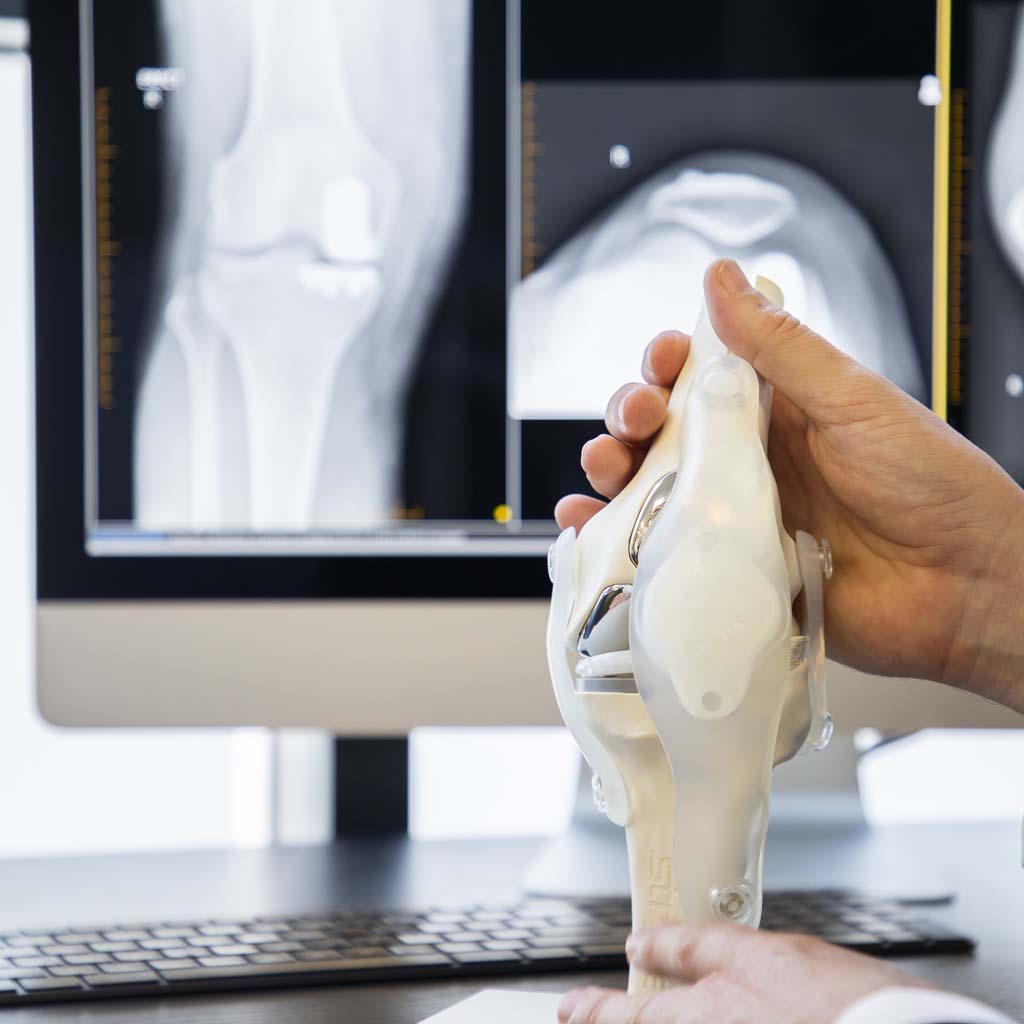
X-rays may show changes associated with osteoarthritis, such as joint-space narrowing and bone spurs, and can be useful for assessing established joint disease. Ultrasound or MRI may be requested in some situations, particularly when inflammation, soft-tissue involvement or an uncertain diagnosis needs further evaluation. As with other joint conditions, imaging findings are interpreted alongside symptoms and examination rather than in isolation.
Blood tests
Blood tests are not needed for every person with joint pain, but they can be important when an inflammatory or crystal form of arthritis is suspected. Depending on the situation, tests may help assess inflammation or support the diagnosis of a specific condition. These investigations are usually arranged and interpreted by a GP or rheumatologist.
Joint fluid tests
In some cases, fluid may be taken from a joint for testing. This can help identify crystal arthritis such as gout, or exclude infection when a joint is acutely hot and swollen.
Treatment and management options
There is no single treatment, because what helps depends on your type of arthritis, the joints involved, how severe your symptoms are and your circumstances. For most people, a combination of approaches works well to ease symptoms, keep you moving and support everyday life.
Treatment depends on the type of arthritis, not on imaging alone. The right management for osteoarthritis differs from the management of rheumatoid arthritis or gout, which is why an accurate diagnosis matters. Care is often shared between your GP, physiotherapist and, where appropriate, a rheumatologist or orthopaedic surgeon.
General measures that support most types
Whatever your type, a few things tend to help, including learning about your condition, staying appropriately active, managing your weight where relevant and easing back during flares. These support your joints and your general health, whatever the diagnosis.
Exercise, physiotherapy and exercise physiology
Appropriately prescribed exercise is one of the most consistently valuable parts of managing arthritis. Physiotherapy services and exercise physiology can build your strength, mobility, balance and confidence, matched to your type of arthritis and what you can manage right now. Exercise helps in both degenerative and inflammatory forms, though the programme should be adjusted around your symptoms and any active inflammation.
Managing osteoarthritis
How osteoarthritis is treated depends on the joint, and ranges from non-surgical care through to surgery in advanced cases. If you are not ready for surgery, or want to get more out of non-surgical treatment, the structured care of the MTP Health Osteoarthritis Clinic may help.
Managing inflammatory arthritis
Inflammatory and autoimmune forms, such as rheumatoid or psoriatic arthritis, are usually managed medically by your GP and rheumatologist, often with specific medicines to control inflammation and protect the joints. Physiotherapy and exercise sit alongside that treatment to support your movement, strength and function rather than replace it.
Managing gout and crystal arthritis
Gout and other crystal conditions are usually managed by your GP, with treatment during flares and, where it helps, longer-term steps to reduce future episodes.
Medicines
Pain-relieving or anti-inflammatory medicines can help with symptoms in some forms of arthritis. Whether they suit you depends on your type of arthritis, your medical history and your other medicines, so talk to your GP, pharmacist or treating clinician before starting or changing anything.
When surgery may be relevant
When arthritis of any type causes advanced joint damage that keeps affecting your daily life despite good care, surgery such as joint replacement may become an option. This is most often the case in advanced osteoarthritis, where the main procedures are knee surgery and hip surgery. For your shoulder, elbow, hand or wrist, the upper-limb orthopaedic team can assess what might help.
Learn about surgical options that may be considered when advanced knee arthritis continues to affect daily life despite good non-surgical care.
View knee surgery options → Hip surgeryLearn about surgical options that may be considered when advanced hip arthritis continues to cause significant pain and loss of function.
View hip surgery options →When should arthritis be assessed?
It is worth getting your joints assessed when symptoms are ongoing, unclear or affecting your daily life. Consider it when:
- Joint pain or stiffness continues despite simple measures
- Several joints are affected, or the same joints on both sides of the body
- Morning stiffness is prolonged, or symptoms come with fatigue or feeling unwell
- Symptoms limit work, exercise, sleep or everyday activities
- The type of arthritis is uncertain and needs to be clarified
- You want to understand which non-surgical or surgical options may help
An acutely hot, red, swollen and painful joint, particularly with fever, should be assessed urgently. Prompt referral is also important when an inflammatory arthritis is suspected, as early management can help protect the joints.
Questions to ask your clinician
- Which type of arthritis do I have?
- Which joints are affected, and is more than one involved?
- Do I need imaging, blood tests or other investigations?
- Should my GP, a rheumatologist, a physiotherapist or a surgeon manage this?
- Which treatments are appropriate for my type of arthritis?
- What can I do to stay active and protect my joints?
- What may happen if my symptoms continue?
- When would specialist or surgical assessment be appropriate?
Assessment for arthritis in Sydney
Getting the right treatment starts with knowing which type of arthritis you have and which joints are involved. A thorough assessment can clarify the diagnosis, work out whether your symptoms are degenerative, inflammatory or crystal-related, and guide the treatment and any referrals that suit you.
With osteoarthritis or a joint problem from an old injury, MTP Health can help through assessment, physiotherapy, exercise-based care and, where appropriate, surgery. If an inflammatory or autoimmune arthritis is likely, assessment points you towards the right medical care while keeping you moving.
Book an assessment with MTP Health in Sydney to discuss your joint symptoms and the management options that may be appropriate for your situation.
Your care team

MTP Health musculoskeletal team
At MTP Health, a team of physiotherapists, exercise physiologists and orthopaedic surgeons looks after arthritis across the hip, knee and upper limb. Your hip and knee are cared for by orthopaedic surgeons, Dr Jonathan Negus and Dr Donald Cawthorne, and your shoulder, elbow, hand and wrist by Dr Mun Khin Chan. Your assessment looks at which joints are affected, your symptoms, the examination, any imaging and your general health, and your care is coordinated with your GP or rheumatologist before any treatment is recommended. The wider MTP Health team works together across these areas.
Frequently asked questions
What is the difference between arthritis and osteoarthritis?
Arthritis is a general term for more than 100 conditions that cause joint pain, stiffness and swelling. Osteoarthritis is the most common single type. Other forms include rheumatoid arthritis, psoriatic arthritis and gout, which have different causes and are managed in different ways.
How do I know whether I have osteoarthritis or an inflammatory arthritis?
The pattern of symptoms often gives clues. Osteoarthritis tends to affect fewer joints and is often related to activity, with morning stiffness easing quickly. Inflammatory forms are more likely to involve several joints, affect both sides of the body, cause prolonged morning stiffness and be associated with fatigue. A clinical assessment, and sometimes blood tests or imaging, helps confirm the type.
Can arthritis be cured?
Most forms of arthritis are long-term conditions that are managed rather than cured. Many people maintain good function and quality of life with appropriate treatment. Inflammatory forms can often be controlled well with medical management, while osteoarthritis is managed to reduce symptoms and support movement.
Does exercise make arthritis worse?
Appropriately prescribed exercise generally supports joint health, strength and function and is an important part of managing most forms of arthritis. Programmes should be matched to the type of arthritis and current symptoms, and adjusted during flares. A qualified health professional can help design a suitable programme.
Which type of arthritis needs a rheumatologist?
Inflammatory and autoimmune forms, such as rheumatoid arthritis, psoriatic arthritis and ankylosing spondylitis, are usually diagnosed and managed by a GP and rheumatologist. Physiotherapy and exercise support this care. Gout is commonly managed by a GP.
When should I see someone about joint pain?
Consider assessment if joint pain or stiffness is ongoing, affects several joints, limits daily activities or does not settle with simple measures. A joint that becomes acutely hot, red and swollen, particularly with fever, should be assessed urgently.
Arthritis assessments across Sydney
North Shore Health Hub, Level 4, Suite 401, 7 Westbourne St, St Leonards NSW 2065
St Leonards consulting →173 Warringah Road, Beacon Hill NSW 2100, serving the Northern Beaches
Beacon Hill consulting →Also consulting at Gosford, Wahroonga, Castle Towers and Tamworth.
Discuss your joint symptoms with MTP Health
Book an assessment to clarify the cause of your symptoms and discuss appropriate non-surgical and surgical treatment options.
Book an AssessmentPrefer to talk? Call (02) 9437 9794. Referring GPs and physios can use the referrer information.