

A lot of astute gym goers, crossfitters and trainers recognise this and aggressively try and increase their hip extension by stretching their hip flexors (illiopsoas). While the hip flexors are a great place to start another significant and often poorly stretched muscle is rectus femoris (RF). The RF is crosses both the knee and the hip joints, for this reason it is very often overworked and is quite susceptible tightness. Because the RF crosses two joints it is also a prime candidate to have an negative impact on the lower back position. By pulling on the AIIS (front of pelvis) it can tilt the pelvis forward slightly causing the low back to arch to accomodate the change of position.

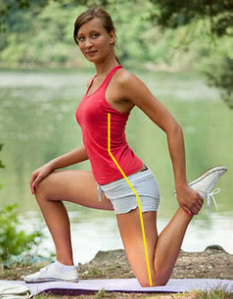
Make sure you keep the lower leg at or above 90degrees of hip flexion. Take hold of the ankle of the upper leg and pin it to your backside. Keep the ankle pinned to your backside while you drive your knee back as far as you can, opening the hip into full extension.


Recent Post
-
Why Do Your Joints Ache in Menopause, and What Helps?
Key Takeaways Falling and fluctuating oestrogen around perimenopause and menopause can leave joints stiff and…
-
Inflammatory Joint Pain: Psoriatic Arthritis and Other Causes
Key Takeaways Inflammatory joint pain is usually stiffest after rest, eases with movement and affects…
-
How Much Does Shoulder Surgery Cost in Australia?
Key Takeaways Public care as a public patient carries no direct cost for the surgery,…
-
Cortisone Injection for Shoulder Pain: Does It Actually Work?
Key Takeaways A cortisone injection settles inflammation and eases pain for a period, but it…
-
Shoulder Pain at Night: Why It Worsens and When to Act
Key Takeaways Lying down loads the shoulder differently and removes the daytime movement that masks…
-
Wrist Pain on the Little Finger Side: TFCC Injuries
Wrist pain on the little-finger side is often a TFCC injury. Learn the signs, why it clicks on rotation, physio-first care and when arthroscopy helps.
-
Wrist Pain After a Fall on an Outstretched Hand
Sore wrist after a fall on an outstretched hand? How to tell a scaphoid fracture, ligament sprain and distal radius fracture apart, and what to do next.
-
Stiff Elbow After a Fracture: Why It Won’t Straighten
Elbow still won’t straighten after a fracture? Why post-fracture stiffness happens, how the rehab window works and when arthroscopic release is considered.
-
A Pop at the Elbow When Lifting: Distal Biceps Rupture
A sudden pop at the elbow when lifting may be a distal biceps rupture. Learn the signs, why the first weeks matter, and repair versus rehab options.
-
Numb Ring and Little Finger: Cubital Tunnel Syndrome
Numb ring and little finger, worse with a bent elbow or at night? Learn the signs of cubital tunnel syndrome and how MTP Health treats it.


