
Subchondroplasty in Sydney
Subchondroplasty is a minimally invasive procedure that treats selected painful bone marrow lesions beneath the knee’s cartilage surface. By supporting the stressed bone with a calcium phosphate material, it may help relieve deep localised pain and delay the need for bigger surgery in carefully selected patients.
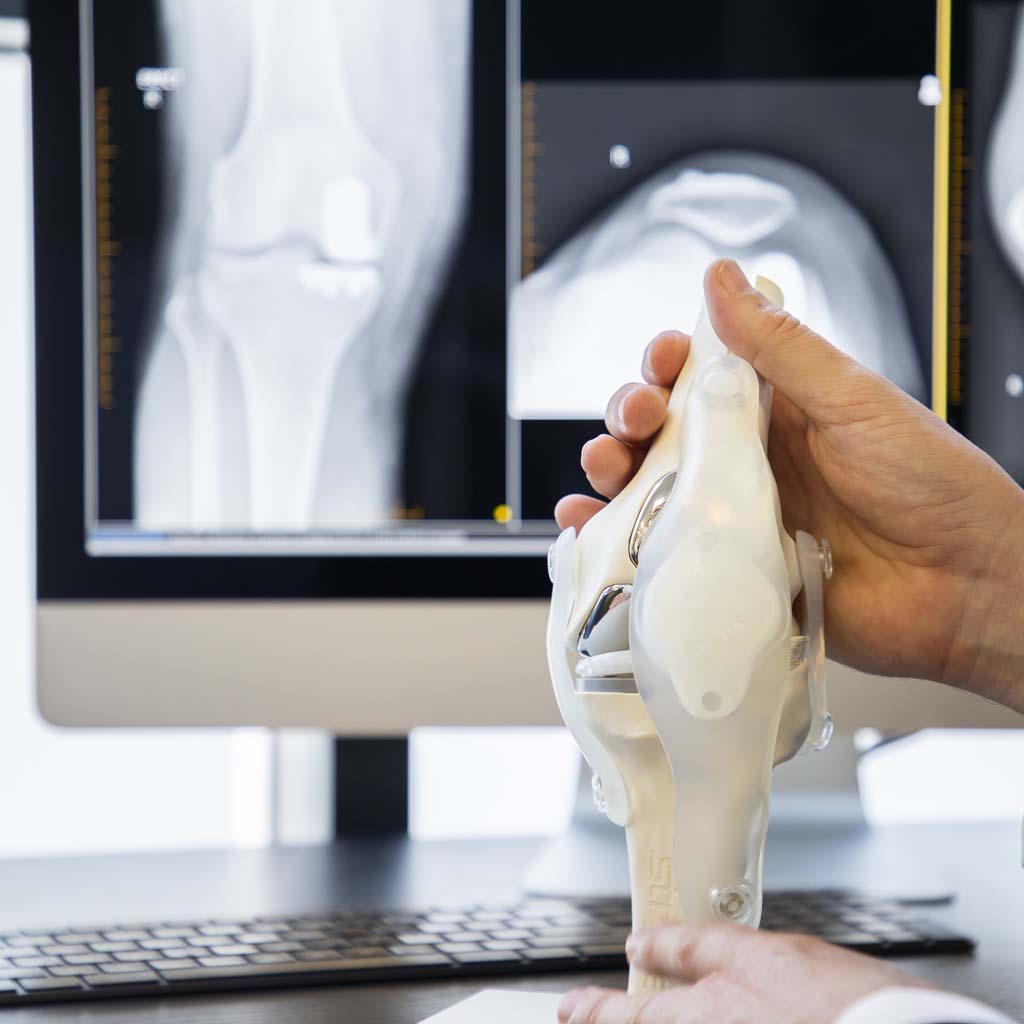
What is subchondroplasty?
Subchondroplasty is a minimally invasive knee procedure used to treat selected bone marrow lesions, often called BMLs. These are areas of stress, swelling or oedema in the bone just beneath the cartilage surface, and they are usually seen on MRI rather than on a standard X-ray.
The word “subchondral” refers to the bone under the cartilage. When this bone becomes overloaded or develops a stress response, it can cause deep, localised pain with walking, standing, stairs or uneven ground. Subchondroplasty aims to support this stressed area by injecting a flowable calcium phosphate bone substitute into the lesion.
The material hardens inside the bone and acts as an internal scaffold. Over time, the body may gradually remodel the material and replace it with natural bone. It is not a treatment for every painful knee, and it is not a replacement for good patient selection, careful imaging review and structured rehabilitation.

Do you need subchondroplasty?
Subchondroplasty is usually considered when an MRI shows a specific bone marrow lesion that matches your symptoms. The pain is often described as deep, localised and worse with load-bearing activities rather than sharp surface-level pain alone.
You may be suitable if the lesion is well-defined, your symptoms match its location, non-surgical treatment has not provided enough improvement, and the surrounding joint is healthy enough to preserve. It may be less suitable if arthritis is advanced, the knee is unstable, there is severe malalignment, or pain is mainly coming from another structure such as widespread cartilage damage or a major meniscal problem.
Not every bone marrow lesion needs surgery. Some BMLs settle with time, load management, physiotherapy, bracing, activity modification and pain management. Our physiotherapy team and exercise physiologists can help you build a non-surgical plan first — and if surgery becomes the right step, your recovery pathway is already connected.
At your consultation, your surgeon will take a detailed history, examine your knee and review your imaging. MRI is especially important because bone marrow lesions are often not visible on plain X-rays. The decision is not based on the MRI alone. It depends on whether the lesion explains your symptoms and whether subchondroplasty is the right option for your whole knee.
Benefits and risks
What you can expect it to achieve
- Target a painful bone marrow lesion seen on MRI
- Support weakened or stressed subchondral bone
- Reduce deep localised bone pain in suitable patients
- Improve walking tolerance and confidence with load-bearing activity
- Allow associated issues to be assessed during knee arthroscopy where required
- Potentially delay the need for larger surgery in carefully selected cases
- Support a structured return to activity through progressive rehabilitation
Risks to understand
- Common and temporary: swelling, bruising, stiffness, local bone discomfort and reduced strength in the early recovery period
- Uncommon: infection, blood clots, wound problems, nerve or blood vessel irritation, and anaesthetic complications
- Specific to subchondroplasty: temporary increase in bone pain, leakage of calcium phosphate material, incomplete symptom relief or pain from another untreated structure
- Longer-term: symptoms may return if arthritis progresses, alignment continues to overload the area, or the lesion is part of a broader joint problem
All surgery carries risk and outcomes vary between individuals. Subchondroplasty can be useful when a bone marrow lesion is the main pain generator, but it is not a cure for advanced arthritis and it is not appropriate for every MRI finding.
Subchondroplasty vs other knee treatments
Subchondroplasty treats the stressed bone beneath the cartilage surface. It is different from cartilage repair, meniscal surgery, osteotomy and knee replacement because it focuses on the bone marrow lesion rather than replacing the joint surface or realigning the leg.
If pain is mainly coming from advanced arthritis, severe malalignment, instability or widespread cartilage loss, another approach may be more reliable. Depending on your knee, this may include non-surgical care, bracing, arthroscopy, cartilage treatment such as microfracture surgery, realignment surgery or knee replacement.

| Subchondroplasty | Other knee treatments |
|---|---|
| Targets a specific bone marrow lesion | May target cartilage, meniscus, alignment, ligaments or whole-joint arthritis |
| Uses calcium phosphate bone substitute to support stressed bone | May involve cartilage repair, meniscal repair, osteotomy or replacement implants |
| Usually guided by MRI and intra-operative imaging | Depends on the diagnosis and treatment being performed |
| May be combined with arthroscopy | May be non-surgical, arthroscopic, realignment-based or replacement-based |
| Best for selected patients without advanced joint damage | Broader options are needed when arthritis or mechanical problems are more advanced |
The procedure: what happens
Before surgery, you will have a pre-operative assessment to review your general health, medications, imaging and anaesthetic plan. Your surgeon will review the MRI carefully to identify the size and location of the bone marrow lesion and plan the safest path for treatment.
The operation is performed under general or spinal anaesthesia. In many cases, subchondroplasty is performed with knee arthroscopy. This allows the surgeon to inspect the joint surface, meniscus and ligaments and address related issues if appropriate.
The bone marrow lesion is targeted using imaging guidance, often fluoroscopy, which provides real-time X-ray images during the procedure. A small cannula is placed into the affected area of bone, and a flowable calcium phosphate bone substitute is injected in a controlled way.
The material fills the targeted region and hardens to provide internal support. The surgeon confirms placement, removes the instruments and closes or dresses the small incisions. The exact operating time depends on the lesion, the technique used and whether other procedures are performed at the same time.
After surgery
You will wake in the recovery room, where your pain, circulation and vital signs are monitored closely. Once you are comfortable and stable, you will begin your early recovery with nursing and physiotherapy support.
Some discomfort in the treated area is expected in the first few days. Crutches may be recommended for a short period to reduce load while pain settles and walking confidence improves. Your exact instructions depend on the lesion location, the amount of material used and whether arthroscopy or another procedure was performed at the same time.
When to seek help. Contact us or seek urgent care if you develop a fever, increasing calf pain or swelling, spreading redness, wound discharge, shortness of breath, chest pain, sudden worsening pain, new numbness or pain that is not controlled by medication. Concerned about your recovery? Call (02) 9437 9794.
Subchondroplasty recovery and rehabilitation
Recovery after subchondroplasty is usually based on gradual improvement in pain, swelling, strength and load tolerance. Some people notice improvement over the first few weeks, while others improve more gradually over several months as the bone responds and confidence with activity returns.
Because subchondroplasty is often combined with arthroscopy, your recovery plan depends on the whole procedure rather than the injection alone. Rehabilitation aims to restore movement, rebuild strength, improve load-sharing across the knee and reduce the chance of the lesion being overloaded again.
Recovery timeline
| Phase | Timeframe | What to expect |
|---|---|---|
| Protect & settle | Days 0–14 | Crutches as needed, wound care, swelling control, gentle range-of-motion and short walking bouts |
| Early loading | Weeks 2–6 | Walking progression, gentle strengthening, balance work and gradual return to daily tasks as symptoms allow |
| Build capacity | Weeks 6–12 | Progressive strengthening, gait retraining, cycling and improved tolerance for stairs and longer walks |
| Strength & control | Months 3–6 | More demanding strengthening, functional exercises and gradual return to selected recreational activities |
| Longer-term review | Months 6–12 | Ongoing monitoring of symptoms, load tolerance and any underlying arthritis or mechanical contributors |
Timeframes are a guide. Your surgeon and rehabilitation team will progress you based on the lesion, your symptoms, any associated procedures and your recovery goals.
Post-operative care
At home, the priorities are keeping the wounds clean and dry, controlling swelling, using pain medication safely, walking as instructed and completing your prescribed exercises. Some swelling and local discomfort is common early, but increasing redness, wound discharge, fever or worsening calf pain should be checked urgently.
Rehabilitation at MTP Health
This is where MTP Health is different. Your rehabilitation is delivered by our own physiotherapists and exercise physiologists, working in the same clinic as your surgeon. Your plan can begin before surgery and continue seamlessly afterwards, with everyone working from the same goals and shared clinical record.
Rehabilitation focuses on restoring movement, improving walking quality, rebuilding quadriceps and hip strength, improving balance and gradually increasing load tolerance. Your recovery may be supported by our post-operative rehabilitation, physiotherapy and exercise physiology services.
Returning to driving, work and sport
Return to driving depends on which knee was treated, whether you drive an automatic or manual car, your pain, swelling, weight-bearing status, reaction time and medication use. You must be able to safely perform an emergency stop and must no longer be taking strong pain medication. Please check with your surgeon and your insurer before driving.
Desk-based work may be possible relatively early if pain is controlled and transport is manageable. Physical work takes longer, particularly if it involves prolonged standing, stairs, kneeling, lifting, squatting or uneven ground.
Return to sport or higher-load activity is gradual. Low-impact activity is usually introduced before running, jumping or pivoting. The timing depends on symptoms, strength, confidence, the lesion location and whether there is underlying arthritis or another mechanical contributor.
Rehab helps protect the bone. Subchondroplasty supports the affected area, but long-term comfort also depends on strength, movement quality and how load is shared across the knee. The best outcomes come from matching the procedure to the right lesion and progressing activity carefully afterwards.
Subchondroplasty cost in Sydney
The cost of subchondroplasty depends on your private health cover, hospital insurance, surgeon fees, anaesthetist fees, assistant fees, hospital charges, imaging, implant or bone substitute costs and whether arthroscopy or another procedure is performed at the same time.
If you are having surgery using private health cover, your out-of-pocket cost depends on your fund, policy, hospital arrangement and any gap charged by the surgical and anaesthetic teams. The anaesthetist is an independent practitioner and may charge a separate gap, so we provide their details and recommend checking their quote before surgery.
Because subchondroplasty may be performed alone or alongside arthroscopy, costs can vary. Your team will explain the expected fees, hospital arrangements and rebate pathway before surgery wherever possible.
If surgery is performed through the public system, there may be no out-of-pocket surgical cost, but waiting times can be long and depend on hospital access, urgency category and local availability.
Why have your subchondroplasty at MTP Health
MTP Health brings together fellowship-trained orthopaedic surgeons, careful surgical planning, physiotherapy and exercise physiology in one clinic. That matters because subchondroplasty is not just about filling an MRI finding — it is about working out whether that lesion is truly causing your symptoms and whether the rest of the knee is suitable.
Honest advice comes first. If your knee is better suited to non-surgical care, we will tell you. If the lesion is part of advanced arthritis or a bigger mechanical problem, we will explain why another option may be more reliable. If subchondroplasty is suitable, we will help you understand the procedure, recovery, risks and expected outcome clearly before you decide.
Your surgeon

Dr Jonathan Negus
Dr Negus is a fellowship-trained hip and knee surgeon with a focus on evidence-based knee care, joint preservation and joint replacement decision-making. He works alongside MTP Health's physiotherapy and exercise physiology team so your surgery and rehabilitation are managed as one plan.
View full profile →Frequently asked questions
What conditions can subchondroplasty help with?
Subchondroplasty may be considered when an MRI identifies a specific bone marrow lesion that matches your symptoms, usually deep, localised bone pain related to overload or early degenerative change.
It is not suitable for every knee problem, particularly when there is more advanced arthritis, significant malalignment or instability. A clinical assessment helps work out whether it fits your situation.
Is subchondroplasty performed on its own or with other procedures?
It is often performed alongside a knee arthroscopy, so the joint surface, meniscus and ligaments can be checked and treated at the same time.
Whether additional procedures are recommended depends on your symptoms, your imaging and the overall condition of the knee.
How long does recovery usually take?
Recovery varies with the size of the lesion, your activity level and whether other procedures were done at the same time.
Many people notice gradual improvement over weeks to months as the bone responds and load tolerance builds. Your surgeon and physiotherapist will guide progression based on how you respond.
Does the calcium phosphate material stay in the bone permanently?
The injected material provides internal support, and over time the body may gradually remodel it and replace it with natural bone.
The rate of this varies from person to person and depends on factors such as bone quality, how load is shared across the knee and your activity demands.
How do I know if subchondroplasty is right for me?
Suitability depends on your symptoms, the size and location of the lesion, your alignment and the health of the surrounding joint.
A clinical assessment can help work out whether subchondroplasty or another approach is more appropriate for you.
Can subchondroplasty delay knee replacement?
In selected patients, subchondroplasty may help reduce pain and improve function enough to delay larger surgery. This is most realistic when the bone marrow lesion is a major contributor to symptoms and the joint is not too arthritic.
If arthritis is advanced or progressing quickly, knee replacement may still be needed in the future.
Are bone marrow lesions visible on X-ray?
Bone marrow lesions are usually seen on MRI, not on standard X-rays. X-rays are still useful because they show joint space narrowing, alignment and signs of arthritis.
Your surgeon may use both imaging types to understand whether the lesion is isolated or part of a broader joint problem.
What happens if subchondroplasty does not relieve my pain?
If pain continues, your surgeon may reassess the knee with examination, imaging and a review of your rehabilitation progress.
Ongoing symptoms may mean the pain is coming from another structure, arthritis has progressed, alignment is still overloading the area, or another treatment pathway is needed.
Subchondroplasty consultations across Sydney
North Shore Health Hub, Level 4, Suite 401, 7 Westbourne St, St Leonards NSW 2065
St Leonards consulting →173 Warringah Road, Beacon Hill NSW 2100 — serving the Northern Beaches
Beacon Hill consulting →Also consulting at Gosford, Wahroonga, Castle Towers and Tamworth.
Talk to a surgeon about bone marrow lesions
Book a consultation to find out whether subchondroplasty is right for your knee — and if it is not, to leave with a clear plan for the most suitable next step.
Book a ConsultationPrefer to talk? Call (02) 9437 9794 · GP & physio referrals: referrer information
- Current peer-reviewed literature on subchondroplasty for symptomatic knee bone marrow lesions, including patient selection, outcomes and complications.
- Current peer-reviewed literature on knee osteoarthritis, subchondral bone stress, MRI-defined bone marrow lesions and joint preservation treatment pathways.