
Partial Meniscectomy in Sydney
A partial meniscectomy removes only the torn, unstable part of the meniscus while keeping as much healthy tissue as possible. It is usually a short keyhole procedure, with a structured rehabilitation plan to help you move comfortably and return to activity safely.
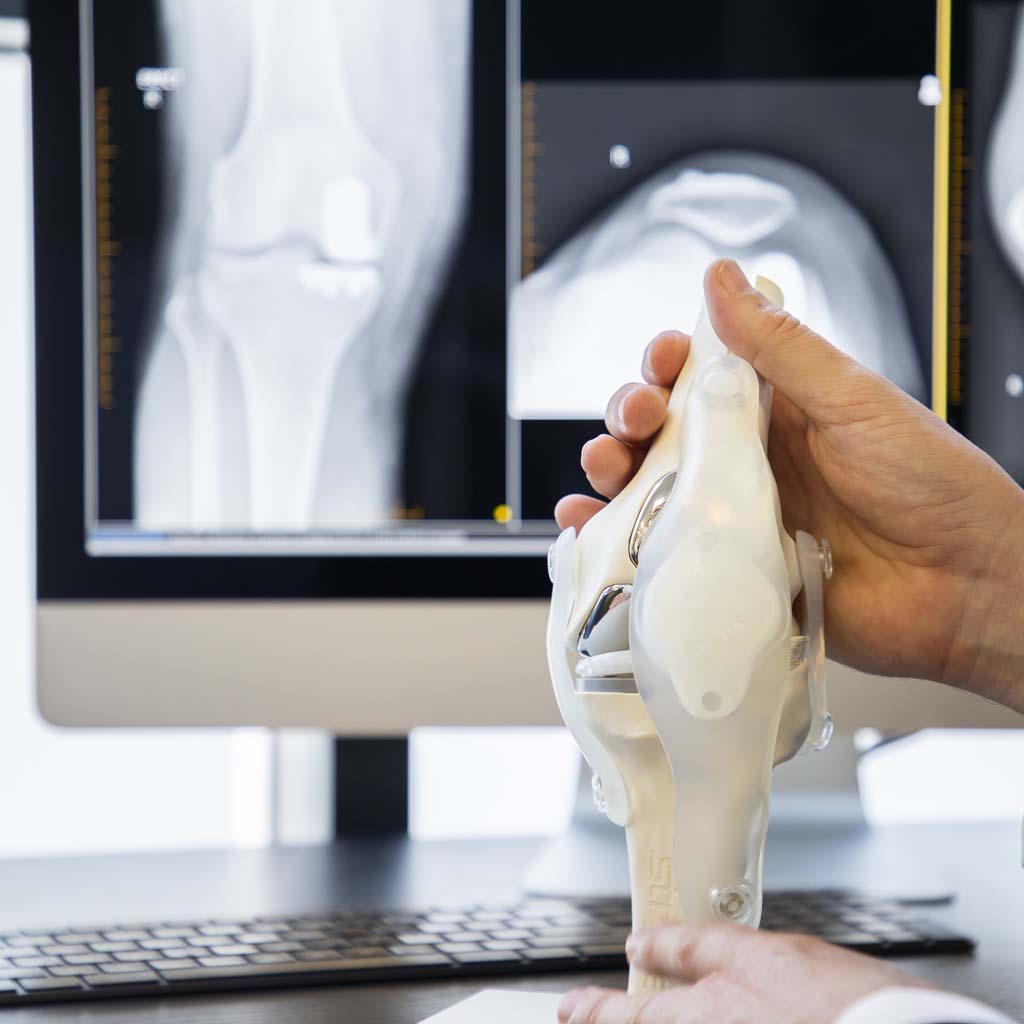
What is a partial meniscectomy?
A partial meniscectomy is keyhole knee surgery to remove the torn, unstable part of the meniscus. The meniscus is a crescent-shaped piece of fibrocartilage that sits between the thigh bone and shin bone, helping to share load, absorb shock and stabilise the knee.
This type of meniscus surgery is different from a meniscus repair. A repair stitches the torn tissue together so it can heal. A partial meniscectomy does not repair the meniscus; it trims away the damaged flap or frayed section that is causing symptoms, while preserving as much healthy meniscal tissue as possible.
In the past, surgeons often removed the whole meniscus. We now understand that the meniscus has an important protective role in the knee, so the modern approach is meniscal preservation: repair when suitable, and trim only what cannot be repaired or is clearly unstable.

Do you need a partial meniscectomy?
A partial meniscectomy is usually considered when a meniscus tear is causing ongoing mechanical symptoms such as catching, locking, painful clicking or repeated swelling, and when non-surgical care has not given enough relief.
It may also be recommended when the tear is frayed, complex, unstable or in a part of the meniscus with poor blood supply, meaning it is unlikely to heal with a repair. Tears in the inner part of the meniscus often have limited healing potential because blood supply is poor.
Not every meniscus tear needs surgery. Many tears can be managed with physiotherapy, activity changes, pain relief and time. Our physiotherapy team and knee surgeons can help you understand whether your tear is best treated without surgery, with repair, or with careful trimming.
The decision is not based on MRI alone. Some meniscus tears seen on scans are not the main source of pain, especially when there is arthritis or cartilage wear. At your consultation, your surgeon will examine your knee, review your imaging and explain whether your symptoms fit a tear that partial meniscectomy is likely to improve.
Benefits and risks
What you can expect it to achieve
- Remove the torn, unstable portion of meniscus that is catching or locking
- Preserve as much healthy meniscal tissue as possible
- Improve mechanical symptoms such as catching, locking or painful clicking
- Support more comfortable walking, bending and day-to-day movement
- Allow faster recovery than meniscus repair in many cases
- Help you progress back to work, exercise and sport with guided rehabilitation
Risks to understand
- Common and temporary: swelling, bruising, stiffness and mild wound discomfort
- Uncommon: infection, bleeding, blood clots, wound problems and anaesthetic complications
- Nerve symptoms: small numb patches around the incision sites can occur and usually shrink over time
- Persistent symptoms: pain may continue if arthritis, cartilage damage or overload is also present
- Longer-term: removing meniscal tissue can increase load on the joint surface over time
All surgery carries risk and outcomes vary between individuals. The aim is to remove no more than necessary, but even partial removal can change how load is shared through the knee. Your surgeon will talk through your individual risks before you decide.
Partial meniscectomy vs meniscus repair
A partial meniscectomy removes only the torn, unstable section of meniscus. It is usually used when the tear is not repairable or the tissue is unlikely to heal.
A meniscus repair stitches the tear back together. It preserves more tissue, but only works for selected tear patterns and requires a slower, more protected recovery.

| Partial meniscectomy | Meniscus repair |
|---|---|
| Trims the unstable torn section | Stitches the torn tissue together |
| Used when the tear is not repairable | Used when the tear has healing potential |
| Usually allows earlier weight-bearing | Often requires protected weight-bearing |
| Recovery is usually faster | Recovery is usually slower |
| Removes some meniscal tissue | Preserves more meniscal tissue |
The procedure: what happens
Partial meniscectomy is usually performed as a knee arthroscopy. You will arrive at hospital before surgery, meet the anaesthetic team and have the skin around your knee prepared with antiseptic. Your surgeon will confirm the correct knee and mark the side before the anaesthetic.
The operation is usually performed under general anaesthetic, although spinal anaesthetic may be suitable in some cases. Small incisions are made around the front of the knee. A camera is inserted through one incision, and small instruments are inserted through another.
Your surgeon first inspects the knee compartments, including the meniscus, joint cartilage, ligaments and the rest of the joint. The torn part of the meniscus is then trimmed using specialised instruments such as meniscal biters, baskets and an arthroscopic shaver.
The goal is to remove only the unstable part that is catching or irritating the knee, then smooth the remaining edge so there are no sharp or loose fragments. Any other findings, such as cartilage wear or loose bodies, will be assessed and treated where appropriate.
After surgery
You will wake in the recovery room and be monitored until comfortable and stable. Most partial meniscectomy procedures are day surgery, so you can usually go home the same day with a responsible adult.
Many people can put weight through the leg quite soon, often on the same day. You may use crutches for comfort at first, but the goal is usually to walk more normally as pain and swelling settle.
When to seek help. Contact us or seek urgent care if you develop fever, increasing calf pain or swelling, chest pain, shortness of breath, spreading redness, wound discharge, severe pain that is not improving, or sudden locking that does not settle. Concerned about your recovery? Call (02) 9437 9794.
Partial meniscectomy recovery and rehabilitation
Post-operative rehabilitation after partial meniscectomy is usually quicker than after meniscus repair because the meniscus does not need to heal around stitches. Even so, recovery still depends on swelling, strength, the health of the cartilage in the knee and how demanding your work or sport is.
Your recovery starts with swelling control, walking safely, restoring knee movement and reactivating the quadriceps. From there, rehabilitation progresses into strength, balance, stairs, gym work and return to running or sport where appropriate.
Recovery timeline
| Phase | Timeframe | What to expect |
|---|---|---|
| Protect & settle | Days 0–7 | Walking as tolerated, crutches if needed, swelling control, wound care and gentle knee movement |
| Early movement | Weeks 1–2 | Walking more normally, reducing crutches, returning to desk work and beginning controlled strengthening |
| Strength & control | Weeks 2–6 | Progressive strength work, cycling or swimming if suitable, balance and return to most daily activities |
| Return to activity | Weeks 4–8 | Gradual return to higher loading, gym work and sport-specific exercise if swelling and strength allow |
| Longer settling | Months 3–6 | Some people, especially those with cartilage wear or arthritis, may take longer for swelling and pain to fully settle |
Timeframes are a guide. Your surgeon and rehabilitation team will progress you based on pain, swelling, strength, cartilage health and your goals.
Post-operative care
The bulky dressing can usually be removed the morning after surgery. Smaller waterproof dressings underneath should stay in place until your wound check at 10 to 14 days unless they become loose or soaked.
You can usually shower with waterproof dressings, but avoid soaking the knee in a bath, pool or ocean until the wounds have healed. The knee may remain swollen for several weeks, and the incision sites can feel puffy or firm for up to three months.
Rehabilitation at MTP Health
This is where MTP Health is different. Your rehabilitation is delivered by our physiotherapists and exercise physiologists in the same clinic as your surgeon, following a plan based on what was found and treated inside your knee.
Your physiotherapist will help settle swelling, restore range of motion and rebuild quadriceps strength. If you are returning to sport or physically demanding work, exercise physiology can help with running mechanics, change of direction, landing control and workload progression.
We recommend booking your first post-operative physiotherapy appointment as soon as your surgical date is confirmed, ideally two to five days after surgery.
Returning to driving, work and sport
Returning to driving usually takes around two weeks for right knee surgery and around two days for left knee surgery in an automatic car. You must be able to safely perform an emergency stop and must have stopped strong pain medication. Please also check with your car insurer.
Most office workers can return to work after two to five days, depending on pain, swelling, transport and whether they can elevate the leg during the day. Heavy manual workers may need up to two weeks or longer before resuming full duties, especially if their job involves ladders, kneeling, squatting or heavy lifting.
Resistance work and non-impact exercise such as cycling or swimming are often introduced from around two weeks if swelling and wounds allow. Running and impact activity are usually delayed until the knee has settled and strength has returned. We often advise avoiding running for the first six weeks unless your surgeon and physiotherapist clear you earlier.
The aim is limited trimming, not over-removal. A partial meniscectomy can settle mechanical symptoms, but the meniscus still matters. Preserving as much healthy tissue as possible helps support long-term knee function.
Partial meniscectomy cost in Sydney
The cost of partial meniscectomy depends on your private health cover, hospital insurance, surgeon fees, anaesthetist fees, assistant fees, hospital charges and whether any other procedures are performed at the same time.
If you are having surgery using private health cover, the surgeon, anaesthetist and assistant fees usually leave an out-of-pocket gap after Medicare and health fund rebates. You will receive a written quote before surgery so you understand the expected cost.
The anaesthetist is an independent practitioner and may charge a different gap, which can affect the final figure. We provide their details and recommend checking their quote before committing to surgery.
The surgeons at MTP Health participate in various reduced-gap schemes run by different health insurance providers. Availability can vary, and reduced-gap surgical time slots may involve a longer wait. Your insurance may also have an excess to pay, commonly around $500.
If you are having partial meniscectomy through the public system, there is no out-of-pocket surgical cost, but waiting times can be long and depend on your local hospital, urgency category and availability.
Why have your partial meniscectomy at MTP Health
MTP Health brings together experienced knee surgeons, physiotherapists and exercise physiologists in one clinic. That matters because a partial meniscectomy should never be a default decision. The question is whether the tear is truly driving your symptoms, whether repair is possible, and whether trimming is likely to help.
Honest advice comes first. If your knee is better suited to rehabilitation than surgery, we will tell you. If the tear is repairable, we will explain why repair may be preferable. If partial meniscectomy is the right option, we will aim to remove only what is necessary and guide your recovery properly.
Your surgeon

Dr Jonathan Negus
Dr Negus is a fellowship-trained hip and knee surgeon who works alongside MTP Health's physiotherapy and exercise physiology team so your surgery and rehabilitation are managed as one plan.
View full profile →Frequently asked questions
What is the goal of a partial meniscectomy?
The aim is to remove only the torn, unstable part of the meniscus while keeping as much healthy tissue as possible.
The focus is on settling mechanical symptoms such as catching, locking or painful clicking and supporting more comfortable movement, rather than removing more tissue than is necessary.
Because the meniscus helps share load and protect the knee joint, preserving healthy tissue is an important part of the procedure.
Is a partial meniscectomy always needed for a meniscal tear?
No. Many meniscal tears can be managed without surgery using activity changes, physiotherapy and pain relief guided by your GP or treating team.
A partial meniscectomy is usually considered when symptoms persist, the tear looks clearly unstable on imaging, and non-surgical care has not given enough relief.
It is also considered when the tear pattern, location or tissue quality means repair is unlikely to heal.
How soon can I walk after a partial meniscectomy?
Many people can put weight through the leg quite soon, often on the same day. Crutches may be used for comfort and confidence at first.
The exact timeline depends on your pain levels, swelling, any other findings in the knee and your overall health.
Your surgeon and physiotherapist will guide what is right for you and help you progress back to normal walking safely.
What are the main risks of a partial meniscectomy?
Possible risks include infection, bleeding, blood clots, stiffness and ongoing pain. There are also general anaesthetic risks, although serious complications are uncommon.
Because removing meniscal tissue can change how load is shared across the knee, there is also a chance that underlying joint wear continues over time.
Your surgeon will talk through your individual risks, including the condition of your cartilage and whether arthritis is already present, before you decide.
Will a partial meniscectomy cure my knee pain?
It may ease symptoms that come from an unstable meniscus tear, especially catching, locking or painful clicking.
However, it does not reverse existing cartilage wear or arthritis. Some people notice a clear improvement, while others still have discomfort if there are other changes in the joint.
It helps to discuss likely outcomes with your surgeon beforehand so you understand what surgery can and cannot realistically change.
What is the difference between partial medial and partial lateral meniscectomy?
A partial medial meniscectomy trims the meniscus on the inside of the knee. A partial lateral meniscectomy trims the meniscus on the outside of the knee.
The principles are similar, but the tear location, pattern and role of each meniscus can affect surgical decisions and rehabilitation advice.
How long does partial meniscectomy surgery take?
The trimming part of the procedure can often be completed in less than an hour if no other procedures are required.
There is additional time before surgery for anaesthetic preparation and after surgery for recovery before you return to the day stay ward and go home.
Can a partial meniscectomy make arthritis worse?
Removing meniscal tissue can increase pressure on the joint surface, which is why surgeons aim to preserve as much healthy meniscus as possible.
A partial meniscectomy does not directly create arthritis in every patient, but if cartilage wear is already present, symptoms may take longer to settle and joint wear may continue over time.
Strengthening the muscles around the knee, maintaining a healthy weight and avoiding unnecessary high-impact overload can help support long-term knee health.
Partial meniscectomy consultations across Sydney
North Shore Health Hub, Level 4, Suite 401, 7 Westbourne St, St Leonards NSW 2065
St Leonards consulting →173 Warringah Road, Beacon Hill NSW 2100 — serving the Northern Beaches
Beacon Hill consulting →Also consulting at Gosford, Wahroonga, Castle Towers and Tamworth.
Talk to a surgeon about your meniscus tear
Book a consultation to find out whether partial meniscectomy is right for your knee — and if it is not, to leave with a clear plan for the most suitable next step.
Book a ConsultationPrefer to talk? Call (02) 9437 9794 · GP & physio referrals: referrer information
- American Academy of Orthopaedic Surgeons, Clinical Practice Guideline for Management of Acute Isolated Meniscal Pathology.
- American Academy of Orthopaedic Surgeons, Meniscus Tears and Meniscus Repair patient information.
- Current meniscal preservation literature supporting repair where suitable and limited partial meniscectomy where repair is not appropriate.