
Cartilage Repair Surgery in Sydney
Articular cartilage does not heal well on its own, so the right treatment matters. Cartilage repair surgery may help selected patients with a focal cartilage defect reduce pain, improve function and protect the knee with a structured rehabilitation plan.
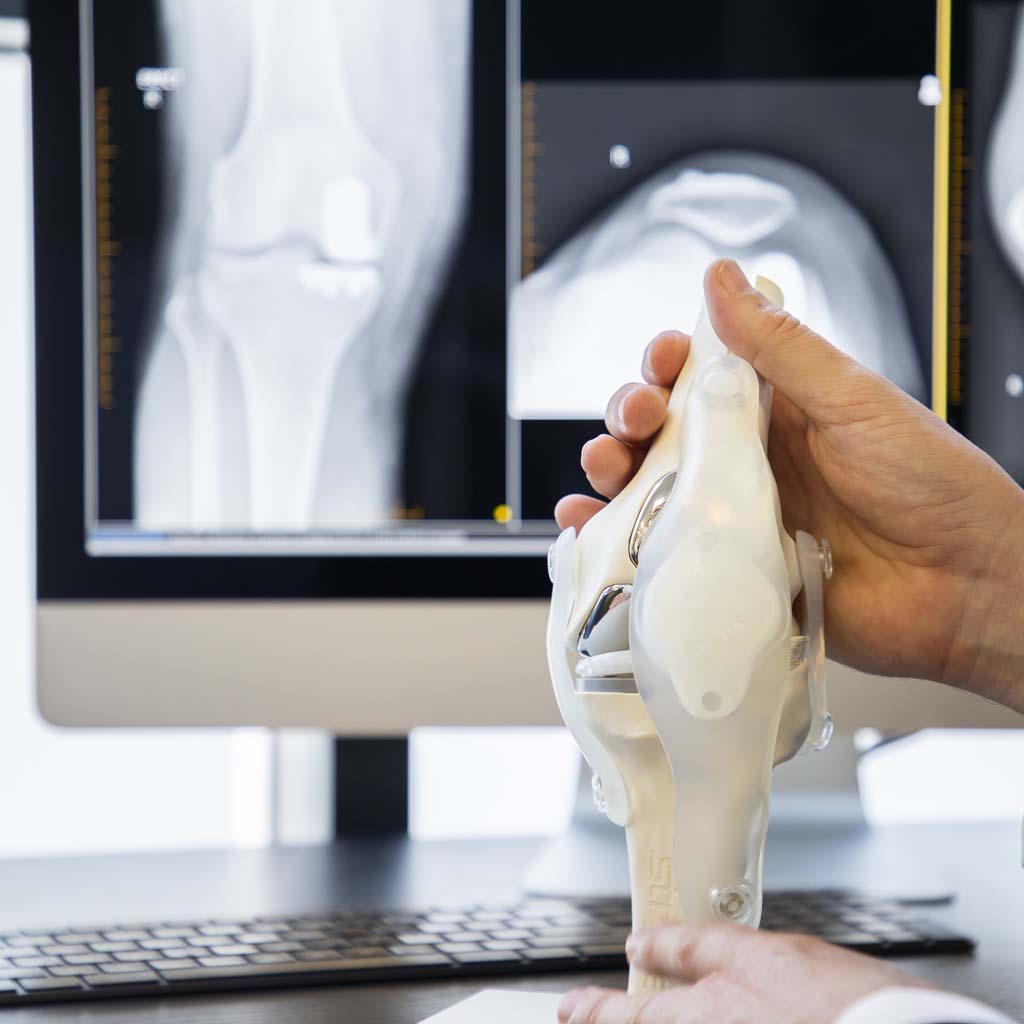
What is knee cartilage repair?
Knee cartilage repair refers to a group of procedures used to treat damage to the smooth articular cartilage that covers the ends of the bones inside the knee. This cartilage allows the joint surfaces to glide with low friction and helps absorb load during movement.
Unlike bone or skin, articular cartilage has very limited ability to heal because it has little blood supply. A small, contained cartilage defect can cause localised pain, swelling after activity, catching, stiffness or a sense that something is not moving smoothly inside the knee.
Cartilage repair surgery does not recreate the exact cartilage you were born with. The goal is to reduce symptoms, improve function and support longer-term joint health by treating a specific defect, protecting the knee and guiding rehabilitation carefully.

Do you need cartilage repair surgery?
Cartilage repair is usually considered for people with focal cartilage damage rather than widespread arthritis. The best candidates are often younger or active patients with a single area of damage, good knee alignment, a stable knee and healthy surrounding cartilage.
Surgery may be discussed when pain, swelling, catching or activity limitation continue despite appropriate non-surgical care. This may include physiotherapy, strength work, load management, activity modification, weight management and pain relief guided by your GP or treating team.
Not all cartilage damage is treated with surgery. Generalised cartilage wear is usually osteoarthritis, and the treatment pathway is different. Our physiotherapy team, exercise physiologists and knee surgery team can help identify whether your symptoms fit a focal cartilage problem or a broader joint condition.
At your consultation, your surgeon will examine your knee and review imaging. X-rays can show alignment and arthritis, while MRI is often used to assess the cartilage defect, bone beneath the cartilage, meniscus, ligaments and surrounding joint surfaces.
Benefits and risks
What you can expect it to achieve
- Reduce symptoms from a focal cartilage defect
- Improve comfort with walking, stairs, sport or daily activity
- Smooth unstable cartilage flaps where appropriate
- Stimulate repair tissue or restore cartilage and bone in selected defects
- Address related problems such as meniscus or ligament injuries where needed
- Support longer-term knee health with structured rehabilitation and load management
Risks to understand
- Common and temporary: pain, swelling, stiffness and difficulty loading the knee early in recovery
- Uncommon: infection, bleeding, blood clots, wound problems and anaesthetic complications
- Procedure-specific: graft failure, repair tissue overgrowth, ongoing swelling or incomplete symptom relief
- Rehabilitation risk: loading too quickly can compromise the repair
- Longer-term: cartilage damage may still progress, especially if alignment, instability, weight or arthritis are not addressed
All surgery carries risk and outcomes vary between individuals. The most important part of your consultation is matching the procedure to the defect, the rest of the knee and your goals.
Cartilage repair treatment options
There is no single cartilage repair procedure that suits every knee. Smaller contained defects may suit chondroplasty or microfracture surgery. Larger or deeper defects may need cell-based techniques such as MACI or cartilage-and-bone grafting.
Sometimes cartilage repair also needs another procedure, such as ligament reconstruction, knee realignment or subchondroplasty, depending on the problem being treated, because a cartilage repair is less likely to succeed if the knee remains unstable or overloaded.

| Procedure | What it does | When it may be considered |
|---|---|---|
| Chondroplasty | Smooths unstable cartilage edges | Loose or unstable cartilage flaps without a need to regenerate cartilage |
| Microfracture | Creates small holes in bone to stimulate fibrocartilage repair tissue | Smaller, contained defects in selected patients |
| MACI / ACI | Uses a patient's own cartilage cells grown and implanted into the defect | Larger focal cartilage defects in suitable knees |
| Osteochondral autograft | Transfers cartilage and bone plugs from a lower-load area of the same knee | Smaller cartilage-and-bone defects |
| Osteochondral allograft | Uses donor cartilage and bone for larger defects | Larger or deeper osteochondral defects in selected patients |
The procedure: what happens
The procedure depends on the type of cartilage damage and the repair technique chosen. Some procedures are performed arthroscopically through small keyhole incisions, while others require a small open incision to access the defect and place a graft or cell-based implant accurately.
In a chondroplasty, loose or unstable cartilage is smoothed using fine instruments. This may reduce catching or irritation, but it does not regenerate new cartilage.
In microfracture, the damaged cartilage is cleared to create a stable defect, then small holes are made in the bone beneath the cartilage. This allows bone marrow cells to form a clot that can mature into fibrocartilage repair tissue.
MACI or ACI is usually a staged procedure. First, a small sample of healthy cartilage is taken from a low-load area. The cells are grown in a laboratory, then implanted into the cartilage defect during a second procedure.
Osteochondral grafting transfers cartilage and bone into the defect. This may come from a lower-load area of your own knee for smaller lesions, or from a donor graft for larger or deeper defects.
After surgery
You will wake in the recovery room and be monitored until comfortable and stable. Some patients go home the same day, while others may stay overnight depending on the procedure, pain control, mobility and any additional surgery.
Many cartilage repair procedures require protected weight-bearing with crutches. Your surgeon and physiotherapist will explain exactly how much weight you can place through the leg and when this can increase.
When to seek help. Contact us or seek urgent care if you develop fever, increasing calf pain or swelling, chest pain, shortness of breath, spreading redness, wound discharge, severe pain that is not improving, or sudden worsening of knee swelling. Concerned about your recovery? Call (02) 9437 9794.
Cartilage repair recovery and rehabilitation
Recovery after cartilage repair is usually slower and more protective than a simple knee arthroscopy. The repair site needs time to mature, and loading too early can affect the result.
Post-operative rehabilitation focuses first on protecting the repair, controlling swelling and restoring safe movement. Later stages rebuild strength, walking quality, balance, gym capacity and sport-specific function where appropriate.
Recovery timeline
| Phase | Timeframe | What to expect |
|---|---|---|
| Protect & settle | Weeks 0–6 | Crutches, protected weight-bearing, swelling control, wound care and gentle range-of-motion work |
| Early loading | Weeks 6–12 | Gradual increase in weight-bearing, controlled strengthening, cycling and movement retraining where allowed |
| Strength & control | Months 3–6 | Progressive strengthening, balance, walking tolerance and low-impact conditioning |
| Return to activity | Months 6–9 | Higher-level strength, running preparation and sport-specific progressions if cleared |
| Final maturation | Months 9–12+ | Ongoing improvement in strength, confidence and activity tolerance; return to sport depends on the procedure and testing |
Timeframes are a guide. Your surgeon and rehabilitation team will progress you based on the procedure performed, defect size, symptoms, imaging and strength targets.
Post-operative care
Your dressings, wound care, crutch use and weight-bearing restrictions will be explained before you leave hospital. It is important to follow these instructions closely because the repair tissue or graft needs protection while it integrates and matures.
Depending on your procedure, you may be asked to use a brace, crutches or a knee movement device. Pain, swelling and stiffness are expected early, but increasing redness, fever, wound discharge, calf pain or shortness of breath should be checked urgently.
Rehabilitation at MTP Health
This is where MTP Health is different. Your rehabilitation is delivered by our physiotherapists and exercise physiologists in the same clinic as your surgeon, following a plan that reflects your specific cartilage procedure.
Your physiotherapist will guide early swelling control, range of motion and safe walking. Exercise physiology becomes important as you progress into strength, conditioning, movement control, return to work and return to sport.
Cartilage repair rehabilitation requires patience. The aim is not simply to feel better quickly, but to protect the repair long enough to give it the best chance of becoming useful, durable tissue.
Returning to driving, work and sport
Driving depends on which knee was operated on, whether you drive an automatic or manual car, your weight-bearing status and whether you can perform an emergency stop safely. You must also be off strong pain medication. Please check with your surgeon and insurer before driving.
Office work may be possible within one to two weeks for smaller procedures, but this can be longer if you need crutches, cannot elevate the leg or have a more complex repair. Labour-intensive work may require several weeks or months depending on the procedure and restrictions.
Return to sport is highly procedure-specific. Low-impact exercise is usually introduced before running, jumping or pivoting. Long-distance running and repeated impact may not be recommended if the cartilage damage is significant or the joint surface remains vulnerable.
Cartilage repair is a long-game procedure. The best result usually comes from matching the right operation to the right defect, protecting the repair early and building strength gradually before returning to higher loads.
Cartilage repair surgery cost in Sydney
The cost of cartilage repair surgery depends on the procedure performed, private health cover, hospital insurance, surgeon fees, anaesthetist fees, assistant fees, implant or graft costs and any additional procedures required.
Some cartilage procedures are simple arthroscopic procedures, while others are staged or involve specialised grafts, membranes, implants or laboratory cell preparation. This can significantly affect cost and insurance coverage.
If you are having surgery using private health cover, you will receive a written quote before surgery. The anaesthetist is an independent practitioner and may charge a separate gap, so we provide their details and recommend checking their quote before committing to surgery.
The surgeons at MTP Health participate in various reduced-gap schemes run by different health insurance providers where available. Your insurer may also have an excess to pay, commonly around $500.
Why have your cartilage repair at MTP Health
MTP Health brings together knee surgeons, physiotherapists and exercise physiologists in one clinic. That matters because cartilage repair is not just about the operation. It is about diagnosis, patient selection, load management, surgical technique and careful rehabilitation.
Honest advice comes first. If your cartilage damage is best managed without surgery, we will tell you. If your symptoms are more consistent with arthritis than a focal defect, we will explain that clearly. If surgery is suitable, we will help you understand the options, limitations and recovery before you decide.
Your surgeon

Dr Jonathan Negus
Dr Negus is a fellowship-trained hip and knee surgeon who works alongside MTP Health's physiotherapy and exercise physiology team so your surgery and rehabilitation are managed as one plan.
View full profile →Frequently asked questions
How do I know if my knee cartilage is damaged?
Knee cartilage damage can cause localised pain, swelling that worsens with activity, stiffness after rest or a catching sensation inside the joint.
An MRI is often used to confirm the location and extent of a cartilage lesion. X-rays may also be used to check alignment and look for arthritis.
If symptoms persist despite rest, activity changes or physiotherapy, it may be worth seeking assessment from a knee specialist.
Can cartilage repair surgery restore my knee to normal?
Cartilage repair procedures aim to improve symptoms and support better function, but they do not recreate the original cartilage you were born with.
Outcomes depend on factors such as the size of the defect, knee alignment, overall joint health, activity level and rehabilitation.
Your surgeon can explain what a particular technique may reasonably achieve in your case, including what it can and cannot change.
When is surgery considered for cartilage damage?
Surgery may be discussed when a focal area of cartilage loss keeps causing symptoms despite non-surgical care.
Suitability depends on the size and depth of the lesion, your activity demands, knee alignment, ligament stability and the health of the surrounding joint.
Some techniques suit smaller, contained defects, while others address larger or deeper cartilage-and-bone damage.
What is recovery like after cartilage repair surgery?
Recovery varies with the procedure performed. Some techniques need a period of limited weight-bearing, while others allow earlier movement.
Rehabilitation focuses on protecting the repair, restoring movement, gradually building strength and returning to activity in stages.
Your physiotherapist and surgeon will outline a plan suited to your procedure, defect location and goals.
Can cartilage damage get worse if left untreated?
Untreated cartilage damage may continue to cause symptoms, particularly with load or repetitive activity.
Whether it progresses depends on factors such as alignment, activity level, body weight, joint stability and the size of the lesion.
Early assessment can help identify options to manage symptoms and support longer-term joint function.
What is the difference between cartilage damage and arthritis?
A focal cartilage defect is a contained area of cartilage loss or injury. Arthritis usually refers to more widespread joint surface wear and inflammation across the knee.
This distinction matters because cartilage repair procedures are usually more suitable for focal defects than generalised arthritis.
Is microfracture still used for knee cartilage damage?
Microfracture is still used in selected cases, usually for smaller contained defects in suitable patients.
It stimulates the body to form fibrocartilage repair tissue. This can improve symptoms, but fibrocartilage is not the same as native hyaline cartilage and may not be as durable under high loads.
Will I need crutches after cartilage repair?
Many cartilage repair procedures require crutches and restricted weight-bearing for a period of time to protect the repair.
The exact restrictions depend on the procedure, size and location of the defect, and whether other procedures were performed at the same time.
Cartilage repair consultations across Sydney
North Shore Health Hub, Level 4, Suite 401, 7 Westbourne St, St Leonards NSW 2065
St Leonards consulting →173 Warringah Road, Beacon Hill NSW 2100 — serving the Northern Beaches
Beacon Hill consulting →Also consulting at Gosford, Wahroonga, Castle Towers and Tamworth.
Talk to a surgeon about knee cartilage damage
Book a consultation to find out whether cartilage repair is suitable for your knee — and if it is not, to leave with a clear plan for the most appropriate next step.
Book a ConsultationPrefer to talk? Call (02) 9437 9794 · GP & physio referrals: referrer information
- American Academy of Orthopaedic Surgeons, Articular Cartilage Restoration patient guidance.
- Current cartilage repair literature on microfracture, chondroplasty, MACI/ACI and osteochondral grafting.
- Current rehabilitation principles for protected loading and staged return to activity after cartilage repair.