
Tibial Tubercle Osteotomy (TTO) in Sydney
A tibial tubercle osteotomy repositions the bony attachment of the patella tendon to improve kneecap tracking and stability. It is commonly used for recurrent kneecap dislocation, patella maltracking or patellofemoral pain when alignment is part of the problem.
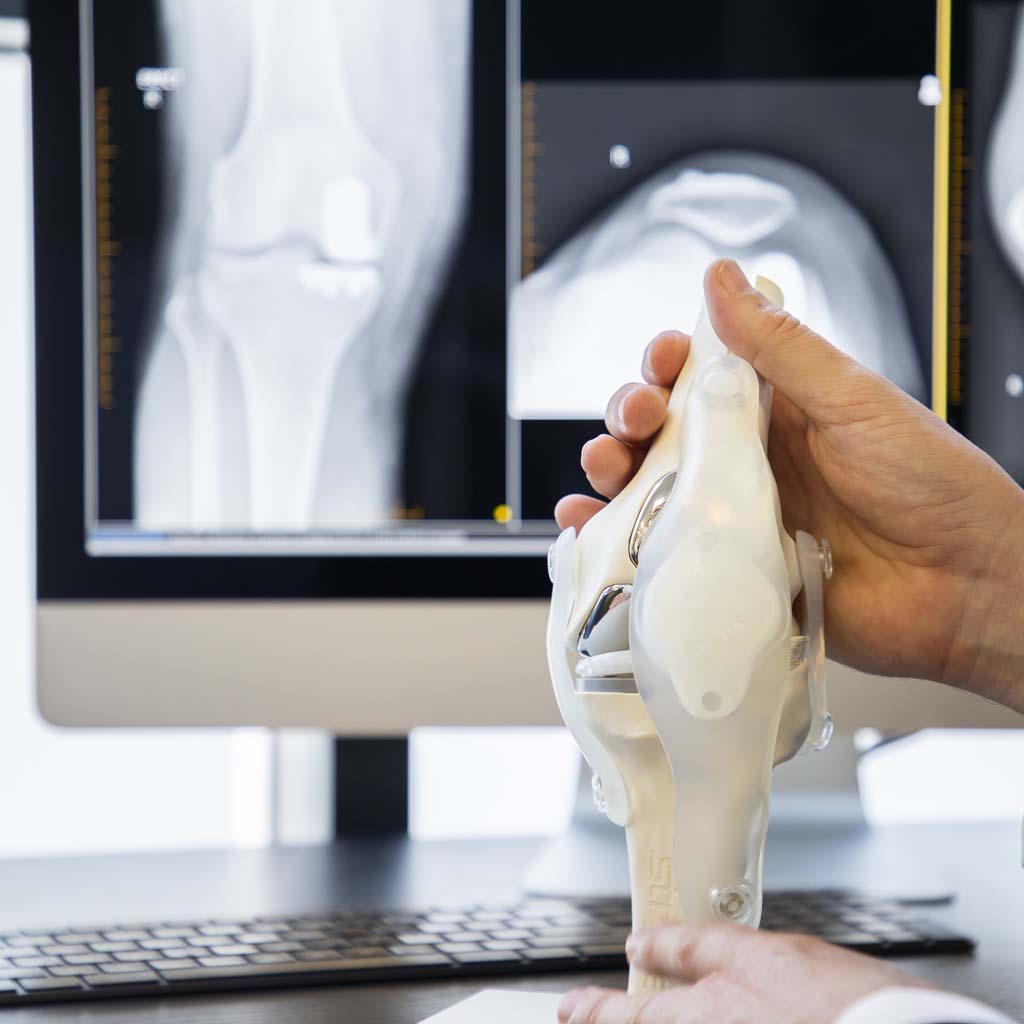
What is TTO surgery?
Tibial tubercle osteotomy, often shortened to TTO, is surgery used to treat kneecap dislocation, patella instability, patella maltracking and some patterns of patellofemoral pain.
The tibial tubercle is the bony bump at the front of the shin bone where the patella tendon attaches. During TTO surgery, this small section of bone is moved to a better biomechanical position so the kneecap sits and tracks more securely in its groove.
The tubercle may be moved towards the inner side of the knee, further down the shin bone, slightly forward, or in a combined direction depending on your anatomy and symptoms. The aim is to improve tracking, reduce the risk of dislocation and offload painful areas of the kneecap joint.

Do you need a tibial tubercle osteotomy?
TTO is usually considered when kneecap instability or maltracking has not settled with appropriate non-surgical care, and imaging shows that the position of the tibial tubercle is contributing to the problem.
It is more commonly used in skeletally mature patients with long-term kneecap instability, recurrent patella (kneecap) dislocation, patella alta, painful maltracking, a high tibial tubercle to trochlear groove distance, or focal patellofemoral cartilage overload.
TTO is not a standard operation for every kneecap problem. It is an individualised realignment procedure. Some patients need MPFL reconstruction instead, while others may need TTO combined with MPFL reconstruction, trochleoplasty, cartilage repair or knee arthroscopy.
At your consultation, your surgeon will assess your kneecap tracking, apprehension, alignment, strength, gait and flexibility. Imaging may include X-rays, MRI and sometimes CT scans to assess cartilage damage, patella height, trochlear shape and tubercle position.
Benefits and risks
What you can expect it to achieve
- Improve kneecap tracking in the trochlear groove
- Reduce the risk of recurrent kneecap dislocation
- Decrease pressure on painful areas of the patellofemoral joint
- Improve confidence in a knee that feels unstable
- Support return to activity when rehabilitation targets are met
- Allow associated problems, such as cartilage damage or loose fragments, to be treated at the same time
Risks to understand
- Common and temporary: pain, swelling, bruising, stiffness and numbness around the incision
- Bone-healing risks: delayed union, non-union, loss of fixation or fracture around the osteotomy
- Hardware-related: screws may irritate the skin or soft tissues and may need removal after the bone has healed
- General risks: infection, bleeding, blood clots, wound problems and anaesthetic complications
- Longer-term: ongoing pain, recurrent instability or need for further surgery can occur in some cases
All surgery carries risk and outcomes vary between individuals. The goal is to match the correction to the reason your kneecap is unstable or overloaded, not simply to move the bone in the same way for every patient.
TTO and other kneecap procedures
TTO is often used as part of a bigger knee osteotomy and patellofemoral plan. If the MPFL is torn, an MPFL reconstruction may be performed at the same time. If the groove is severely abnormal, trochleoplasty may be discussed. If cartilage damage is present, cartilage treatment may also be considered.
This is why imaging and assessment matter. The same symptom — a kneecap that slips, catches or hurts — can come from different combinations of ligament injury, bone shape, cartilage damage and muscle control.

| Procedure | Why it may be used with TTO |
|---|---|
| MPFL reconstruction | Rebuilds the ligament that helps stop the kneecap slipping outwards |
| Knee arthroscopy | Checks cartilage, loose fragments and joint damage inside the knee |
| Trochleoplasty | Reshapes a severely abnormal trochlear groove in selected cases |
| Cartilage repair | Treats focal cartilage defects caused by overload or dislocation |
| Lateral release or soft tissue balancing | May be considered only in carefully selected cases where soft tissue tightness contributes |
The procedure: what happens
You will arrive at hospital one to two hours before surgery. TTO is usually performed under a general anaesthetic, meaning you are asleep for the procedure. Your anaesthetist may also use local anaesthetic or a nerve block to reduce pain after you wake up.
Before surgery begins, your surgeon will confirm the correct knee and mark the side. A tourniquet may be inflated around the upper thigh to reduce bleeding and improve visibility.
The procedure often begins with knee arthroscopy. Two or three small incisions are made at the front of the knee, the joint is filled with sterile saline, and a camera is used to assess the cartilage surfaces, kneecap tracking, loose fragments and other internal damage.
The next step is preparing the tibial tubercle. This is done through an incision over the front of the shin bone just below the knee joint. A section of bone with the patella tendon attached is carefully cut and moved into the planned position.
The tubercle may be shifted towards the inner knee, moved further down the shin bone, moved forward, or repositioned in a combined direction. It is then fixed to the shin bone with screws so it can heal in its new position.
At this point, extra procedures such as MPFL reconstruction or cartilage treatment may be performed if needed. At the end of surgery, the incisions are injected with local anaesthetic, closed with dissolvable sutures and sealed with dressings or glue. A drain may be used overnight.
After surgery
Most patients stay in hospital for one to two nights. You can go home when your pain is controlled, you are safe on crutches, and your care team is confident that you can manage your early recovery safely.
You will usually need crutches for the first six weeks. Weight-bearing is often restricted, and you may only be allowed to place some weight through the leg while wearing a brace. These restrictions protect the bone while it heals.
When to seek help. Contact us or seek urgent care if you develop fever, increasing calf pain or swelling, chest pain, shortness of breath, spreading redness, wound discharge, severe pain that is not improving, new numbness or weakness in the foot, or a new dislocation episode. Concerned about your recovery? Call (02) 9437 9794.
TTO recovery and rehabilitation
Post-operative rehabilitation after TTO is slower than recovery from a simple knee arthroscopy because the bone needs time to heal in its new position. The early phase is about protecting the osteotomy while keeping the knee moving safely and preventing excessive stiffness.
A brace is commonly used for six to eight weeks. Crutches are usually needed for around six weeks, and your surgeon will guide when you can increase weight-bearing based on your procedure, symptoms and X-rays.
Recovery timeline
| Phase | Timeframe | What to expect |
|---|---|---|
| Protect & settle | Weeks 0–2 | Brace, crutches, swelling control, wound care, gentle range-of-motion and early muscle activation |
| Protected loading | Weeks 2–6 | Restricted weight-bearing, physiotherapy, swelling management and controlled knee movement |
| Bone healing | Weeks 6–12 | X-ray review, gradual increase in loading, walking retraining and progressive strengthening |
| Strength & function | Months 3–6 | Low-impact activity, cycling, swimming, gym strength, balance and confidence work |
| Return to sport | Months 8–12 | Running, jumping, pivoting and sport-specific progression if strength, symptoms and bone healing allow |
Timeframes are a guide. TTO rehabilitation should be progressed according to bone healing, pain, swelling, strength, balance and the details of your surgery.
Post-operative care
The bulky dressings can usually be removed the morning after surgery. Small waterproof dressings underneath should stay in place until your wound check at 10 to 14 days, unless they become loose or soaked. Some fluid may ooze into the dressings over the first 24 to 48 hours and may have a faint red colour.
You can shower with waterproof dressings, but avoid soaking the knee in a bath, pool or ocean until the wounds have healed. Swelling can last for several weeks, and incision sites can feel puffy or firm for up to three months.
Your first post-operative visit with your surgeon is usually at two weeks. Further follow-up with X-rays is commonly arranged at six weeks, 12 weeks, six months, one year and then as advised. X-rays are important because the bone needs to heal before loading and activity are progressed.
Rehabilitation at MTP Health
This is where MTP Health is different. Your rehabilitation is delivered by our physiotherapists and exercise physiologists in the same clinic as your surgeon, following a plan that reflects your procedure, imaging, sport and goals.
We recommend booking your first post-operative physiotherapy appointment as soon as your surgical date is confirmed, ideally two to five days after surgery. Your physiotherapist will help manage swelling, stiffness, brace use and early exercises before progressing strength and function.
Physio and exercise physiology visits often follow this pattern:
- First 6 weeks: twice weekly physiotherapy
- Second 6 weeks: weekly physiotherapy or exercise physiology
- Ongoing: as directed by your surgeon, physiotherapist or exercise physiologist
Returning to driving, work and sport
Returning to driving usually takes a minimum of six weeks for right knee surgery and around two weeks for left knee surgery in an automatic car. You must be able to safely perform an emergency stop and must have stopped all painkillers other than over-the-counter medications such as Panadol or Nurofen. Please also check with your car insurer.
Most office workers can return to work after two to four weeks, depending on pain, swelling, transport and the ability to keep the leg comfortable. Heavy manual workers may require two to three months before resuming full duties.
Low-impact activities such as walking, cycling, swimming and using an elliptical trainer may begin around three to four months if healing and strength allow. Higher-impact activity such as running, jumping and sport is usually delayed until around eight to twelve months and should be guided by your surgeon and rehabilitation team.
TTO is a bone-healing operation. Even if the knee feels better early, the osteotomy needs time to unite. The best results come from protecting the bone first, then rebuilding strength, balance and sport-specific control gradually.
TTO surgery cost in Sydney
The cost of TTO surgery depends on your private health cover, hospital insurance, surgeon fees, anaesthetist fees, assistant fees, implant or screw costs, hospital stay and whether additional procedures such as MPFL reconstruction, trochleoplasty, cartilage repair or knee arthroscopy are performed at the same time.
If you are having surgery using private health cover, the standard fees for the surgeon, anaesthetist and assistant usually lead to a total out-of-pocket payment of around $3,500. This is the gap left after Medicare and your health fund have paid their rebates.
The anaesthetist is an independent practitioner and may charge a different gap, which can affect this figure. We provide their details and recommend checking their quote before committing to surgery.
The surgeons at MTP Health participate in various reduced-gap schemes run by different health insurance providers where available. Your insurance may also have an excess to pay, commonly around $500 depending on your policy.
If TTO is performed through the public system, there is no out-of-pocket surgical cost, but waiting times depend on hospital access, urgency category and local availability.
Why have your TTO surgery at MTP Health
MTP Health brings together knee surgeons, physiotherapists and exercise physiologists in one clinic. That matters because TTO is not just about moving bone. It is about understanding why your kneecap is unstable or painful, correcting the right factor and then protecting the correction while you rebuild strength.
Honest advice comes first. If your knee is better suited to rehabilitation, we will tell you. If MPFL reconstruction alone is more appropriate, we will explain why. If TTO is needed, we will help you understand the procedure, recovery, risks and expected outcome before you decide.
Your surgeon

Dr Jonathan Negus
Dr Negus is a fellowship-trained hip and knee surgeon who works alongside MTP Health's physiotherapy and exercise physiology team so your surgery and rehabilitation are managed as one plan.
View full profile →Frequently asked questions
What is TTO surgery?
Tibial tubercle osteotomy is surgery used to treat kneecap dislocations, instability and maltracking. It changes the kneecap's alignment in its groove so that it is less likely to dislocate or overload painful areas.
The operation involves moving the section of bone where the patella tendon attaches, called the tibial tubercle, into a better biomechanical position.
It is more commonly used for patients who have had long-term kneecap instability or maltracking that contributes to patellofemoral pain. Other procedures are sometimes needed alongside TTO, including MPFL reconstruction, trochleoplasty and knee arthroscopy.
How can I best prepare for TTO surgery?
The most important preparation is to have a settled knee with minimal swelling or effusion, and to get the quadriceps, or thigh muscles, as strong as possible.
The best results are usually achieved when working with a sports-focused physiotherapist who is in communication with your surgeon.
At MTP Health, we focus on preparation before surgery so your knee is moving well, your swelling is controlled and your early rehabilitation plan is clear.
What happens before TTO surgery?
Before your surgery, the hospital will contact you to confirm the time you need to arrive and when you need to start fasting.
If you are on a morning list, you usually need to stop all food from midnight and drink clear fluids only until 5:30am or two hours before the planned start of the list, whichever comes first.
For afternoon lists, the food fasting time is usually 11am. Clear fluids include water, clear apple juice with no bits, or clear sports drink such as Gatorade. Clear fluids do not include milk or cloudy juice with pulp.
What happens during TTO surgery?
You will arrive at hospital between one and two hours before surgery and will usually stay for one to two nights afterwards. One of our anaesthetists will give you a general anaesthetic, meaning you will be asleep for the procedure. They may also use local anaesthetic around some nerves in your leg to reduce pain after you wake up.
A tourniquet may be inflated around your upper thigh to reduce blood flow and allow a clear view inside the knee. Your surgeon may begin with knee arthroscopy, using small incisions and a camera to look for cartilage damage, loose fragments or other injured areas.
The tibial tubercle is then prepared through an incision over the front of the shin bone, just below the knee. A section of bone with the patella tendon attached is moved into the planned position and fixed back to the shin bone with screws.
Additional procedures such as MPFL reconstruction can be performed if needed. At the end of surgery, the incisions are injected with local anaesthetic, closed with dissolvable sutures and sealed with glue or dressings. A drain may be used overnight.
What should I expect immediately after TTO surgery?
Most patients experience some discomfort after waking from TTO surgery, but it is usually well controlled with pain medication, ice, elevation and compression.
Length of stay — You will usually go home one to two days after surgery when it is safe and you are comfortable.
Walking — You will need crutches for the first six weeks. Most patients are only allowed to put some weight through the leg and only while wearing the brace during this early period.
Bracing — A brace is commonly used to restrict bending for six to eight weeks.
Dressings — The bulky dressings can usually be removed the morning after surgery. Small waterproof dressings underneath should stay on until your wound check at 10 to 14 days. You can shower with these dressings, but avoid soaking in the bath, pool or ocean.
What is my rehabilitation following TTO surgery?
It is vital that you engage in physiotherapy to maximise your early recovery from surgery.
At MTP Health, we recommend booking your first post-operative physiotherapy appointment as soon as your surgical date is confirmed. This should usually be two to five days after surgery.
We will communicate the rehabilitation plan with your treating physiotherapist, whether that is one of our team or your own physio. They will help you manage swelling and stiffness before progressing strength, walking, balance and activity-specific function.
The TTO rehabilitation protocol we use is based on current research, clinical experience and careful progression around bone healing.
When can I return to driving, work and sport after TTO surgery?
Driving — Returning to driving usually takes a minimum of six weeks for right knee surgery and around two weeks for left knee surgery in an automatic car. You must be able to safely perform an emergency stop and must have stopped all painkillers other than over-the-counter medications such as Panadol or Nurofen. Checking with your insurer is recommended.
Work — The knee may remain swollen for up to six weeks, and the incision sites are often puffy and firm for up to three months. Most office workers can return after two to four weeks. Heavy manual workers may require two to three months before resuming full duties.
Sport — Low-impact activities such as walking, cycling, swimming and elliptical training may begin around three to four months if healing allows. Higher-impact activities such as running and sport are usually delayed until eight to twelve months.
What are the risks of TTO surgery?
TTO surgery is generally safe, but all joint and bone surgeries carry risks. The most common side effects are temporary pain, bruising, swelling and stiffness.
Reoperation — Another operation may be needed if the bone fails to heal, fixation fails, a large haematoma forms, or screws cause irritation after the bone has healed.
Blood clots — These are uncommon but can cause calf swelling and pain. A deep vein thrombosis can rarely travel to the lungs and cause a pulmonary embolism.
Infection — Infection is uncommon. A superficial wound infection may need antibiotics. If infection enters the knee joint or bone, further surgery may be needed.
Skin numbness — Small skin nerves around the knee are cut during surgery, which can leave a numb patch near the scar. This usually shrinks over time.
Delayed or non-union — The repositioned bone can take longer than expected to heal, and rarely may not heal without further treatment. Smoking, diabetes and not following weight-bearing instructions can increase this risk.
How much does TTO surgery cost?
As always with the health system, the answer is: it depends.
At MTP Health, our mission is to simplify healthcare through a better understanding of the system upfront. You can discuss the options specific to you with the team when you see your specialist.
If you are having surgery using private health cover, the standard fees for the surgeon, anaesthetist and assistant usually lead to a total out-of-pocket payment of around $3,500. This is the gap left after Medicare and your health fund have paid their rebates.
The anaesthetist is an independent practitioner and may charge a different gap, which can affect this figure. We always provide their details and recommend checking their quote before committing to surgery.
The surgeons at MTP Health participate in various reduced-gap schemes run by different health insurance providers where available. Your insurance may also have an excess to pay, commonly around $500.
Do the screws need to be removed after TTO?
The screws often stay in place long term and may not cause any problems.
Some people feel irritation from the retained screws after the bone has healed. If this happens, screw removal can be considered as a separate procedure.
Is TTO the same as MPFL reconstruction?
No. MPFL reconstruction rebuilds the ligament that helps stop the kneecap slipping outwards.
TTO changes the bony alignment of the patella tendon attachment. Some patients need one procedure, and some need both, depending on the cause of their instability.
TTO surgery consultations across Sydney
North Shore Health Hub, Level 4, Suite 401, 7 Westbourne St, St Leonards NSW 2065
St Leonards consulting →173 Warringah Road, Beacon Hill NSW 2100 — serving the Northern Beaches
Beacon Hill consulting →Also consulting at Gosford, Wahroonga, Castle Towers and Tamworth.
Talk to a surgeon about kneecap alignment
Book a consultation to find out whether tibial tubercle osteotomy could help your kneecap track more securely — and whether it should be considered alone or with another procedure.
Book a ConsultationPrefer to talk? Call (02) 9437 9794 · GP & physio referrals: referrer information
- Current Reviews in Musculoskeletal Medicine, 2024: Tibial Tubercle Osteotomy: Indications, Outcomes, and Complications.
- Sydney Knee Specialists, Tibial Tubercle Osteotomy patient information.
- Current patellofemoral instability literature on TTO, MPFL reconstruction, trochleoplasty, rehabilitation and return-to-sport progression.