
High Tibial Osteotomy in Sydney
A high tibial osteotomy corrects alignment at the top of the shin bone, unloading the worn side of the knee. It suits active patients who want to preserve their own knee and stay active for longer before considering a replacement.
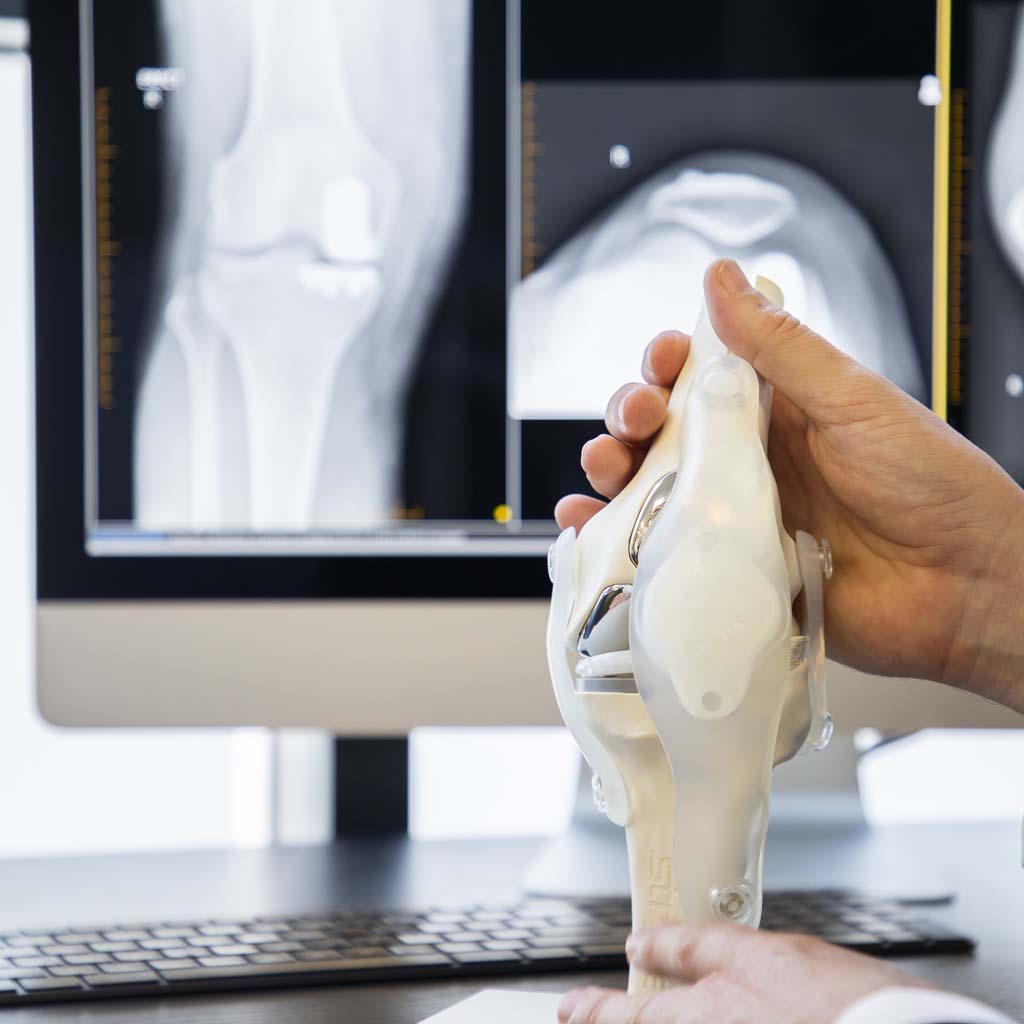
What is a high tibial osteotomy?
A high tibial osteotomy, often shortened to HTO, is knee realignment surgery performed at the upper part of the tibia, or shin bone. It is most commonly used when the inner, or medial, compartment of the knee is overloaded because the leg has a bow-legged alignment.
The operation changes the way weight travels through the knee. This type of knee osteotomy shifts load away from the worn inner compartment and toward the healthier outer compartment, which can reduce pain, improve function and help delay the need for knee replacement surgery.
HTO is a joint-preserving procedure. It does not replace the knee, and it does not reverse arthritis. Instead, it aims to make the best use of the healthy cartilage that remains by correcting the alignment that is overloading the painful side.

Do you need a high tibial osteotomy?
A high tibial osteotomy may be worth considering if your knee pain comes mainly from the inner compartment and your alignment is placing extra load on that area. It is usually considered for active patients with early to moderate single-compartment knee osteoarthritis where the rest of the joint is still relatively healthy.
You may be a suitable candidate if you have localised medial knee pain, a bow-legged alignment, good knee movement, stable ligaments, minimal arthritis in the outer and kneecap compartments, and a goal of preserving your own knee for longer.
HTO is not the same as knee replacement. A high tibial osteotomy keeps your own joint and changes the load through it. A knee replacement resurfaces the worn joint. The right option depends on your alignment, cartilage, age, activity goals and how widespread the arthritis is.
Assessment usually includes standing X-rays, long-leg alignment films from hip to ankle, and sometimes MRI to assess cartilage, meniscus and ligament health. These images help your surgeon calculate whether realignment is likely to unload the painful compartment enough to help.
Benefits and risks
What you can expect it to achieve
- Shift load away from the worn inner side of the knee
- Reduce pain from medial compartment overload
- Preserve your own knee joint rather than replacing it
- Delay the need for partial or total knee replacement in suitable patients
- Support a more active lifestyle than may be advised after knee replacement
- Correct bow-legged alignment that is contributing to symptoms
- Allow combined treatment with meniscus, cartilage or ligament procedures in selected cases
Risks to understand
- Common and temporary: pain, swelling, bruising, stiffness and difficulty walking early in recovery
- General risks: infection, bleeding, blood clots, wound problems and anaesthetic complications
- Bone-healing risks: delayed union, non-union, fracture around the osteotomy or loss of correction
- Nerve and vessel risks: numbness around the incision is common; major nerve or blood vessel injury is rare
- Hardware-related: plates and screws can irritate soft tissues and may need removal after the bone has healed
- Longer-term: arthritis can still progress, and knee replacement may be needed later
All surgery carries risk and outcomes vary between individuals. Your surgeon will talk through the risks that apply to your health, imaging, alignment and activity goals before you decide.
High tibial osteotomy vs knee replacement
A high tibial osteotomy is generally considered when the knee still has useful cartilage outside the worn compartment. A distal femoral osteotomy may be considered when the alignment problem instead sits in the femur. HTO is often chosen for younger or more active people because it preserves the joint and may allow a wider range of activity.
Knee replacement is usually considered when arthritis is more advanced, affects multiple compartments, or symptoms are no longer suitable for a joint-preserving option.

| High tibial osteotomy | Knee replacement |
|---|---|
| Preserves your own knee joint | Replaces worn joint surfaces with implants |
| Changes alignment to unload the painful side | Removes and resurfaces arthritic compartments |
| Often considered for younger, active patients | Often considered for more advanced or widespread arthritis |
| Bone must heal before higher activity | Recovery focuses on implant function and soft tissue healing |
| May delay replacement surgery | May be more suitable when osteotomy is unlikely to help |
The procedure: what happens
Before surgery, your surgeon plans the correction using your clinical assessment, standing X-rays and long-leg alignment films. The amount of correction is calculated carefully because the aim is to shift the weight-bearing line away from the overloaded inner compartment without overcorrecting the knee.
The operation is usually performed under general or spinal anaesthesia. Antibiotics are given to reduce infection risk, and a tourniquet may be used around the upper thigh.
In a common opening wedge HTO, a controlled cut is made in the upper tibia. The bone is opened like a hinge to create the planned correction. The gap may be filled with bone graft or bone substitute, then held with a metal plate and screws while the bone heals.
Some HTO procedures use a closing wedge technique, where a wedge of bone is removed and the bone is brought together into the corrected alignment. The technique chosen depends on your anatomy, correction size, surgeon preference and future planning.
Your surgeon may also perform knee arthroscopy at the same time to assess the joint surfaces, meniscus or loose fragments if this is part of the plan. An X-ray is usually taken after surgery to confirm the correction and plate position.
After surgery
You will wake in recovery and be monitored until comfortable and stable. A physiotherapist will help you begin safe movement and teach you how to use crutches while protecting the healing bone.
Most people stay in hospital for a short period while pain relief, wound care, mobilisation and physiotherapy are organised. Your discharge timing depends on your general health, mobility, pain control and home support.
When to seek help. Contact us or seek urgent care if you develop fever, increasing calf pain or swelling, chest pain, shortness of breath, spreading redness, wound discharge, severe pain that is not improving, new numbness or weakness in the foot, or sudden loss of movement. Concerned about your recovery? Call (02) 9437 9794.
High tibial osteotomy recovery and rehabilitation
Post-operative rehabilitation after a high tibial osteotomy is staged because the bone needs time to heal in its new position. Many people use crutches for several weeks, and weight-bearing is progressed according to your surgeon’s instructions and follow-up X-rays.
The early goal is to protect the osteotomy while keeping the knee moving and maintaining strength. As the bone heals, rehabilitation progresses into walking quality, strength, balance, cycling, gym work and return to activity.
Recovery timeline
| Phase | Timeframe | What to expect |
|---|---|---|
| Protect & settle | Weeks 0–2 | Crutches, swelling control, wound care, gentle movement and early muscle activation |
| Protected loading | Weeks 2–6 | Gradual loading as advised, physiotherapy, range-of-motion work and maintaining quadriceps strength |
| Bone healing | Weeks 6–12 | Increasing weight-bearing if X-rays confirm healing, walking retraining and progressive strengthening |
| Strength & function | Months 3–6 | Strength, balance, cycling, longer walks and preparation for higher-level activity |
| Return to sport | Months 6–12 | Gradual return to sport-specific loading if bone healing, strength and symptoms allow |
Timeframes are a guide. Your progression depends on the correction, bone healing, X-rays, pain, swelling, strength and activity goals.
Post-operative care
Your dressings, brace use, crutch plan and weight-bearing limits will be explained before you leave hospital. It is important to follow the weight-bearing instructions closely because the bone needs time to heal.
Swelling, bruising and stiffness are common in the first month. Pain is usually managed with oral medication. X-rays are used during follow-up to check that the osteotomy is healing and that the plate and screws remain in the correct position.
Rehabilitation at MTP Health
This is where MTP Health is different. Your rehabilitation is delivered by our physiotherapists and exercise physiologists in the same clinic as your surgeon, with a plan that reflects your correction size, bone healing and sport or work goals.
Physiotherapy focuses on safe mobility, knee movement, swelling control and early strength. Exercise physiology becomes important as you return to heavier loading, gym work, running preparation or sport-specific movement.
Because HTO is often chosen by active people, rehabilitation is not just about walking again. It is about building the strength and control needed to make the new alignment useful.
Returning to driving, work and sport
Driving depends on which leg was operated on, your crutch use, pain, medication use and ability to safely perform an emergency stop. Many people having right-sided surgery cannot drive until they are off crutches and have good control of the leg. Please check with your surgeon and insurer before driving.
Desk-based work may be possible within three to four weeks if pain, swelling and transport are manageable. Jobs involving heavy manual labour, long periods on your feet, uneven ground or ladders may require three months or longer.
Many people return to recreational activity once the bone has healed and strength has improved. Higher-impact or pivoting sport needs longer rehabilitation and is considered once strength, balance and alignment are well controlled, with your physiotherapist and surgeon guiding the timeline.
HTO is about load, not just pain. The surgery changes where force travels through your knee. The rehabilitation then teaches your leg to use that new alignment with strength, balance and confidence.
High tibial osteotomy cost in Sydney
The cost of high tibial osteotomy depends on your private health cover, hospital insurance, surgeon fees, anaesthetist fees, assistant fees, implant or plate costs, bone graft or graft substitute costs and any additional procedures performed at the same time.
If you are having surgery using private health cover, you will receive a written quote before surgery once the planned procedure and hospital pathway are known. The anaesthetist is an independent practitioner and may charge a separate gap, so we provide their details and recommend checking their quote before committing to surgery.
The surgeons at MTP Health participate in various reduced-gap schemes run by different health insurance providers where available. Your insurer may also have an excess to pay, commonly around $500 depending on your policy.
If HTO is performed through the public system, there is no out-of-pocket surgical cost, but waiting times depend on hospital access, urgency category and local availability.
Why have your high tibial osteotomy at MTP Health
MTP Health brings together knee surgeons, physiotherapists and exercise physiologists in one clinic. That matters because high tibial osteotomy is a planning-heavy operation: the correction must match the alignment problem, and rehabilitation must protect the healing bone while rebuilding function.
Honest advice comes first. If your arthritis is too widespread for HTO, we will explain why. If non-surgical care is more appropriate, we will guide that. If HTO is suitable, we will help you understand the procedure, recovery, risks and expected outcome before you decide.
Your surgeon

Dr Jonathan Negus
Dr Negus is a fellowship-trained hip and knee surgeon who works alongside MTP Health's physiotherapy and exercise physiology team so your surgery and rehabilitation are managed as one plan.
View full profile →Frequently asked questions
Is a high tibial osteotomy permanent?
The change in alignment is designed to stay once the bone has fully healed.
Over time, natural age-related changes or progression of arthritis can still affect the knee. Some people may later consider a knee replacement depending on symptoms, function and imaging.
The aim is often to preserve your own knee and delay replacement surgery for as long as the joint remains comfortable and useful.
How do I know if an osteotomy or a knee replacement is more suitable?
The most suitable option depends on which part of the knee is affected, how much cartilage is preserved, your alignment and your activity goals.
An osteotomy may be considered when wear is concentrated on one side and the rest of the joint is relatively healthy. A knee replacement is more often considered when several compartments are affected or symptoms persist despite other care.
Your surgeon will review your symptoms, X-rays and alignment films before discussing the options.
Will I need to stay in hospital after a high tibial osteotomy?
Most people stay in hospital for a short period while early pain relief, mobilisation and physiotherapy are organised.
How long this takes varies with your general health, your mobility, the type of osteotomy performed and your home supports.
Your care team will advise when it is safe to go home.
Can I return to sport after a high tibial osteotomy?
Many people return to recreational activity once the bone has healed and strength has improved.
Higher-impact or pivoting sport needs longer rehabilitation and is considered once strength, balance and alignment are well controlled.
Your physiotherapist and surgeon will guide the timeline based on healing, symptoms and your sport.
What risks should I consider before deciding on a high tibial osteotomy?
As with any knee surgery, there are potential risks. These can include infection, bleeding, blood clots, stiffness, delayed bone healing, irritation from the hardware, or the need for further procedures if symptoms continue.
There are also less common risks such as fracture, loss of correction, nerve or blood vessel injury and non-union of the bone.
Your surgeon will talk through the risks relevant to your health, alignment and imaging so you can make an informed decision.
What is the difference between high tibial osteotomy and general knee osteotomy?
Knee osteotomy is the broader term for realignment surgery around the knee.
High tibial osteotomy is one specific type. It corrects alignment through the upper shin bone and is most often used for bow-legged alignment with inner compartment knee wear.
Will the plate and screws need to be removed?
The plate and screws often stay in place long term and may not cause any problems.
If they irritate the skin, tendons or soft tissues after the bone has fully healed, removal can be considered. This is usually a smaller procedure than the original osteotomy.
What happens if the bone does not heal properly?
Delayed healing or non-union is uncommon but can occur. Smoking, poor bone health, medical conditions and not following weight-bearing instructions can increase the risk.
If the bone does not heal properly, treatment may include longer protection, bone stimulation, bone grafting or revision fixation.
High tibial osteotomy consultations across Sydney
North Shore Health Hub, Level 4, Suite 401, 7 Westbourne St, St Leonards NSW 2065
St Leonards consulting →173 Warringah Road, Beacon Hill NSW 2100 — serving the Northern Beaches
Beacon Hill consulting →Also consulting at Gosford, Wahroonga, Castle Towers and Tamworth.
Talk to a surgeon about high tibial osteotomy
Book a consultation to find out whether HTO could help unload the painful side of your knee — and whether it is the right option before considering replacement surgery.
Book a ConsultationPrefer to talk? Call (02) 9437 9794 · GP & physio referrals: referrer information
- American Academy of Orthopaedic Surgeons, Osteotomy of the Knee patient guidance.
- Mater Health, High Tibial Osteotomy patient information.
- Current high tibial osteotomy literature and rehabilitation guidance for opening wedge and closing wedge HTO.