
Microfracture Surgery in Sydney
Microfracture is a keyhole cartilage treatment that encourages the body to form new repair tissue over small areas of damaged knee cartilage. At MTP Health, we explain when it is appropriate, its limitations, and the rehabilitation needed to protect the repair.
What is microfracture surgery?
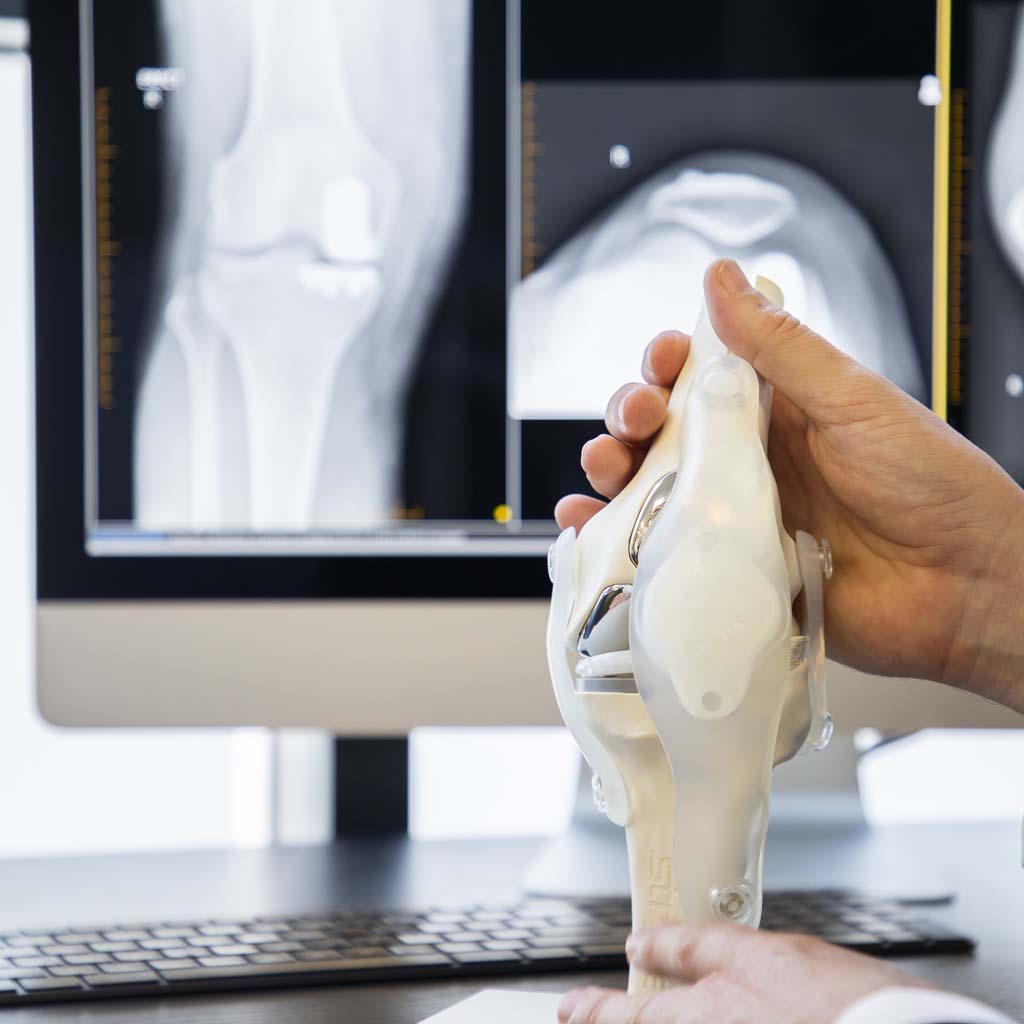
Microfracture surgery is an arthroscopic, or keyhole, procedure used to treat selected cartilage defects in the knee. It is most often considered when there is a small, contained area of full-thickness cartilage loss and the surrounding joint is otherwise suitable for repair.
Articular cartilage is the smooth white tissue that covers the ends of the bones inside the knee. It helps the joint glide with very little friction. When cartilage damage occurs through injury, repeated load or local overload, it does not heal well on its own. If the underlying bone becomes exposed, the area can cause pain, swelling, catching or difficulty with loaded activities.
Microfracture works by creating tiny openings in the bone beneath the cartilage defect. This allows marrow elements and blood to enter the area and form a clot. Over time, that clot can mature into repair tissue that covers the defect. This repair tissue is not the same as normal cartilage, but in the right situation it may improve symptoms and create a smoother surface than the exposed bone.

Do you need microfracture surgery?
Microfracture is not a general treatment for all knee arthritis. It is a selective cartilage repair technique for specific defects. Careful patient selection is one of the most important factors in getting a good result.
You may be suitable if your MRI shows a small, well-contained cartilage defect, your symptoms match the location of the damage, the surrounding cartilage is healthy, your knee ligaments are stable, and there is no advanced arthritis across the joint. It may be less suitable if cartilage loss is widespread, the defect is large, knee alignment is placing excess load through the area, or there are untreated instability or meniscal problems.
Not every cartilage defect needs surgery. Some people improve with physiotherapy, strength work, load management, activity modification and time. Our physiotherapy team and exercise physiologists can help you build a non-surgical plan first — and if surgery becomes the right step, your rehabilitation pathway is already connected.
At your consultation, your surgeon will review your symptoms, examine your knee and look closely at your imaging. The decision is not based on the MRI alone. It depends on whether the cartilage defect is likely to be the main cause of your symptoms, whether the rest of the knee is suitable for repair, and whether microfracture is the best option compared with other cartilage treatments.
Benefits and risks
What you can expect it to achieve
- Stimulate repair tissue over a small area of cartilage loss
- Reduce pain from a focal cartilage defect in suitable patients
- Improve the surface over exposed bone where cartilage has been lost
- Treat loose or unstable cartilage edges during arthroscopy
- Use a minimally invasive keyhole approach
- Potentially delay the need for larger cartilage procedures in selected cases
- Support a structured return to walking, work and activity through rehabilitation
Risks to understand
- Common and temporary: swelling, bruising, stiffness, discomfort and reduced strength in the early recovery period
- Uncommon: infection, blood clots, wound problems, nerve or blood vessel irritation, and anaesthetic complications
- Specific to microfracture: incomplete repair tissue formation, persistent symptoms, repair tissue breakdown or ongoing swelling with activity
- Longer-term: symptoms may return if the repair tissue does not tolerate load, if arthritis progresses, or if alignment and joint mechanics continue to overload the area
All surgery carries risk and outcomes vary between individuals. Microfracture can be useful for the right cartilage defect, but it is not a permanent guarantee and does not recreate normal hyaline cartilage. Your surgeon will help you understand what is realistic for your knee.
Microfracture vs other cartilage treatments
Microfracture is one of several cartilage repair options. It is generally used for smaller, contained defects where the joint environment is favourable. Larger defects, repeat cartilage injuries or defects associated with alignment problems may need a different strategy.
Other options may include non-surgical care, biological treatments, subchondroplasty where subchondral bone changes are relevant, osteochondral autograft transfer, osteochondral allograft, matrix-induced autologous chondrocyte implantation, or realignment surgery such as an osteotomy. The right choice depends on your cartilage defect, symptoms, age, activity goals and whole-knee mechanics.

| Microfracture | Other cartilage procedures |
|---|---|
| Usually suited to smaller, contained cartilage defects | May be considered for larger, recurrent or more complex defects |
| Stimulates marrow-based repair tissue | May transfer cartilage-bone plugs, donor tissue or cultured cartilage cells |
| Performed arthroscopically in many cases | May require more complex surgery depending on the technique |
| Repair tissue is fibrocartilage, not normal hyaline cartilage | Some techniques aim to restore a more cartilage-like surface |
| Rehab is essential to protect the developing clot | Rehab is also essential, but timelines vary by procedure |
The procedure: what happens
Before surgery, you will have a pre-operative assessment to review your general health, medications, imaging and anaesthetic plan. Your surgeon will review the MRI and explain whether microfracture is planned, while also noting that final decisions may depend on what is seen during arthroscopy.
The operation is performed under general or spinal anaesthesia. Small incisions are made around the knee so an arthroscope and fine instruments can be inserted. The surgeon inspects the joint, checks the cartilage defect and assesses the surrounding cartilage, meniscus, ligaments and joint surfaces.
Loose or unstable cartilage is carefully trimmed back to stable edges. The base of the defect is prepared so the exposed bone can respond to stimulation. Small holes are then made in the subchondral bone using specialised instruments. These openings allow marrow elements and blood to enter the defect and form the clot that begins the repair process.
The knee is then washed, the instruments are removed and the small incisions are closed or dressed. The exact operating time depends on the size and location of the defect and whether any other procedures are performed at the same time.
After surgery
You will wake in the recovery room, where your pain, circulation and vital signs are monitored closely. Once you are comfortable and stable, you will begin your early recovery.
Most people use crutches after microfracture. Weight-bearing is often protected for a period of time so the developing repair tissue is not overloaded too early. Your exact instructions depend on the location of the cartilage defect, the size of the treated area and what your surgeon finds during the procedure.
When to seek help. Contact us or seek urgent care if you develop a fever, increasing calf pain or swelling, spreading redness, wound discharge, shortness of breath, chest pain, sudden worsening pain, new numbness or pain that is not controlled by medication. Concerned about your recovery? Call (02) 9437 9794.
Microfracture surgery recovery and rehabilitation
Recovery after microfracture is different from many other arthroscopic knee procedures because the repair tissue needs protection while it forms and matures. The surgery creates the conditions for healing, but rehabilitation has a major influence on how well the repair is protected and loaded over time.
The first phase is usually focused on swelling control, gentle movement and protected weight-bearing. Too much load too early can disrupt the developing clot, while too little movement can contribute to stiffness. Your physiotherapy program is designed to balance both priorities.
Recovery timeline
| Phase | Timeframe | What to expect |
|---|---|---|
| Protect & settle | Days 0–14 | Crutches, swelling control, wound care, gentle range-of-motion and early muscle activation |
| Protected loading | Weeks 2–6 | Gradual movement and strengthening while limiting stress on the repair site; weight-bearing depends on defect location and surgeon instructions |
| Build capacity | Weeks 6–12 | Progressive strengthening, balance work, walking progression and low-impact conditioning as tolerated |
| Strength & control | Months 3–6 | More demanding strengthening, cycling, functional control and gradual return to selected work or recreational activities |
| Return to sport | Months 6–12+ | Running, jumping, pivoting or competitive sport only when strength, control and clinical review support progression |
Timeframes are a guide. Your surgeon and rehabilitation team will progress you based on the cartilage defect, your symptoms, strength, control and recovery.
Post-operative care
At home, the priorities are keeping the wounds clean and dry, managing swelling, using crutches as instructed, avoiding overload of the repair site and completing your prescribed exercises. Some swelling and discomfort is expected, especially as activity increases, but increasing redness, wound discharge, fever or worsening calf pain should be checked urgently.
Rehabilitation at MTP Health
This is where MTP Health is different. Your rehabilitation is delivered by our own physiotherapists and exercise physiologists, working in the same clinic as your surgeon. Your plan can begin before surgery and continue seamlessly afterwards, with everyone working from the same goals and shared clinical record.
Rehabilitation focuses on restoring movement, protecting the repair site, rebuilding quadriceps and hip strength, improving balance, retraining walking quality and gradually preparing the knee for higher loads. Your recovery may be supported by our post-operative rehabilitation, physiotherapy and exercise physiology services.
Returning to driving, work and sport
Return to driving depends on which knee was operated on, whether you drive an automatic or manual car, your weight-bearing restrictions, pain, swelling, reaction time and medication use. You must be able to safely perform an emergency stop and must no longer be taking strong pain medication. Please check with your surgeon and your insurer before driving.
Desk-based work may be possible relatively early if pain is controlled and you can manage transport safely, but this depends heavily on crutch use and swelling. Physical work takes longer, particularly if it involves standing, stairs, kneeling, lifting, squatting or uneven ground.
Return to sport is gradual. Low-impact activity is usually introduced before running or jumping. Pivoting sport and high-load activity should only resume after clinical review and rehabilitation testing show that movement, strength and control are ready for the demands of the sport.
Rehab protects the repair. Microfracture is only the start of the healing process. The repair tissue needs time, protection and carefully progressed loading. The best outcomes come from combining good surgical selection with structured rehabilitation and realistic activity progression.
Microfracture surgery cost in Sydney
The cost of microfracture surgery depends on your private health cover, hospital insurance, surgeon fees, anaesthetist fees, assistant fees, hospital charges, imaging and whether other procedures are performed at the same time.
If you are having surgery using private health cover, your out-of-pocket cost depends on your fund, policy, hospital arrangement and any gap charged by the surgical and anaesthetic teams. The anaesthetist is an independent practitioner and may charge a separate gap, so we provide their details and recommend checking their quote before surgery.
Because microfracture may be performed alone or alongside other arthroscopic procedures, costs can vary. Your team will explain the expected fees, hospital arrangements and rebate pathway before surgery wherever possible.
If surgery is performed through the public system, there may be no out-of-pocket surgical cost, but waiting times can be long and depend on hospital access, urgency category and local availability.
Why have your microfracture surgery at MTP Health
MTP Health brings together fellowship-trained orthopaedic surgeons, careful surgical planning, physiotherapy and exercise physiology in one clinic. That matters because microfracture is not just about treating a cartilage defect — it is about deciding whether that defect is truly the cause of symptoms, protecting the repair afterwards and addressing the mechanics that affect the knee.
Honest advice comes first. If your knee is better suited to non-surgical care, we will tell you. If the cartilage defect is too large or the joint environment is not suitable for microfracture alone, we will explain what other options may be more appropriate. If microfracture is suitable, we will help you understand the procedure, recovery, risks and expected outcome clearly before you decide.
Your surgeon

Dr Jonathan Negus
Dr Negus is a fellowship-trained hip and knee surgeon with a focus on evidence-based knee care, joint preservation and joint replacement decision-making. He works alongside MTP Health's physiotherapy and exercise physiology team so your surgery and rehabilitation are managed as one plan.
View full profile →Frequently asked questions
How do I know if my cartilage defect is suitable for microfracture?
Suitability depends on the size, depth and location of the defect and the quality of the surrounding cartilage. Microfracture is usually considered for smaller, contained defects rather than widespread arthritis.
Your surgeon will review your MRI and examine how your symptoms relate to the damaged area before discussing whether microfracture may be appropriate. Other approaches may suit better in some situations.
Will I need crutches after microfracture surgery?
Most people use crutches for a period of protected weight-bearing to limit stress on the developing repair tissue.
How long this lasts varies depending on the location of the defect, the size of the treated area and what the surgeon finds during the procedure.
How soon can I return to sport after microfracture?
Return to sport is gradual and usually happens once movement, strength and control have improved and the repair is stable enough for higher loads.
The timeline differs between individuals and is guided by clinical review and physiotherapy rather than a fixed date. Higher-impact and pivoting sports usually require a longer build-up than low-impact exercise.
Is microfracture a permanent fix for cartilage damage?
Microfracture encourages repair tissue to form, but this tissue behaves differently from normal cartilage, and its durability varies.
Long-term outcomes depend on the characteristics of the defect, how rehabilitation progresses, and the overall mechanics of the knee.
What happens if a microfracture does not heal as hoped?
If symptoms continue or imaging suggests limited healing, your surgeon may discuss other options such as biological treatments, realignment procedures or different cartilage repair techniques.
The next step depends on your symptoms, your goals and a fresh look at the whole joint, including alignment, meniscus health, ligament stability and surrounding cartilage.
What type of cartilage forms after microfracture?
Microfracture usually leads to fibrocartilage repair tissue rather than normal hyaline cartilage. Fibrocartilage can help cover the defect, but it does not behave exactly like the original smooth joint cartilage.
This is why patient selection, protection during early healing and progressive rehabilitation are so important.
Is microfracture suitable for knee osteoarthritis?
Microfracture is generally better suited to a focal cartilage defect than widespread osteoarthritis. If arthritis affects several parts of the knee, microfracture alone is less likely to provide a reliable result.
Your surgeon will review the whole knee and may discuss non-surgical management, other cartilage procedures, realignment surgery or replacement options depending on the pattern of wear.
Can microfracture be done with other knee procedures?
Yes, in some cases microfracture may be performed alongside other arthroscopic procedures, such as trimming unstable cartilage or addressing related meniscal issues.
If alignment, ligament instability or other mechanical problems are contributing to the cartilage defect, your surgeon may discuss whether those need to be treated separately or as part of a broader plan.
Microfracture surgery consultations across Sydney
North Shore Health Hub, Level 4, Suite 401, 7 Westbourne St, St Leonards NSW 2065
St Leonards consulting →173 Warringah Road, Beacon Hill NSW 2100 — serving the Northern Beaches
Beacon Hill consulting →Also consulting at Gosford, Wahroonga, Castle Towers and Tamworth.
Talk to a surgeon about knee cartilage damage
Book a consultation to find out whether microfracture surgery is right for your cartilage defect — and if it is not, to leave with a clear plan for the most suitable next step.
Book a ConsultationPrefer to talk? Call (02) 9437 9794 · GP & physio referrals: referrer information
- Current peer-reviewed literature on knee microfracture indications, fibrocartilage repair, outcomes and rehabilitation principles.
- Current peer-reviewed literature and consensus guidance on cartilage repair techniques, including microfracture, osteochondral transfer, allograft options and cell-based cartilage restoration.