
Note: When it comes to managing chronic conditions education has been shown to the most effective form of treatment. This is an example of the kind of welcome that we send out to every person that starts up with our programs at MTP Health. It represents the best kind of information that we have to provide education for the patients who are experiencing chronic conditions.
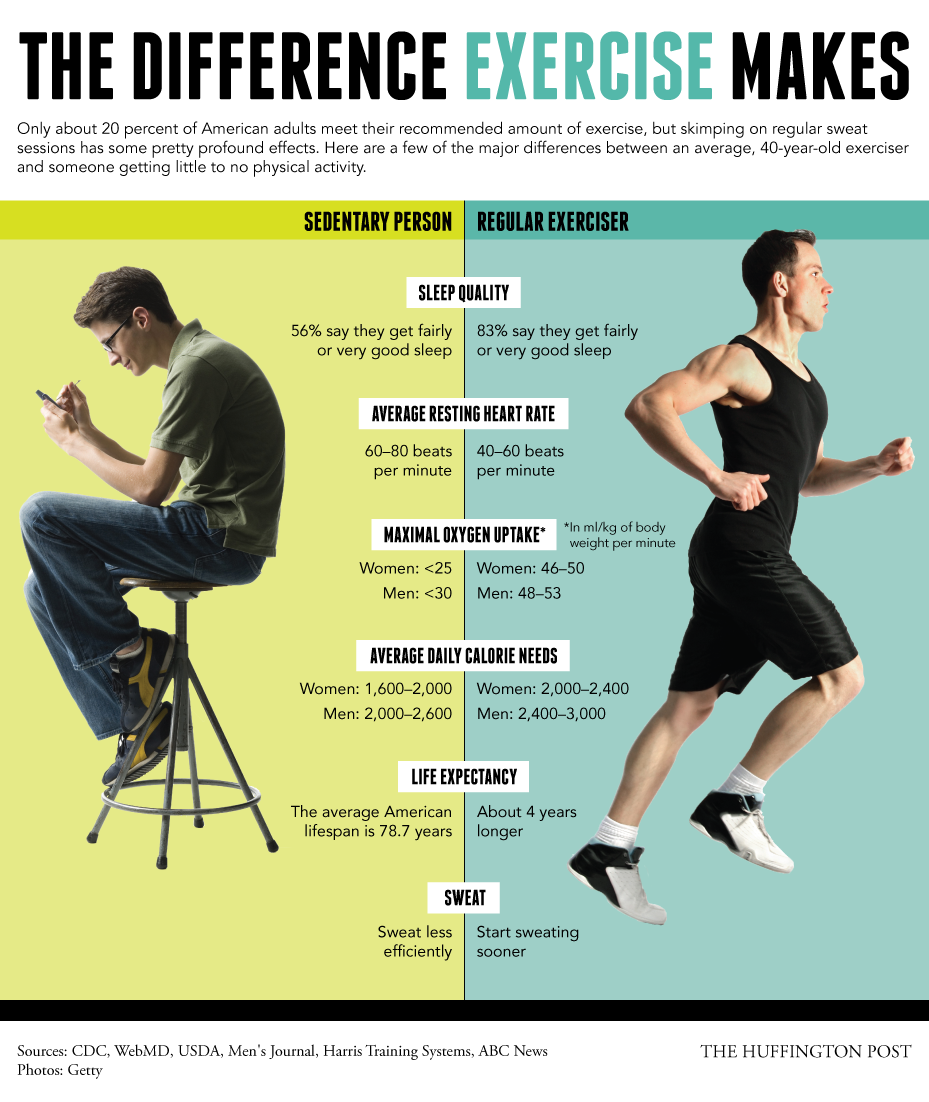
Some Of The Stats Associated With Exercise From A Traditional Health Marker Standpoint. Through This Article, We Will Touch on Some Of the Less Commonly Explored Benefits.
Introducing Movement as Medicine [For Knee Pain]
It’s fair to assume that in this day & age, we all have a pretty decent idea at this point that exercise is good for us (To see more about the ubiquity of exercise check out this article HERE). What we want to do today is go into a bit more detail about exactly why it is so important for us and precisely show how we use exercise to help with issues such as knee pain.
The most important thing to know is that movement is medicine.
It’s an adage that has been touted throughout history, dating back to the very beginnings of modern medicine.
The reason for its popularity is pretty simple, our body is designed to move. Every single cell within our body is in a constant state of flux, adapting to what we face within our environment. When we move, we cause our body to respond, which helps to improve our ability to move in the future. And on the other hand, when we don’t move our body responds in a similar manner. Except instead of being able to move better, it slowly starts to decrease its capacity for movement. In simple terms, it’s the ‘use it or lose it principle at work’.
This simple law of adaptation (more commonly known as the SAID principle) is the reason why when we look at the research, exercise is ubiquitous in terms of positive health effects. There is virtually no situation where exercise does not lead to an improvement in the health outcomes of a certain treatment.
With all of that said, let’s take a look at how this specifically plays out for knee pain.
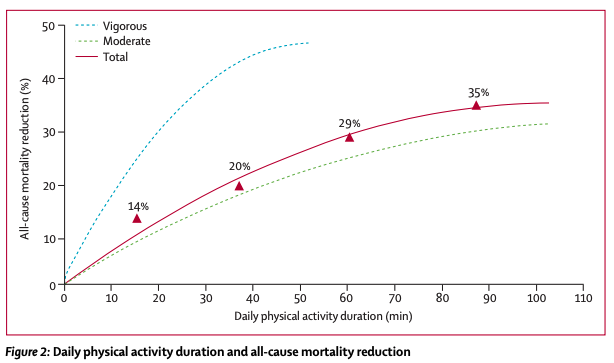
Exercise Has Positive Health Effects For Every Single System in The Human Body [Click Image For Full Article]
Why is exercise important for Osteoarthritis (OA) and Hip & Knee Pain?
Knee and hip pain and dysfunction can have a huge impact on our lives. You might find yourself making decisions based on the impact they have on your knee or decline opportunities because you’re concerned you’ll be a burden or hold others back. These types of avoidant behaviours can have a profound impact on your confidence and quality of life (to get an idea of the factors that contribute to knee pain & how exercise plays into each of these individually, check out this comprehensive article series).
Enter structured exercise!
Doing safe, controlled, and systematic exercise that challenges your control and strength will allow you to build strength in movement and tolerate more and more activity without flaring up pain in your hip/knee(s).
It is important to understand that all exercise isn’t created equal. You need to be systematic and progressive in your approach and learn to move in new and sometimes challenging ways, “You can’t do the same thing over and over and expect a different result”.
This is what we aim to guide people through in our 12-week Hip & Knee Program. So with that in mind. Let’s go into a little more detail.

What are some common triggers for knee pain?
Firstly, it’s important to consider what can trigger our knee pain. In terms of physical biomechanical triggers that are common, we often see movements that place a lot of force on specific structures can lead to knee pain becoming triggered (to see some of the other triggers that are common, have a glance through the full list of factors in this article). Some of the more common forms of these movements are:
- Challenging movements/activities
- Prolonged sitting or standing
- Sudden, fast movement
- Large range movements eg. bending or straightening fully
We all try to avoid things that cause us pain but often this leads to us doing less and less – or even stop activities altogether. Unfortunately, due to the nature of osteoarthritis, this will not solve the problem. In fact, it often makes it worse!
How can avoiding pain be bad (A Typical Journey of Knee Pain)?
By avoiding the pain, you are usually reducing activity from your day-to-day routine. A common path of avoidance goes like this:
- Prior to experiencing symptoms you played tennis and jogged regularly.
- Then, the pain and swelling you experienced playing tennis was having too big an impact on your knee pain so you stopped playing but jogging was still fine.
- You have taken tennis out of your schedule and you seem better off but then you start to get sore after jogging.
- You decide to jog less.. you think you’ve just been overdoing it.
- This helps temporarily, then the soreness escalates again, so you stop jogging all together.
- You have now removed a large proportion of activity from your weekly routine and you find your strength and fitness goes down. You even begin to gain a little weight.
- Now the stairs you used to take without thinking are making you sore, so you reduce the number of stairs you take.
- Playing with the kids/grandkids at the park is also making you sore, so you spend more time watching than playing.
- The pain is starting to become constant now, so you decide to speak with your Dr or Surgeon… maybe you need a joint replacement?!
This is an all too common storyline with OA. The primary issue is not that the OA has progressed, but that your strength, control, and fitness have regressed. Making things that used to be physically easy too much of a challenge.

This is where exercise works its magic!
Exercise plays a vital role in the management of OA by improving function and reducing pain. Exercise helps a number of physiological mechanisms including:
- Increased blood flow
- Increased muscle strength
- Increased joint range of motion
- Improved proprioception / balance
- Improved cardiovascular fitness
The benefits of exercise also extend beyond physiological, with improvements in mobility, fall risk, body weight, psychological state, metabolic abnormalities, and an enhanced ability to perform in daily living without the fear of your knees limiting you. As we talk about HERE, the psychological component of knee pain is a massive contributor to our experience of the condition. Improving our bodies ability to handle force, as well as our perceived capability is massive to improving this aspect of knee pain.
The type of exercise that can help manage your OA involves a combination of movement re-training, muscle strengthening, balance, flexibility, and cardiovascular training.
How does this apply to our programs at MTP?
Our Hip & Knee Program is designed to progress you through the following steps:
- Improve your movement awareness and your understanding of initiating movements such as; stepping, squatting, lunging, bending, turning etc.
- Improve muscular control around your problem joint and the joints above and below.
- Build your muscular strength and endurance within a pain-free range of motion.
- Improve your range of motion.
- Improve your control and strength in low stability conditions eg. single-leg exercises or unstable surfaces.
- Increase your overall strength and power.
- Improve your ability to absorb impact eg. jumping, landing, hopping etc.
- Improve cardiovascular fitness/weight management
Not everyone will progress to step 7 or 8, as everyone is starting at different stages, but everyone gets taken through steps 1-6.
.png.png)
Making things sustainable (Homework)!
In the first 2-3 weeks of participating in the MTP program, you will be given some homework to complete outside of your sessions with us.
This homework is very important even if it feels quite easy. It adds a significant amount of activity time to your week with relatively low impact.
Building your strength and control back to where you can achieve your goals and get the most out of life is going to take a little effort. We will add more and more to your program as you progress so you are building a long-term management approach for when you finish with us.
As always, if you have any questions please feel free to speak with one of the team at MTP Health, we are always happy to talk.
Yours in health,
Team MTP

SHARE THE LOVE
Visit us on Google and Facebook to leave an honest review of your experience with us (We love to hear all feedback)!


Recent Post
-
Cortisone Injection for Shoulder Pain: Does It Actually Work?
Key Takeaways A cortisone injection settles inflammation and eases pain for a period, but it…
-
Shoulder Pain at Night: Why It Worsens and When to Act
Key Takeaways Lying down loads the shoulder differently and removes the daytime movement that masks…
-
Wrist Pain on the Little Finger Side: TFCC Injuries
Wrist pain on the little-finger side is often a TFCC injury. Learn the signs, why it clicks on rotation, physio-first care and when arthroscopy helps.
-
Wrist Pain After a Fall on an Outstretched Hand
Sore wrist after a fall on an outstretched hand? How to tell a scaphoid fracture, ligament sprain and distal radius fracture apart, and what to do next.
-
Stiff Elbow After a Fracture: Why It Won’t Straighten
Elbow still won’t straighten after a fracture? Why post-fracture stiffness happens, how the rehab window works and when arthroscopic release is considered.
-
A Pop at the Elbow When Lifting: Distal Biceps Rupture
A sudden pop at the elbow when lifting may be a distal biceps rupture. Learn the signs, why the first weeks matter, and repair versus rehab options.
-
Numb Ring and Little Finger: Cubital Tunnel Syndrome
Numb ring and little finger, worse with a bent elbow or at night? Learn the signs of cubital tunnel syndrome and how MTP Health treats it.
-
Pain at the Front of the Shoulder: Biceps Tendon Pain Explained
Pain at the front of the shoulder is often the biceps tendon. Dr Mun Khin Chan explains causes, a physio-first plan and when tenodesis is considered.
-
Shoulder Pain After a Fall: What Could Be Injured
Shoulder pain after a fall? How to tell a rotator cuff tear, proximal humerus fracture and dislocation apart, and what to do next, from MTP Health Sydney.
-
Gout: The Joint Pain People Don’t Expect
Key Takeaways Gout tends to arrive suddenly, often overnight, as severe pain, swelling and redness…


