
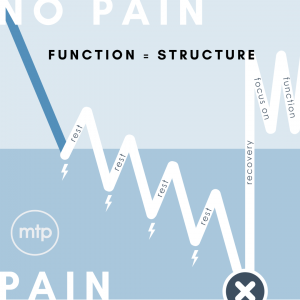
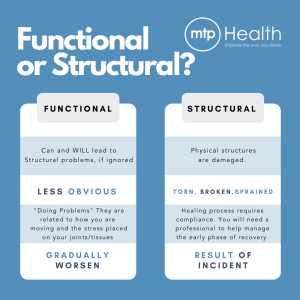
In our series about breaking the cycle of recurring injuries, I outlined the difference between Structural and Functional issues. Thankfully, although plantar fasciitis can be incredibly painful, it is an injury that falls into the functional category which means it can be addressed if you improve the way you move.
What is Plantar Fasciitis?
Plantar fasciitis, like most ‘itis’ conditions, is due to tissue overload and subsequent micro damage that your body struggles to repair. In this case, it is the overload of the plantar fascia – a thick band of tissue that runs from your toes to your heels.
Plantar fasciitis symptoms
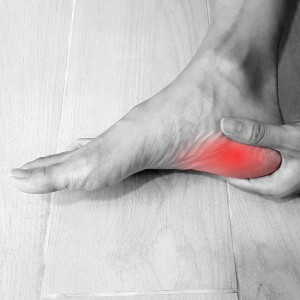
Usually people experience plantar fasciitis as a stabbing pain that occurs either first thing in the morning or after sitting for prolonged periods. It can ease after a few steps and flare up after (not during) exercise.
Causes of plantar fasciitis
Some consider the cause of this condition to be poorly understood, however it can be more common with runners. As with many functional issues, plantar fasciitis is indicative of an excess of stress being placed on the plantar fascia. The cause of the overloading may vary from person to person. But the great thing about functional issues, is that when we improve the way we move, we can shift the way the stress is distributed and lower the demand on the overloaded tissues resulting in reduced pain and aggravation.
Typical movement issues which can be associated with plantar fasciitis symptoms:
- Weak Tibialis Anterior
- Poor Hip Extension Range
- Poor Glute Activation
- Poor Big Toe Extension Range
By strengthening the joints and tissues above, you can reduce the loading going through the ankle and foot. In the long term this can reduce the risk of symptoms returning.
Plantar fasciitis treatment
A range of treatments are often used to help people suffering from plantar fasciitis, including orthotics, massage, rest, and pain relief. However at MTP Health rather than looking simply to relieve the pain we are always looking more broadly to determine what it is that is making the painful area take too much of the demand. In the case of plantar fasciitis we want to look above the foot to the knee and hip. If there is any missing control, range of motion or strength above the foot, that deficit is going to flow down to the foot. While full recovery will take anywhere for 4-12 weeks (depending on the severity) and require a tailored assessment and program design. Below are some of our favorite exercises and stretches for plantar fasciitis treatment to get you started with addressing your function.
1. Hip Extension – Couch Stretch
2. Glute Activation – Side Lying Banded Leg Press
3. Tibialis Raises – Wall Leaning
Recovery from plantar fasciitis
Often people get short term relief from plantar fasciitis symptoms following rest, stretching or manual therapy alone. However, to make lasting improvement on the way you move, and address the root cause takes time. This isn’t always the most appealing approach for people as it requires some sustained effort. But the long term benefits are worth the effort. Like any change process, consistency trumps intensity. So regular, sustained effort to address the weak links in your movement will be more valuable than short bursts of unsustainable effort.
We recommend committing 2 days a week to completing approx 30-40mins of corrective exercises and 2-3 days of 5-10mins. If this level of commitment is sustained over a 12 week period the changes will be significant.
If you are concerned that you might have some other hip or knee problems, our Knee & Hip Programs offer 12 weeks of individualised programming aimed which are tailored to help you reach your pain and movement goals. You can start today with a one on one consultation session, a group or telehealth service consultation to find the right treatment and exercise plan to suit you.
Recent Post
-
Why Do Your Joints Ache in Menopause, and What Helps?
Key Takeaways Falling and fluctuating oestrogen around perimenopause and menopause can leave joints stiff and…
-
Inflammatory Joint Pain: Psoriatic Arthritis and Other Causes
Key Takeaways Inflammatory joint pain is usually stiffest after rest, eases with movement and affects…
-
How Much Does Shoulder Surgery Cost in Australia?
Key Takeaways Public care as a public patient carries no direct cost for the surgery,…
-
Cortisone Injection for Shoulder Pain: Does It Actually Work?
Key Takeaways A cortisone injection settles inflammation and eases pain for a period, but it…
-
Shoulder Pain at Night: Why It Worsens and When to Act
Key Takeaways Lying down loads the shoulder differently and removes the daytime movement that masks…
-
Wrist Pain on the Little Finger Side: TFCC Injuries
Wrist pain on the little-finger side is often a TFCC injury. Learn the signs, why it clicks on rotation, physio-first care and when arthroscopy helps.
-
Wrist Pain After a Fall on an Outstretched Hand
Sore wrist after a fall on an outstretched hand? How to tell a scaphoid fracture, ligament sprain and distal radius fracture apart, and what to do next.
-
Stiff Elbow After a Fracture: Why It Won’t Straighten
Elbow still won’t straighten after a fracture? Why post-fracture stiffness happens, how the rehab window works and when arthroscopic release is considered.
-
A Pop at the Elbow When Lifting: Distal Biceps Rupture
A sudden pop at the elbow when lifting may be a distal biceps rupture. Learn the signs, why the first weeks matter, and repair versus rehab options.
-
Numb Ring and Little Finger: Cubital Tunnel Syndrome
Numb ring and little finger, worse with a bent elbow or at night? Learn the signs of cubital tunnel syndrome and how MTP Health treats it.


