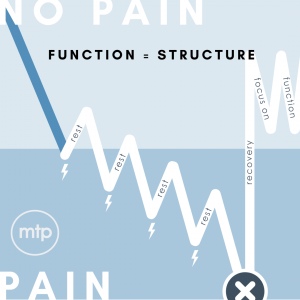
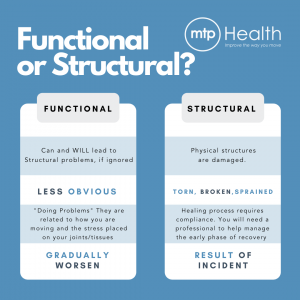
In our series about breaking the cycle of recurring injuries, I outlined the difference between Structural and Functional issues. Thankfully, although plantar fasciitis can be incredibly painful, it is an injury that falls into the functional category which means it can be addressed if you improve the way you move.
What is Plantar Fasciitis?
Plantar fasciitis, like most ‘itis’ conditions, is due to tissue overload and subsequent micro damage that your body struggles to repair. In this case, it is the overload of the plantar fascia – a thick band of tissue that runs from your toes to your heels.
Plantar fasciitis symptoms
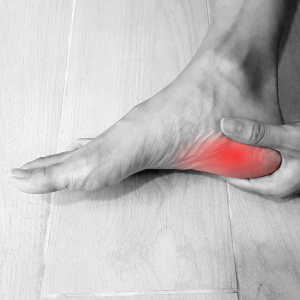
Usually people experience plantar fasciitis as a stabbing pain that occurs either first thing in the morning or after sitting for prolonged periods. It can ease after a few steps and flare up after (not during) exercise.
Causes of plantar fasciitis
Some consider the cause of this condition to be poorly understood, however it can be more common with runners. As with many functional issues, plantar fasciitis is indicative of an excess of stress being placed on the plantar fascia. The cause of the overloading may vary from person to person. But the great thing about functional issues, is that when we improve the way we move, we can shift the way the stress is distributed and lower the demand on the overloaded tissues resulting in reduced pain and aggravation.
Typical movement issues which can be associated with plantar fasciitis symptoms:
- Weak Tibialis Anterior
- Poor Hip Extension Range
- Poor Glute Activation
- Poor Big Toe Extension Range
By strengthening the joints and tissues above, you can reduce the loading going through the ankle and foot. In the long term this can reduce the risk of symptoms returning.
Plantar fasciitis treatment
A range of treatments are often used to help people suffering from plantar fasciitis, including orthotics, massage, rest, and pain relief. However at MTP Health rather than looking simply to relieve the pain we are always looking more broadly to determine what it is that is making the painful area take too much of the demand. In the case of plantar fasciitis we want to look above the foot to the knee and hip. If there is any missing control, range of motion or strength above the foot, that deficit is going to flow down to the foot. While full recovery will take anywhere for 4-12 weeks (depending on the severity) and require a tailored assessment and program design. Below are some of our favorite exercises and stretches for plantar fasciitis treatment to get you started with addressing your function.
1. Hip Extension – Couch Stretch
2. Glute Activation – Side Lying Banded Leg Press
3. Tibialis Raises – Wall Leaning
Recovery from plantar fasciitis
Often people get short term relief from plantar fasciitis symptoms following rest, stretching or manual therapy alone. However, to make lasting improvement on the way you move, and address the root cause takes time. This isn’t always the most appealing approach for people as it requires some sustained effort. But the long term benefits are worth the effort. Like any change process, consistency trumps intensity. So regular, sustained effort to address the weak links in your movement will be more valuable than short bursts of unsustainable effort.
We recommend committing 2 days a week to completing approx 30-40mins of corrective exercises and 2-3 days of 5-10mins. If this level of commitment is sustained over a 12 week period the changes will be significant.
If you are concerned that you might have some other hip or knee problems, our Knee & Hip Programs offer 12 weeks of individualised programming aimed which are tailored to help you reach your pain and movement goals. You can start today with a one on one consultation session, a group or telehealth service consultation to find the right treatment and exercise plan to suit you.
Recent Post
-
The MTP Difference
“Bridging the gap between pain & human performance” That is what MTP Health…
-
Part 3/3: Attention Soccer Players, Coaches, and Trainers!! Are you or your athletes at risk of an ACL injury?
If you struggled to land properly and displayed poor movement quality on any of…
-
Part 2/3: Attention Soccer Players, Coaches, and Trainers!! Are you or your athletes at risk of an ACL injury?
By David Maiolo Following on from Part 1, I will take you through…
-
Part 1/3: Attention Soccer Players, Coaches, And Trainers!! Are you or your athletes at risk of an ACL injury?
By David Maiolo PART 1In this 3 part series, I will discuss the…
-
The Science Behind how Practice Literally Makes Perfect [Mobility, Performance & Your Brain]
“Nothing is impossible” Chances are, if you watched the video above, you simply wrote off…
-
This is TRUE Athletic Performance: Why the Best Athlete is Never the Strongest in the Gym
True performance = [The biomechanics of improved mobility (Greater Range of motion & control)] X…
-
Why you are Always Stiff, Tired and Sore
If you have been following along, you will know that mobility is incredibly important for…
-
RUN FOREST RUN
By Sarah Antico | Exercise Physiologist With the running season fast approaching, now is…
-
Putting Research Into Your Rehab – Patellofemoral Pain Syndrome
Patellofemoral pain (PFP) has a high prevalence in general practice, orthopaedic, and sports settings. Pain…
-
Putting Research Into Your Rehab – Patellar Tendinopathy
One of the most common injuries suffered by athletes and gym-goers is tendinopathy, more…