
Revision Hip Replacement in Sydney
Your first hip replacement was meant to end the pain, and now it aches, slips or gives way when you least expect it. Revision hip replacement in Sydney removes the parts that have loosened, worn or failed and rebuilds the joint, so the hip you already have can carry you steadily again.
What Revision Involves
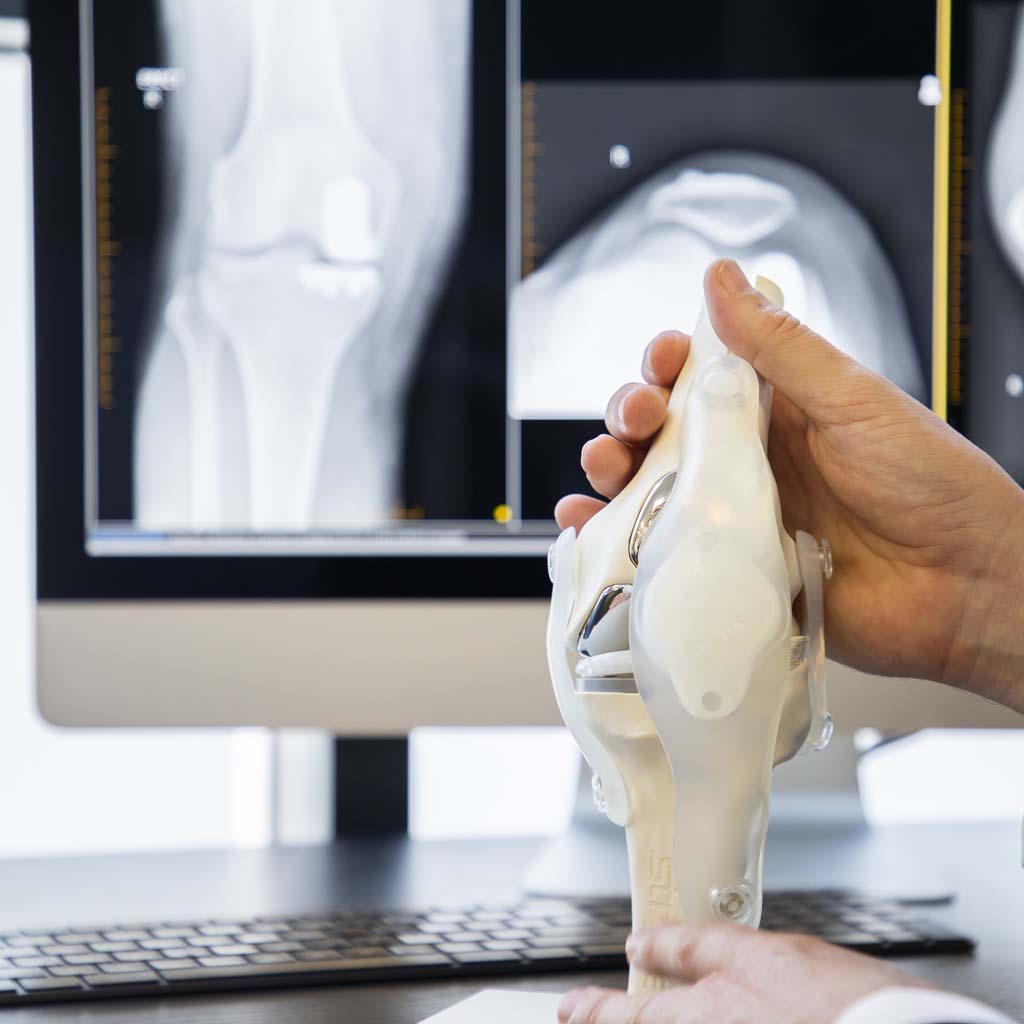
A hip replacement uses a cup, liner, ball and stem to replace the worn ball and socket of the joint. Over the years any of those parts, or the bond between the implant and the bone, can give way. Revision surgery replaces some or all of that implant, from swapping a single worn liner to removing and rebuilding the whole construct.
Because the surgeon works around hardware that is already fixed in place, and often around bone the old implant has weakened, a failed hip replacement is more demanding to correct than the original operation and is planned in detail beforehand. If you have not had a first replacement yet, the hip surgery overview and the pages on the anterior approach and posterior approach cover a first-time procedure.

Why a Hip Replacement Fails
Most hip replacements last for decades, but they can fail for reasons a scan and, where needed, blood tests are used to pin down. The Australian Orthopaedic Association National Joint Replacement Registry (AOANJRR) consistently lists loosening, infection, dislocation and fracture around the implant among the most common reasons a hip is revised in Australia:
Aseptic Loosening
The implant separates from the bone over time without infection present. It usually shows up as gradually increasing pain in the groin, thigh or buttock that is worse on weight-bearing.
Plastic Wear and Osteolysis
The plastic liner wears down, and the tiny particles it sheds can prompt the body to resorb nearby bone. This can loosen a hip that was stable for years, often before symptoms are obvious.
Recurrent Dislocation
A hip that slips out of joint more than once may need its components repositioned or exchanged for a more stable design, such as a larger head or a dual-mobility bearing.
Infection
Bacteria around the implant can cause pain, swelling, warmth or fever. Infection changes the whole plan, since clearing it usually takes priority over the mechanics.
Fracture Around the Implant
A break in the bone next to a stem, known as a periprosthetic fracture, can follow a fall or develop where bone has thinned. It may need fixation, a longer stem, or both.
Metal Wear Reactions
Some older metal-on-metal designs can release metal debris that irritates the surrounding tissue. Where this is found, the affected parts are usually exchanged.
Types of Revision Surgery
The right revision depends on what has failed and how much healthy bone remains, which is why this is planned from your imaging before the day. The main types range from a limited exchange to a staged rebuild:
The worn plastic liner or the ball is swapped while the well-fixed cup and stem stay in place. It is the least invasive revision and suits a hip where only the bearing surface has worn.
The cup is removed and replaced, sometimes with bone graft or metal augments where the socket has lost bone. This applies when the socket component has loosened, but the stem is sound.
The stem is exchanged, at times for a longer or modular design that grips healthy bone further down the femur. Removing a well-fixed stem can call for a controlled cut in the bone to release it.
Both the cup and the stem are replaced in one operation. This is used when both components have failed or when the whole construct needs rebuilding.
Where infection is confirmed, the implant is removed and a temporary antibiotic spacer is placed, followed by a course of antibiotics, before a new implant is fitted at a second operation weeks later. It is more involved, and your surgeon explains the timing if it applies to you.
Signs to Watch For
Revision is weighed up when a previous replacement is failing and affecting your life, not simply because a scan shows change. Signs worth reviewing include:
- New or increasing hip, groin or thigh pain, especially on weight-bearing
- Looseness, instability or clunking in the hip
- Slipping out of joint, particularly more than once
- Reduced walking distance, a new limp, or a change in leg length
- Swelling, redness, warmth or fever, which can point to infection
Whether revision is the right step depends on the cause, your general health and how much bone remains, confirmed with imaging and, where needed, blood tests. A hip that keeps dislocating or a confirmed infection are common reasons it becomes the better option. Where symptoms are mild and the implant is stable, monitoring over time may be recommended instead. This is general guidance, and what applies to you is decided at consultation.
Benefits and Risks
Revision aims to fix a specific problem with a failing hip, and as a larger operation it carries its own risks. Both sides are worth weighing together:
Potential Improvements
- Relief from pain caused by a loose, worn or failing implant
- Greater stability in the hip, with less clunking or giving way
- Improved walking, standing and daily function for many patients
- Clearance of infection where that is the reason for surgery
- Correction of leg length or mechanics in some cases
Possible Complications
- Common, temporary effects such as bruising, swelling, stiffness, fatigue and early discomfort
- Higher risks than after a first replacement, including dislocation, fracture around the implant, further bone loss and the chance of more surgery
- Uncommon problems such as deep infection, blood clots, wound issues, and nerve or blood vessel injury
- Longer, less predictable recovery, since revision is a larger operation
- Anaesthetic and medical risks, discussed with your anaesthetist
Revision vs First-Time Hip Replacement
The core difference is that a first-time, or primary, replacement is fitted into a natural hip, while hip revision surgery is fitted where an implant already sits. That reshapes the planning, the operation and the recovery.
A revision often takes longer, may involve rebuilding lost bone, and sometimes uses longer or specialised implants. Recovery tends to be more gradual, and the risk of complications such as dislocation is higher. Whether yours is straightforward or complex depends on why the first replacement failed, how much bone remains and whether infection is involved.

| Revision hip replacement | First-time (primary) hip replacement |
|---|---|
| Redoes a previous replacement that has failed | Replaces a natural, arthritic hip for the first time |
| Works around an existing implant and any bone loss | Works in a hip that has not been operated on |
| Often takes longer, with a more gradual recovery | Usually has a set, more predictable recovery |
| Carries a higher risk of dislocation and further surgery | Carries a lower baseline risk for suitable patients |
| Is sometimes staged across two operations for infection | Is almost always a single operation |
Preparing for Revision Surgery
Revision is rarely urgent unless infection is involved, and results are generally better with preparation. Where possible, we prepare you over several weeks, which may include:
- Building hip and leg strength through a prehabilitation program
- Arranging scans and, where needed, blood tests to confirm the cause and check for infection
- Reviewing your general health and medications with your GP or specialist
- Planning timing around work, family, driving and home responsibilities
- Organising help at home for the early weeks
Timeframes vary with your circumstances and what the revision involves, so treat these as a general guide.
What Happens Before Surgery
Your first appointment reviews your history, examines the hip and works through your imaging. Extra scans and blood tests are often arranged to confirm why the replacement is failing and to check for infection, since that changes the plan. What the first visit looks like is set out on the orthopaedic first visit page.
Once revision is agreed, you are given a fasting time and an arrival time. On the day, the surgeon and anaesthetist confirm the plan and answer last questions, the leg is marked and prepared, and the anaesthetic is settled, whether general, spinal or both.
Inside the Procedure
During surgery, the failing components are carefully removed. Where bone has been lost around the old implant, bone graft or metal augments may be used to rebuild support, and longer or specialised implants are sometimes needed for a secure fit. The new implant is then placed and the hip tested for stability before closing.
Where infection is the reason for revision, treatment may be staged across two operations, with a spacer and a course of antibiotics in between before the new implant is fitted. Your surgeon explains which approach applies to your hip.
The First Days After Surgery
The first days focus on getting you moving safely and looking after the wound:
Early Mobility
Many patients are helped up and walking with aids soon after surgery, though this is often more gradual than after a first replacement and depends on what the revision involved. Your team guides how much weight to put through the leg.
Wound Care
You go home with a dressing and clear instructions on wound care and what to watch for. Some pain and swelling are expected early and ease with the measures provided.
Length of Stay
A stay of one or more nights is common, and often longer than after a first replacement, so recovery can be supervised. Where infection is being treated, the stay may be longer again.
Recovery and Rehabilitation
Recovery runs at its own pace and is supported at each stage:
Recovery Timeline
Recovery from a revision is often longer and less predictable than after a first replacement. Many patients walk more freely over the following weeks, with strength and confidence building over months. Your surgeon gives you a timeline built around your operation and starting point.
Guided Rehabilitation
Because MTP Health runs its own physiotherapy and exercise physiology service, your recovery is mapped before you go in, and guided post-operative rehabilitation rebuilds movement, strength and trust in the joint at a sensible pace.
Inpatient Rehabilitation
Some patients benefit from a short period of inpatient rehabilitation before continuing at home, particularly after a more complex revision. Whether this suits you is discussed as part of your plan.
Returning to Activity
Return to activity depends on your comfort, strength, medication use, confidence and the demands of what you are doing, and after a revision it is usually more gradual. Always follow your surgeon’s advice and check with your insurer before driving. The timing differs by activity:
Returning to Driving
You should not drive until you can safely perform an emergency stop and are off strong painkillers. Many patients wait longer after a revision than after a first replacement, and your surgeon guides the timing.
Returning to Work
Desk-based work can often restart once you are comfortable, mobile enough and off strong pain medication, sometimes as a staged return. Physical jobs, heavy lifting and high-risk manual work take longer and are guided by your surgeon and rehabilitation team.
Returning to Sport
Return to activity is led by your pain, strength, balance and physiotherapy progress. Low-impact activities are usually reintroduced first, with higher-impact or twisting activities considered later, if at all, depending on your hip.
Revision Hip Replacement Cost in Sydney
Cost turns on the complexity of the revision, the implants used, the hospital, the anaesthetist and your private health cover, so no single figure can be quoted upfront. Because revisions range from exchanging one part to rebuilding lost bone, the range is wider than for a first replacement.
At consultation, you are given an itemised estimate with the relevant item numbers, so you can check your rebate with Medicare and your insurer. Public options may be available on referral, though waiting times differ. Bringing your policy details lets these be answered against your own situation.
Why Choose MTP Health
MTP Health puts physiotherapy, exercise physiology and orthopaedic surgery under one roof in Sydney, so the assessment, the operation and the recovery are run by one team rather than handed between separate providers. Revision is detailed, individual work, and every plan is built around your hip and your goals, with each step explained so you keep hold of your own recovery.
Your Surgeon
Your revision is planned and performed by:

Dr Donald Cawthorne
Dr Cawthorne is an Australian fellowship-trained hip and knee surgeon with a focus on hip and knee surgery, including robotic and computer-assisted hip replacement using anterior and posterior approaches. He works alongside MTP Health’s physiotherapy and exercise physiology team so your surgery and rehabilitation can be managed as one coordinated plan.
View full profile →Frequently Asked Questions (FAQs)
How long does a hip replacement last before it needs revising?
The AOANJRR reports that about 90% of hip replacements are still in place at 20 years, though these are population averages and every hip is different. Lifespan varies with the implant, your activity and other factors, which is why any new or increasing hip pain is worth reviewing.
Is a revision bigger than the first replacement?
Usually, yes. The surgeon works around an existing implant and sometimes rebuilds lost bone, so revision tends to take longer, involve a longer recovery and carry more risk than a first replacement.
How do I best prepare for revision surgery?
Unless infection makes it urgent, revision is rarely an emergency, and results are generally better with preparation. Building strength and walking capacity beforehand with our physiotherapy and exercise physiology team, and planning the timing around your life, both help. We aim to prepare you over several weeks where possible.
Why did my hip replacement fail?
Common reasons include loosening, plastic wear, instability, infection or a fracture around the implant. Imaging and, where needed, blood tests are used to find the cause, since it decides which revision is right for you.
Will I get back to normal after a revision?
Many people regain good, reliable function after revision, though how much depends on the reason for it and the state of the bone and muscle around the hip. Your surgeon sets realistic expectations for your case.
Do I need a referral to be seen?
A referral from a general practitioner or specialist is generally needed to see an orthopaedic surgeon and to claim a Medicare rebate. If you are unsure what you need, contact the clinic and the staff can talk you through it.
Revision hip replacement consultations across Sydney
North Shore Health Hub, Level 4, Suite 401, 7 Westbourne St, St Leonards NSW 2065
St Leonards consulting →173 Warringah Road, Beacon Hill NSW 2100 — serving the Northern Beaches
Beacon Hill consulting →Also consulting at Gosford, Wahroonga, Castle Towers and Tamworth.
A Hip You Can Rely on Again
If your replacement has begun to fail, the uncertainty is often the hardest part, not knowing whether the pain means something serious or whether anything can be done. An assessment gives you an answer, and where revision is the right step, a plan built around your hip. Where it is not, you leave with a clear sense of the most suitable next move.
Talk to the TeamPrefer to talk? Call (02) 9437 9794